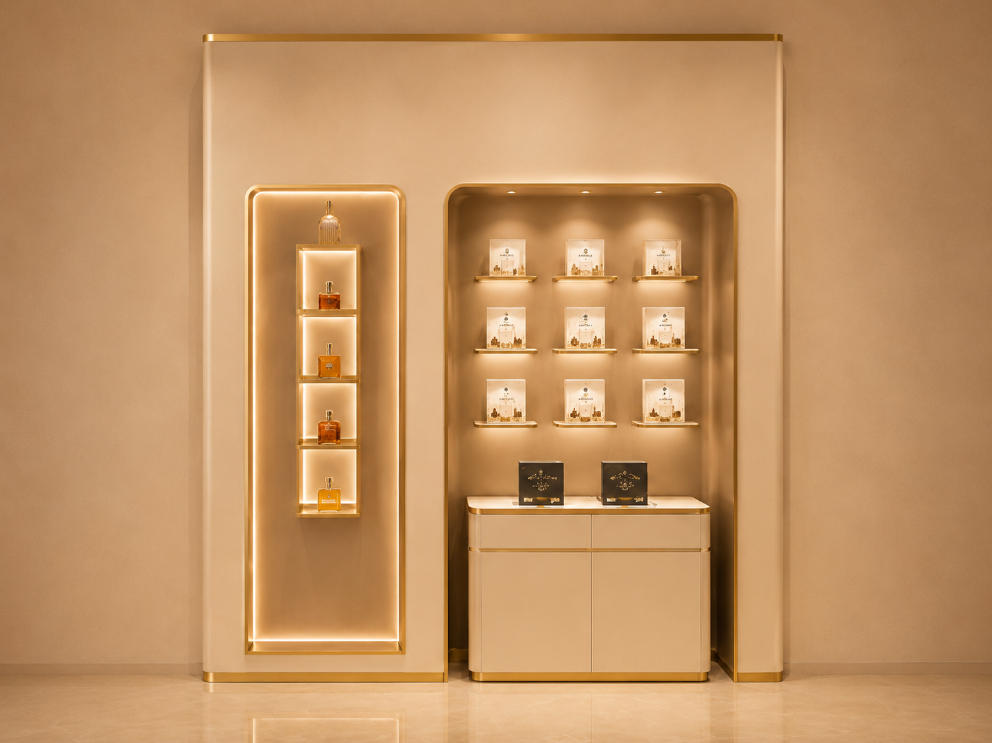
Modern perfume displays combine presentation, durability, and practicality to create an environment where fragrance bottles can be viewed clearly. Because perfume packaging often relies on glass, metallic details, distinctive shapes, and elegant finishes, the materials used for the display need to complement these visual qualities rather than compete with them.
A well-planned Perfume Showcase may incorporate several materials within one structure. Glass can provide visibility, while metal, wood, acrylic, and engineered panels can contribute strength, style, and flexibility. The right combination depends on the collection, store environment, maintenance requirements, and overall design concept.
Glass for Visibility and Protection
Glass is one of the most recognizable materials used in perfume display construction. Its transparent surface allows customers to see products from different angles while creating a physical barrier between the bottles and the surrounding retail environment.
Different glass options can serve different purposes. Clear glass provides straightforward visibility, while tempered glass can offer greater resistance to everyday impact. Low-reflection glass may also be considered when reflections could interfere with viewing products under strong retail lighting.
Metal for Structural Support
Metal is frequently used for frames, brackets, bases, shelf supports, and other structural components. Aluminum and stainless steel can provide a clean contemporary appearance while supporting the overall stability of the display.
Common Metal Finishes
The finish can change the visual character of the showcase. Brushed metal tends to create a subtle appearance, while polished finishes can provide a more reflective decorative effect. Dark or neutral metal finishes may also help create contrast against light-colored perfume packaging.
Metal components should be selected not only for appearance but also for their durability and compatibility with the surrounding fixtures.
Wood and Wood-Based Panels
Wood introduces warmth and visual depth to a perfume display. Natural wood, veneers, and engineered wood panels can be used for bases, cabinets, back panels, shelving, and decorative sections.
Light wood tones may support a softer retail atmosphere, while darker finishes can create a more formal or sophisticated appearance. Engineered panels can also provide flexibility when specific colors, textures, or surface finishes are required.
Acrylic for Lightweight Display Elements
Acrylic is another practical material for modern perfume displays. It can be used for risers, product platforms, dividers, holders, and decorative components.
Its relatively lightweight construction makes it useful when displays need movable or replaceable interior elements. Clear acrylic can maintain visual openness, while opaque or tinted versions can introduce subtle contrast.
Acrylic should be selected carefully for areas that receive frequent handling, since its surface can be more susceptible to scratching than some types of glass.
Stone and Stone-Look Surfaces
Stone and engineered stone-look materials can add a substantial, premium character to perfume displays. They are particularly useful for bases, countertops, or feature sections where a stronger visual foundation is desired.
Natural stone can provide unique patterns and textures, while engineered alternatives may offer more consistency across multiple display units. These materials can work well when the showcase needs to coordinate with upscale flooring, counters, or architectural elements.
Laminate and Decorative Surface Materials
Laminate is often used when designers need a wide selection of colors, patterns, and textures without relying exclusively on natural materials. It can cover display panels, cabinets, shelves, and other surfaces.
Modern laminates can imitate wood, stone, or solid colors, allowing retailers to coordinate the showcase with existing interior elements. They are also useful when easy routine cleaning and consistent appearance are important considerations.
Fabric and Soft Interior Materials
The inside of a perfume display can use fabric or other soft materials to create visual contrast and define individual product areas. Velvet, suede-like materials, and decorative textiles can provide a refined background for bottles and packaging.
These materials should be selected with maintenance in mind. Surfaces that collect dust easily may require more frequent cleaning, particularly in open retail environments.
Lighting-Compatible Materials
Material selection should also take lighting into account. Highly reflective surfaces can create unwanted glare when positioned directly beneath strong illumination. Matte or textured finishes may help control reflections and provide a more balanced background.
Transparent materials can allow light to pass through or reach lower areas of a display, while darker surfaces can provide contrast around illuminated products. The interaction between materials and lighting should be considered during the planning stage.
Combining Materials for a Modern Appearance
Modern perfume showcases do not necessarily rely on a single material. Combining two or more materials can create visual hierarchy while allowing each component to perform a specific function.
For example, a display might use:
- Glass for product visibility
- Metal for framing and structural support
- Wood or laminate for the base
- Acrylic for adjustable product risers
- Fabric for selected interior sections
A carefully controlled material palette can make the display look cohesive instead of visually crowded.
Choosing Materials According to Practical Needs
Appearance is only one factor when selecting showcase materials. Retailers should also consider how the display will be used every day.
Important considerations include:
Durability
Materials should withstand routine customer activity, staff handling, cleaning, and occasional repositioning of products.
Maintenance
Smooth, easy-to-clean surfaces can simplify daily care. Materials with textured or delicate finishes may require more specialized maintenance.
Product Compatibility
The material should complement the shapes, colors, labels, and finishes of the perfume bottles rather than obscure them.
Store Environment
The showcase should coordinate with surrounding counters, shelving, flooring, walls, and other fixtures.
Future Flexibility
If the fragrance collection changes frequently, modular shelves and replaceable interior materials can make future updates easier.
Balancing Appearance and Function
The most effective material combinations balance visual appeal with practical requirements. A highly decorative material may look impressive but become difficult to maintain, while a purely functional design may not provide the desired presentation.
DG Display Showcase can be considered by retailers reviewing showcase solutions where material selection, product visibility, and everyday usability need to work together.
Final Thoughts
Materials play an important role in determining how a modern perfume showcase looks, performs, and lasts. Glass provides visibility and protection, metal contributes structural strength, wood and laminate add warmth or decorative character, and acrylic offers flexible display possibilities. Stone, fabric, and specialized finishes can provide additional visual distinction.
Rather than choosing materials individually, it is useful to consider how they interact as a complete display system. A thoughtful combination can support product visibility, simplify maintenance, complement the retail interior, and create a consistent presentation for different fragrance collections.