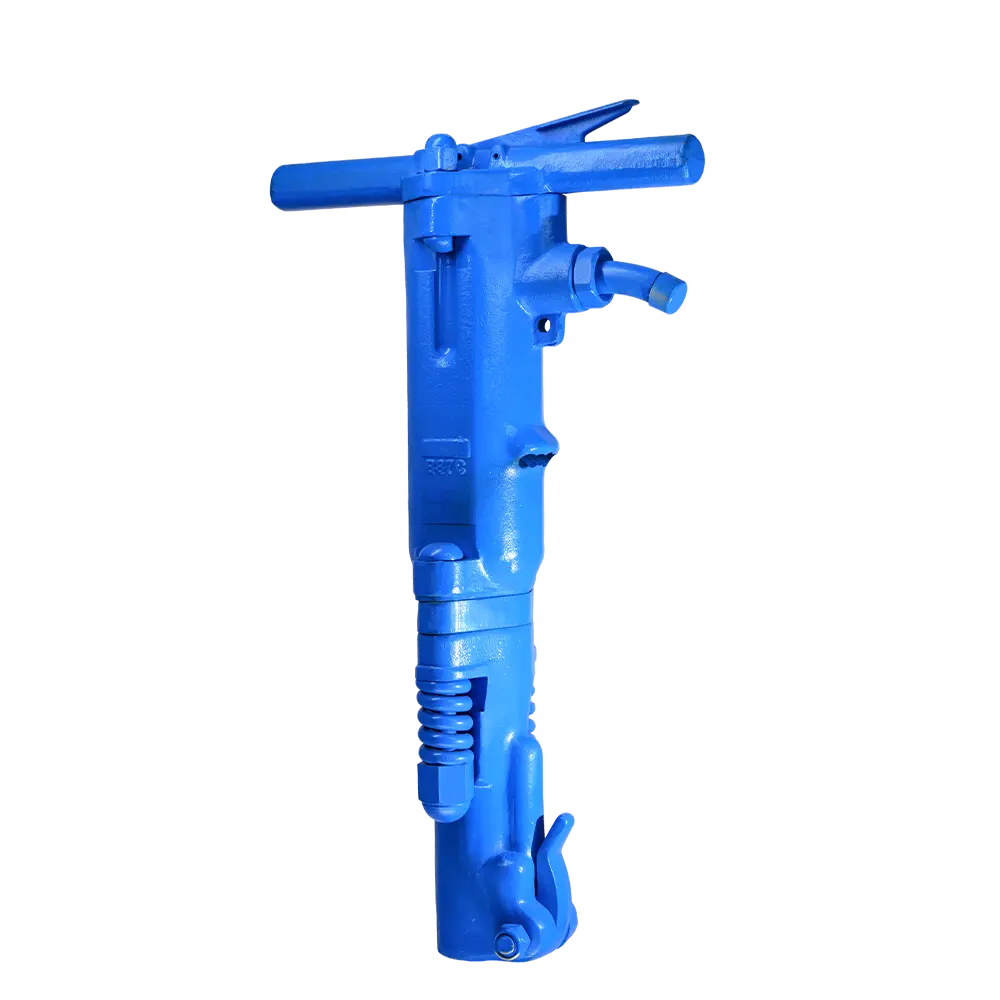
Pneumatic tools play an important role in construction, mining, and industrial maintenance because they deliver repeated impact force for breaking and loosening materials. An air pick hammer is designed for tasks that require concentrated impact energy in a portable format. The G10 model is associated with this category of equipment and may be used for suitable material-breaking operations, depending on its specifications and the manufacturer’s design.
When evaluating a G10 Air Pick Hammer, buyers should consider operating pressure, air consumption, impact performance, tool weight, and compatibility with the intended application. Understanding these factors helps operators select equipment that meets job requirements while supporting safe and efficient operation.
What Is a G10 Air Pick Hammer?
A G10 air pick hammer is a handheld pneumatic tool that uses compressed air to produce repeated mechanical impacts. These impacts are transferred through a tool bit, such as a pointed pick or chisel, to break, chip, or loosen suitable materials.
Compared with large demolition machinery, handheld pneumatic tools can offer greater maneuverability in confined work areas and for localized repairs. Their effectiveness depends on the material being worked on, the selected attachment, the available air supply, and the condition of the tool.
Because specifications may differ among manufacturers and product variants, the G10 model designation should not be treated as a guarantee of identical performance across all suppliers.
Key Features of a G10 Air Pick Hammer
Several design and operating characteristics influence the suitability of an air pick hammer for industrial work.
Pneumatic Impact Mechanism
The tool uses compressed air to drive an internal piston, generating repeated impacts against the working attachment. This mechanism enables the operator to apply concentrated force without relying on an electric motor inside the handheld tool.
Portable Design
A handheld structure allows operators to position the tool directly at the working surface. Portability can be particularly useful for localized demolition, maintenance tasks, and work areas where larger equipment is difficult to maneuver.
The tool’s actual handling characteristics depend on its weight, dimensions, grip design, and vibration behavior.
Interchangeable Working Attachments
Depending on the model, compatible pointed bits and chisels can help operators perform different breaking and chipping tasks. Buyers should confirm the required shank dimensions and retaining system before ordering replacement attachments.
Using an incompatible or damaged bit can affect performance and create a safety hazard.
Compressed-Air Operation
A G10 air pick hammer requires a suitable compressed-air supply. Correct airflow and operating pressure are essential for consistent performance, while the compressor and hose arrangement must meet the manufacturer’s requirements.
Serviceable Components
Routine inspection, lubrication, and replacement of worn components help maintain tool condition. Access to compatible spare parts and clear maintenance instructions is an important consideration when purchasing equipment for regular industrial use.
How Does a G10 Air Pick Hammer Work?
The working mechanism converts the energy of compressed air into repeated impacts that act on a material surface.
- Air supply: A compatible compressor delivers compressed air through a hose and suitable fittings.
- Piston movement: The internal pneumatic mechanism directs air to move a piston back and forth.
- Impact generation: The piston repeatedly strikes the internal impact assembly or working attachment.
- Material breaking: The attachment transfers impact energy to the surface, helping fracture, chip, or loosen the material.
- Continuous operation: As long as the tool is supplied with air and operated correctly, the impact cycle repeats.
The rate of material removal depends on the tool’s design, air-supply conditions, material hardness, bit selection, and operator technique. A higher impact frequency alone does not necessarily mean better performance for every application.
Applications in Construction
Air pick hammers can support various construction activities where localized impact breaking is required.
Concrete Breaking and Repair
A suitable pneumatic pick may be used to break small concrete sections, remove damaged material, and prepare surfaces for repair. The attachment should be selected according to the material and the degree of precision required.
For large slabs or extensive demolition, heavier breakers or excavators may be more productive.
Masonry and Renovation
During renovation work, an air pick hammer may help remove selected masonry sections, loosen mortar-bound material, or perform localized chipping. Operators must avoid damaging surrounding structures and should assess the stability of the work area before starting.
Road and Pavement Maintenance
Maintenance teams may use pneumatic impact tools to remove damaged pavement sections, break localized concrete areas, and prepare surfaces for patching. Their portability can be useful for small repair projects and restricted work zones.
General Construction Maintenance
The tool may also be suitable for certain repair and material-removal tasks in construction facilities. Actual use should be based on the manufacturer’s approved applications and the material being handled.
Applications in Mining and Quarrying
Pneumatic impact tools are used in selected mining and quarrying operations where portable equipment is useful for localized breaking or loosening work.
Material Loosening
Depending on the tool’s rated capability and the geology, an air pick hammer may help loosen suitable material during small-scale excavation or maintenance activities.
Localized Rock Breaking
For certain rock formations and limited breaking tasks, a pneumatic pick may offer a practical alternative to positioning larger machinery. Hardness, fracture characteristics, and working conditions determine whether the tool is appropriate.
Underground Maintenance
In suitable underground environments, pneumatic tools may support maintenance and repair activities. Operators must follow site requirements for ventilation, dust control, noise, and equipment safety.
An air pick hammer is not a universal substitute for specialized drilling or large-scale rock-breaking equipment. Application suitability should always be established through technical documentation and a site-specific assessment.
Important Specifications to Check Before Buying
A reliable purchasing decision requires model-specific technical information rather than assumptions based on the G10 designation alone.
| Specification | Why it matters |
|---|---|
| Operating air pressure | Ensures the tool operates within its rated limits |
| Air consumption | Helps determine the compressor capacity required |
| Impact frequency | Indicates how often the tool delivers impacts |
| Tool weight | Influences handling, portability, and operator fatigue |
| Overall dimensions | Helps assess access to confined work areas |
| Bit compatibility | Confirms which attachments can be fitted safely |
| Spare-parts availability | Supports maintenance and reduces potential downtime |
Request the manufacturer’s data sheet and confirm the stated specifications for the exact product variant. If the tool will be used for extended shifts, also assess vibration exposure, noise levels, and ergonomic requirements.
Maintenance and Safety Considerations
Proper maintenance can help extend service life and reduce unplanned interruptions. Before each use, inspect the tool body, air hose, connections, attachment, and retaining mechanism for visible damage or wear.
Follow the manufacturer’s lubrication and servicing schedule. Disconnect the air supply before changing the bit or carrying out maintenance, and never operate the tool above its specified pressure.
Operators should use appropriate eye, hearing, hand, and foot protection. Dust-control measures and suitable respiratory protection may also be necessary, depending on the material and workplace assessment. Work areas should be checked for hidden electrical cables, gas lines, water pipes, and structural hazards before breaking begins.
Training is especially important in mining and construction environments, where unstable material, flying debris, and prolonged vibration exposure can present serious risks.
Conclusion
The G10 air pick hammer is a pneumatic impact tool intended for suitable breaking, chipping, and material-loosening tasks. Its portable design and compressed-air operating mechanism can make it useful in selected construction, mining, quarrying, and industrial maintenance applications.
Before selecting a model, buyers should verify its technical specifications, compressor requirements, attachment compatibility, and maintenance support. Matching the tool to the working conditions and following established safety procedures helps promote consistent performance and responsible equipment use.