Wudu Basin for Muslim Communities: Design Ideas for Mosques and Islamic Centers
Mosques and Islamic centers need well-designed ablution areas that support daily worship while maintaining cleanliness, comfort, and accessibility. Since many people may perform wudu before prayer within a short period, the basin layout should accommodate regular use, provide adequate washing space, and allow water to drain efficiently. A thoughtful design can make the experience more convenient for worshippers while simplifying cleaning and maintenance for facility managers.
Choosing a suitable Wudu Basin for Muslim communities involves considering the needs of different users, the available floor area, plumbing arrangements, and the expected number of visitors. The right combination of basin style, installation height, seating, and drainage can help create an ablution facility that is practical, hygienic, and consistent with the architectural character of the mosque or Islamic center.
1. Understand the Needs of the Community
Before selecting a basin design, assess how the ablution area will be used throughout the day. A small neighborhood mosque may require a different arrangement from a large Islamic center that welcomes hundreds of worshippers during Friday prayers and religious events.
Consider the following factors:
- Expected usage: Estimate the number of worshippers who may use the facility during peak periods.
- Available space: Measure the room, including entrances, walkways, and areas needed for plumbing.
- User requirements: Consider children, older adults, people with disabilities, and visitors who may need additional support.
- Cleaning routines: Choose materials and layouts that allow staff to clean basins, floors, and surrounding surfaces efficiently.
- Future expansion: Where possible, allow room for additional washing stations if community needs increase.
Understanding these requirements early can prevent overcrowding and reduce the likelihood of costly changes after installation.
2. Install Multiple Basins for High-Traffic Areas
For busy mosques and Islamic centers, a row of individual basins can help several worshippers perform ablution at the same time. This arrangement makes efficient use of wall space and can create a clear, organized washing area.
The number of basins should reflect the facility’s peak demand rather than its average daily attendance alone. Adequate space between stations helps users wash comfortably and reduces interference between neighboring users.
When planning multiple stations, ensure that faucets, drains, and plumbing connections are positioned consistently. A coordinated layout can simplify installation, maintenance, and replacement if individual fixtures need servicing.
3. Choose Wall-Mounted Basins for Modern Facilities
Wall-mounted basins are useful when a mosque or Islamic center needs an uncluttered layout. Because they do not require a floor-standing pedestal, they can leave more visible floor area and make it easier to clean beneath each station.
These basins can work particularly well in compact ablution rooms where every square meter matters. They also offer flexibility in installation height, although the mounting system and wall structure must be suitable for the basin’s weight and intended use.
For shared facilities, confirm that the wall can support the fixture securely. The installation should also leave sufficient space for plumbing connections, maintenance access, and comfortable use.
4. Consider Seated Ablution Stations
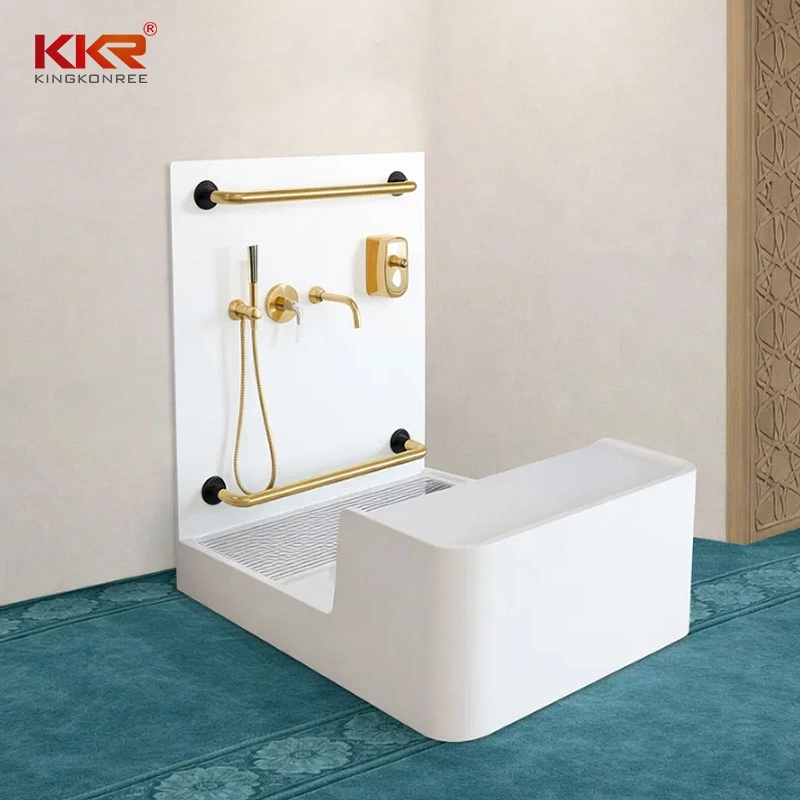
Seated ablution stations can improve comfort for older adults, people with limited mobility, and users who find prolonged standing difficult. Depending on the facility’s needs, these stations may include a seat or bench, a basin positioned for seated use, and conveniently placed water controls.
The seating should be stable, water-resistant, and easy to clean. The surrounding layout should also provide sufficient room for users to sit down and stand up safely.
Where space permits, combining seated and standing stations can help a facility accommodate a broader range of worshippers. Accessible options should be integrated into the overall design rather than placed in an inconvenient or isolated location.
5. Select Durable, Easy-to-Clean Materials
Material selection affects the appearance, maintenance requirements, and service life of an ablution facility. Basins in mosques and Islamic centers may experience frequent use, so surfaces should tolerate regular cleaning and repeated exposure to water.
Common materials include:
Ceramic and Porcelain
Glazed ceramic and porcelain provide smooth surfaces that are generally straightforward to clean. They are suitable options for many traditional and contemporary ablution spaces, although they can chip or crack if struck by heavy objects.
Solid Surface
Solid-surface materials can provide a contemporary appearance and allow a variety of shapes and configurations. Some products have repairable surfaces, but resistance to scratches, heat, and cleaning chemicals depends on the specific formulation.
Stainless Steel
Stainless steel can be appropriate for functional, high-use facilities. It is durable and does not break like ceramic, but the grade and finish matter. Water spots and scratches may also be more noticeable.
Regardless of material, choose products with clear maintenance instructions and verify that the recommended cleaning agents are suitable for the finish.
6. Plan Effective Drainage and Splash Control
Water management is essential in an ablution area. Poor drainage can leave standing water on floors, increase cleaning demands, and create slip hazards for worshippers.
A well-planned design should include appropriately sized drains, correctly installed plumbing, and floor surfaces that direct water toward drainage points. Basin depth, faucet position, and water pressure should also be considered to limit unnecessary splashing.
If the facility includes floor drains, have a qualified professional verify the floor slope and drainage capacity. The floor should remain stable and slip-resistant when wet, with no abrupt changes in level that could create additional hazards.
Regularly inspect drains for blockages and repair leaking faucets promptly. These simple measures can help keep the space cleaner and reduce water waste.
7. Create Clear Walkways and an Organized Layout
An ablution area should allow worshippers to move between the entrance, washing stations, and exit without unnecessary congestion. This becomes especially important before congregational prayers, when many people may arrive within a short period.
Arrange basins so that users can approach and leave each station without blocking the main walkway. Keep cleaning equipment, storage cabinets, and maintenance access points away from busy circulation routes.
Where the room allows, separate the wet washing zone from nearby dry areas. Clear transitions can help limit water being carried into corridors, prayer spaces, and other parts of the building.
Signage can also help visitors identify washing stations, accessible facilities, and appropriate routes through the room.
8. Incorporate Accessibility Into the Design
A mosque or Islamic center serves people of different ages and physical abilities. Accessible ablution facilities help more worshippers use the space comfortably and independently.
Depending on local accessibility requirements, useful features may include:
- Basins installed at suitable heights for different users.
- Clear floor space for wheelchair approach and maneuvering.
- Lever-operated or otherwise easy-to-use water controls.
- Stable seating or support features where appropriate.
- Slip-resistant flooring and unobstructed access routes.
- Adequate lighting to improve visibility around wet surfaces.
Accessibility should be considered during the initial planning stage because changing basin heights, drainage positions, or circulation routes after construction can be expensive.
Consult applicable building codes and accessibility standards to determine the required clearances, fixture heights, and support arrangements.
9. Match the Design to the Mosque’s Architecture
Ablution facilities can be functional while still complementing the architectural style of the building. Traditional mosques may favor neutral finishes, decorative tilework, and natural materials, while contemporary Islamic centers may use minimalist forms and clean lines.
For a traditional setting, coordinated stone finishes or patterned tiles can create visual continuity with the rest of the building. In a modern facility, simple basin profiles, consistent faucet finishes, and uncluttered wall surfaces can produce a calm, orderly appearance.
Visual details should never compromise practical requirements. Decorative materials must be suitable for wet environments, easy to maintain, and installed without creating hard-to-clean gaps or slippery surfaces.
10. Provide Comfortable Lighting and Ventilation
Good lighting helps worshippers use the basin safely and allows cleaning staff to identify water deposits, dirt, and maintenance problems. Even illumination around the washing stations, mirrors where needed, and entrances can improve visibility.
Ventilation is equally important in enclosed ablution rooms. Persistent moisture can contribute to condensation, unpleasant odors, and deterioration of surrounding finishes.
Use ventilation appropriate to the room size and expected occupancy. Select fixtures and electrical equipment suitable for the wet environment, and ensure that maintenance access is available for fans and lighting components.
11. Make Cleaning and Maintenance Easy
A busy ablution facility needs a practical maintenance plan. A design that is difficult to clean can increase labor costs and allow residue to accumulate around drains, faucets, and joints.
Choose basin shapes with accessible interiors and avoid unnecessary crevices where water and dirt may collect. Ensure that staff can reach the floor beneath or around the fixtures and access plumbing components when repairs are required.
A routine maintenance schedule should cover:
- Cleaning basin surfaces, faucets, and surrounding counters.
- Removing debris from drains and checking for slow drainage.
- Inspecting faucets, seals, and plumbing connections for leaks.
- Checking flooring for loose tiles, damaged grout, or slippery residue.
- Reviewing the condition of seating, grab bars, and other support features.
- Replacing damaged fixtures and worn components promptly.
Follow manufacturer guidance when selecting cleaning products, particularly for natural stone, specialty coatings, and solid-surface materials.
12. Balance Initial Cost With Long-Term Value
The least expensive basin may not always be the most economical option over time. Purchase price is only one part of the total cost of operating an ablution facility.
When comparing designs, include installation, plumbing modifications, cleaning labor, water use, repair requirements, and expected replacement costs. A durable, easy-to-maintain fixture may provide better long-term value even if its initial price is higher.
For larger projects, request product specifications and installation details from suppliers before making a final decision. Confirm warranty coverage, replacement-part availability, and the process for obtaining technical support.
Conclusion
Designing an effective ablution area for a mosque or Islamic center requires a balance of comfort, durability, hygiene, accessibility, and efficient use of space. Multiple washing stations can support high visitor numbers, while wall-mounted and seated designs can improve flexibility for different users. Durable materials, effective drainage, slip-resistant flooring, and good ventilation help maintain a safer and cleaner environment.
By assessing community needs before choosing fixtures, facility managers can create an organized space that supports daily worship and remains practical to maintain. Careful planning, professional installation, and regular inspections can help ensure that the ablution area continues to serve the community reliably for years to come.