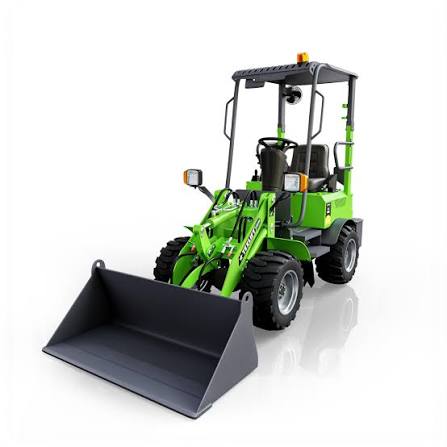
Evaluating Warranty, Spare Parts, and Technical Support from an Electric Skid Steer Loaders Supplier
Purchasing an electric skid steer loader involves more than comparing machine specifications and initial prices. Buyers must also consider the support available after delivery, including warranty coverage, replacement parts, and technical assistance. These services can influence equipment reliability, maintenance expenses, and the time required to resolve unexpected problems.
A thorough assessment of an Electric Skid Steer Loaders Supplier helps businesses understand what support they can expect throughout the equipment’s service life. By reviewing warranty terms, checking parts availability, and evaluating technical service arrangements before purchasing, buyers can make better-informed decisions and reduce uncertainty about long-term ownership.
1. Understand the Scope of Warranty Coverage
Warranty coverage is one of the first areas to evaluate when comparing equipment suppliers. It establishes the conditions under which certain defects or component failures may qualify for repair or replacement.
Electric skid steer loaders contain several systems, including electric motors, battery packs, controllers, charging equipment, hydraulics, and mechanical components. These parts may not all have identical warranty periods or conditions.
Ask the supplier to explain exactly what the warranty covers and request the complete terms in writing.
Important details to review include:
- Warranty duration for the complete machine.
- Separate coverage for the battery and charger.
- Coverage for motors, controllers, and hydraulic components.
- Conditions for repair or replacement.
- Exclusions related to misuse, accidents, or unauthorized modifications.
- Requirements for routine maintenance and service records.
A longer warranty period is not automatically better if the coverage is narrow or difficult to claim. Compare the actual protections offered rather than relying solely on the number of months or operating hours advertised.
2. Check Battery and Electrical System Warranty Terms
Battery performance is especially important for electric skid steer loaders because it affects operating time, charging schedules, and equipment availability. Buyers should examine battery warranty terms separately from the general machine warranty.
Ask whether coverage applies to manufacturing defects, specific component failures, or measurable battery-capacity degradation. If performance thresholds are included, clarify how they are measured and under what conditions a claim may be accepted.
You should also determine whether the warranty covers the charging system, battery management electronics, and related control components.
Questions worth asking include:
- Is the battery covered by a separate warranty?
- Are there limits based on operating hours or charging cycles?
- What maintenance records must be retained?
- Are temperature and storage conditions relevant to coverage?
- Who evaluates a suspected battery fault?
- Where will diagnostic testing and repairs take place?
Battery warranty conditions vary by manufacturer and battery design. Always use the documentation supplied for the specific model rather than assuming that terms from another machine apply.
3. Review the Warranty Claim Process
A warranty is only useful if the buyer understands how to request service. Complicated reporting procedures or unclear responsibilities can delay the resolution of eligible issues.
Before purchasing, ask the supplier to explain the complete claim process, from reporting a fault to receiving an approved repair or replacement.
Clarify whether you must contact the supplier directly, submit a claim through a distributor, or work with an authorized service center. Ask which documents are required and whether the machine must be transported to a particular location.
A typical claim may require:
- Proof of purchase.
- Machine model and serial number.
- Description of the fault.
- Relevant warning codes or diagnostic information.
- Maintenance and inspection records.
- Photographs or videos when appropriate.
Also ask whether labor, transportation, diagnostic testing, and shipping are included in eligible warranty repairs. These expenses can affect the actual cost of resolving a problem.
Written instructions make it easier for operators and maintenance teams to follow the correct process when a fault occurs.
4. Evaluate Spare Parts Availability
Replacement parts are essential for routine maintenance and repairs. Even a reliable machine will eventually require components to be inspected, serviced, or replaced.
When evaluating suppliers, determine which parts are readily available and which must be ordered from a central warehouse or manufacturer. Availability may differ depending on the machine model, location, and distribution network.
Common parts requirements may include:
- Hydraulic hoses, seals, and fittings.
- Filters and routine service items.
- Tires, tracks, and other wear components.
- Electrical connectors and control components.
- Battery-related replacement parts.
- Switches, sensors, and other machine-specific components.
Ask the supplier for typical lead times and an explanation of how urgent orders are handled. If the equipment is imported, consider shipping schedules, customs procedures, and local distribution arrangements.
For businesses with tight project deadlines, the ability to obtain critical components promptly may be a major factor in supplier selection.
5. Confirm Parts Compatibility and Authenticity
Not every replacement component is suitable for every electric skid steer loader. Differences in electrical ratings, dimensions, connectors, hydraulic specifications, and software compatibility can affect performance and safety.
Ask the supplier whether replacement parts are genuine or manufacturer-approved and how compatibility is verified. Provide the machine’s model and serial number when requesting components.
It is also useful to ask whether the supplier provides part numbers, illustrated parts catalogs, or installation documentation. These resources help maintenance teams identify the correct components and avoid ordering incompatible items.
For electronic controllers, battery components, and other specialized parts, confirm whether installation or calibration must be performed by a qualified technician.
Choosing compatible components helps maintain equipment performance and reduces the risk of problems caused by unsuitable replacements. Buyers should also check whether the use of third-party parts affects the warranty under the specific warranty terms.
6. Assess Technical Support Availability
Technical support becomes important when operators encounter warning indicators, charging problems, unusual machine behavior, or faults that cannot be resolved through routine checks.
Suppliers may provide assistance through telephone support, email, video calls, diagnostic guidance, or authorized technicians. The actual service options depend on the supplier’s capabilities and the terms of the purchase.
Before committing to an order, ask:
- Which communication channels are available?
- During what hours can technical support be reached?
- What is the usual process for urgent inquiries?
- Are technicians familiar with the machine’s electrical and hydraulic systems?
- Is remote troubleshooting available for supported models?
- Can the supplier arrange on-site service when necessary?
If you are purchasing from an overseas supplier, confirm how time differences, language, shipping, and local service arrangements may affect assistance.
Clear information about the support process helps businesses plan for potential problems rather than relying on assumptions about service availability.
7. Examine Diagnostic and Troubleshooting Resources
Modern electric equipment may include electronic control systems that display fault codes or provide information about machine performance. These features can help technicians identify possible causes of a problem.
Ask whether the supplier provides troubleshooting guides, fault-code explanations, maintenance manuals, or access to diagnostic tools where supported by the machine.
A useful troubleshooting process should help operators distinguish between routine conditions and faults requiring professional inspection. For example, an alert may indicate a charging issue, a temperature condition, or a system fault that requires further diagnosis.
However, diagnostic codes do not always identify the complete cause of a failure. Qualified technicians may need to perform additional tests or inspect the machine physically.
Operators should follow the manufacturer’s safety instructions and avoid opening high-voltage components or attempting repairs beyond their training. The supplier should explain when equipment must be taken out of service and when professional assistance is required.
8. Compare Maintenance Guidance and Service Documentation
Good maintenance documentation helps owners perform routine inspections consistently and understand when professional servicing is necessary.
Ask the supplier whether the purchase includes an operation manual, maintenance schedule, parts catalog, and relevant troubleshooting information. Confirm that the documentation matches the exact model being supplied.
Maintenance guidance should explain the recommended inspection intervals and procedures for key systems, including the battery, hydraulic components, electrical connections, tires or tracks, and safety devices.
You should also clarify which tasks operators can perform and which require qualified technicians. Some repairs may involve specialized tools, diagnostic equipment, or safety procedures.
A supplier that provides clear documentation can help the buyer establish a maintenance program and maintain better records. These records may also be important when investigating recurring faults or submitting warranty claims.
9. Determine Whether Technician Training Is Available
Technical training can improve maintenance quality and help prevent avoidable equipment damage. It is particularly useful for businesses that are new to electric construction machinery.
Ask whether the supplier offers operator instruction, maintenance training, demonstrations, or guidance for troubleshooting common issues. Confirm whether these services are included in the purchase price or require an additional fee.
Training may cover daily inspections, battery charging, warning indicators, safe shutdown, attachment use, and basic maintenance procedures.
For maintenance personnel, it is important to understand the difference between permitted routine checks and repairs requiring specialized qualifications. Electrical and battery-system work can present serious hazards if handled incorrectly.
Even when formal training is unavailable, clear manuals and documented support procedures can help staff operate the machine more consistently.
10. Evaluate Service Network and Repair Arrangements
The supplier’s service network can affect how easily you obtain professional assistance. This is especially important when equipment operates in remote locations or when a business depends on machinery every working day.
Ask whether the supplier has local service centers, authorized repair partners, or technicians who can travel to the worksite. If support is provided remotely, clarify which issues can be handled through remote guidance and which require physical inspection.
Important factors to consider include:
- Distance to the nearest authorized service provider.
- Availability of qualified repair technicians.
- Procedures for scheduling service visits.
- Access to required diagnostic tools.
- Responsibility for transportation and travel expenses.
- Availability of support after the warranty expires.
A supplier may have strong technical knowledge but limited local coverage. Understanding this distinction helps buyers assess whether the service arrangement is practical for their location and workload.
11. Compare the Total Cost of After-Sales Support
The price of the loader does not always include every service that may be needed during ownership. Some suppliers include initial training or limited servicing, while others charge separately for technician visits, replacement parts, or extended warranty plans.
Request a clear breakdown of included and optional services. Where possible, estimate the likely cost of routine maintenance, common replacement components, and technical assistance outside the warranty period.
Your comparison should consider:
| Cost factor | Questions to ask |
|---|---|
| Warranty | What repairs and components are covered? |
| Spare parts | What are the prices and expected delivery times? |
| Technician visits | Are travel and labor charged separately? |
| Routine maintenance | What service tasks and supplies are required? |
| Diagnostic support | Is remote assistance included? |
| Extended coverage | What additional protections and exclusions apply? |
| Shipping | Who pays to transport parts or equipment? |
Use realistic operating assumptions when estimating long-term costs. Actual expenses depend on machine utilization, working conditions, local service rates, and maintenance practices.
A slightly higher purchase price may be justified when it includes useful support, but the decision should be based on the documented value of the complete package.
12. Check Supplier Reputation and Service Commitments
A supplier’s reputation can provide useful context, but buyers should focus on evidence relevant to warranty administration, parts delivery, and technical support.
Ask for customer references or case studies involving similar equipment and operating conditions. Where possible, seek feedback about the supplier’s responsiveness when problems arise, the availability of replacement parts, and the accuracy of delivery commitments.
Review any service agreements carefully. Look for specific information about communication channels, responsibilities, service fees, and expected procedures for handling technical issues.
Avoid treating general statements such as “full support” or “fast service” as guaranteed outcomes unless the terms are clearly defined. Ask for clarification whenever a commitment is vague.
A supplier that communicates transparently about limitations and responsibilities may be easier to work with than one that makes broad promises without explaining how support is delivered.
13. Create a Pre-Purchase Evaluation Checklist
Before making a final decision, use a checklist to ensure that warranty, parts, and technical support have been assessed consistently across all shortlisted suppliers.
-
Obtain the complete written warranty terms.
-
Confirm separate coverage for the battery and other major components.
-
Understand the warranty claim process and required documents.
-
Check availability and lead times for essential replacement parts.
-
Verify parts compatibility and ordering procedures.
-
Confirm available technical support channels and service hours.
-
Ask about troubleshooting resources and diagnostic capabilities.
-
Review maintenance manuals and service schedules.
-
Check whether operator or technician training is available.
-
Understand service fees, transportation costs, and optional coverage.
-
Confirm what support remains available after the warranty expires.
This checklist provides a practical way to compare suppliers on the quality of their after-sales arrangements, not just the equipment they sell.
Conclusion
Evaluating warranty coverage, spare-parts availability, and technical support is essential when purchasing an electric skid steer loader. These factors influence how quickly problems can be addressed, how maintenance is managed, and how confidently a business can plan for long-term equipment use.
Before placing an order, request written warranty terms, verify the process for obtaining replacement parts, and confirm how technical assistance is delivered. Consider the supplier’s service network, maintenance documentation, training options, and the costs of support beyond the initial purchase.
A careful evaluation helps buyers understand their responsibilities and identify suppliers whose documented services align with their operational needs. By considering after-sales support alongside machine performance and price, businesses can make a more informed investment in their equipment.