Hydraulic systems are widely used in industrial machinery because they provide controlled movement, lifting capacity, and reliable power transmission. These systems depend on hydraulic fluid to transfer force between different components. However, maintaining the correct pressure and preventing fluid leakage require properly designed sealing products.
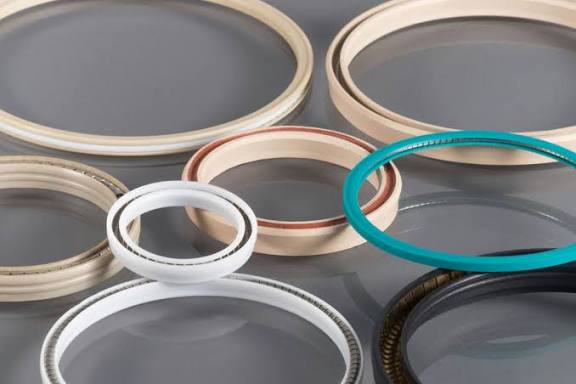
A professional Hydraulic Seals Manufacturer produces different types of sealing components to meet the requirements of industrial equipment, construction machinery, agricultural vehicles, and heavy-duty hydraulic systems. Each seal has a specific function, ranging from preventing internal fluid leakage to protecting cylinders from dust and external contaminants. Understanding the different types of hydraulic seals helps equipment manufacturers, maintenance professionals, and industrial buyers select suitable products for their applications.
Understanding the Role of Hydraulic Seals
Hydraulic seals are components designed to control fluid movement within hydraulic systems. They create barriers between stationary and moving surfaces, helping maintain pressure and prevent unwanted leakage.
Without effective sealing, hydraulic equipment may experience pressure loss, reduced operating efficiency, contamination, and premature component wear.
Hydraulic seals generally perform two main functions:
- Preventing fluid leakage: They maintain hydraulic pressure by limiting fluid movement between components or outside the system.
- Preventing contamination: They stop dust, moisture, dirt, and other foreign materials from entering sensitive hydraulic components.
Different applications require different seal designs because operating pressure, temperature, movement, and fluid conditions can vary significantly.
1. Piston Seals
Piston seals are among the most important components in hydraulic cylinders. They are installed around the piston and prevent hydraulic fluid from passing between the piston and the cylinder bore.
Their primary purpose is to maintain pressure differences between the two sides of the piston. This allows hydraulic force to produce controlled linear movement.
Common Features
- Designed for reciprocating movement.
- Help maintain hydraulic pressure.
- Available in single-acting and double-acting configurations.
- Manufactured from materials such as polyurethane, NBR, and PTFE.
- Available in different profiles depending on operating requirements.
Industrial Applications
Piston seals are commonly used in excavators, hydraulic presses, lifting platforms, agricultural machinery, and industrial automation equipment.
Their performance is particularly important in applications where consistent pressure and controlled movement are required.
2. Rod Seals
Rod seals prevent hydraulic fluid from escaping along the moving piston rod as it travels through the cylinder head or gland.
They are exposed to continuous movement, friction, pressure, and environmental conditions. Therefore, their design must provide effective sealing without creating excessive friction.
Important Characteristics
Rod seals are designed to maintain contact with the moving rod surface while accommodating repeated reciprocating motion.
Depending on the application, they may use elastomeric sealing lips, specialized profiles, or combined sealing arrangements.
Where They Are Used
Rod seals are found in:
- Hydraulic excavators.
- Industrial cylinders.
- Construction machinery.
- Agricultural equipment.
- Material-handling systems.
- Hydraulic lifting equipment.
A suitable rod seal helps minimize external leakage and maintain the efficiency of the hydraulic cylinder.
3. Wiper Seals
Wiper seals, also called scraper seals, protect hydraulic cylinders from external contamination.
They are installed at the cylinder opening, where the piston rod enters and exits. Their primary function is to remove dust, dirt, moisture, and other contaminants from the rod surface before these materials enter the hydraulic system.
Main Benefits
- Reduce contamination inside hydraulic cylinders.
- Protect internal sealing components.
- Help minimize premature wear.
- Support cleaner piston rod operation.
- Improve the reliability of hydraulic equipment.
Wiper seals are particularly important in construction, mining, and agricultural machinery because these environments often contain dust, mud, and abrasive particles.
4. Guide Rings and Wear Rings
Guide rings, commonly known as wear rings, are used to guide the movement of pistons and rods inside hydraulic cylinders.
Unlike conventional fluid seals, their main purpose is not to prevent leakage. Instead, they help maintain proper alignment and prevent direct metal-to-metal contact between moving components.
Key Functions
- Support lateral forces.
- Maintain alignment between moving components.
- Reduce friction-related damage to cylinder surfaces.
- Prevent direct contact between metal components.
- Help extend the service life of hydraulic assemblies.
Wear rings are often manufactured from materials such as PTFE-based compounds, reinforced polymers, and other wear-resistant materials.
They are widely used in hydraulic cylinders operating under heavy loads and demanding mechanical conditions.
5. O-Rings
O-rings are circular sealing components with a round cross-sectional profile. They are among the most commonly used seals in industrial and hydraulic applications.
They create a sealing barrier when compressed between two mating surfaces.
O-rings can be used in both static and appropriately designed dynamic applications, depending on material selection, dimensions, pressure, and operating conditions.
Common Materials
- Nitrile rubber (NBR).
- Fluorocarbon rubber (FKM).
- EPDM.
- Silicone rubber.
- Other application-specific elastomers.
Industrial Applications
O-rings are commonly installed in hydraulic pumps, valves, fittings, connectors, manifolds, and cylinder assemblies.
Their simple design and availability in different sizes make them useful for numerous industrial sealing requirements.
6. Backup Rings
Backup rings are supporting components used alongside O-rings and other seals in applications where pressure may cause seal material to extrude into an assembly clearance.
They are generally installed next to the primary sealing element to provide additional support.
Why Backup Rings Are Important
High hydraulic pressure can push softer sealing materials into gaps between mating components. This phenomenon is known as extrusion.
Backup rings help reduce this risk by supporting the primary seal and limiting material deformation.
They are commonly manufactured from PTFE, reinforced polymers, and other materials suitable for the operating environment.
Backup rings are particularly useful in high-pressure hydraulic systems where maintaining seal integrity is essential.
7. Static Hydraulic Seals
Static seals prevent fluid leakage between components that remain stationary relative to one another.
Unlike dynamic seals, they do not normally experience continuous sliding or reciprocating movement during operation.
Common examples include O-rings, gaskets, and specialized static sealing profiles.
Common Applications
Static seals are used in:
- Hydraulic valve assemblies.
- Pump housings.
- Cylinder covers.
- Fixed pipe connections.
- Hydraulic manifolds.
- Stationary equipment joints.
Although static seals experience less movement-related friction, they must still withstand pressure, temperature changes, and fluid exposure.
8. Dynamic Hydraulic Seals
Dynamic seals are designed for applications involving relative movement between components.
They are commonly used in hydraulic cylinders, pumps, and other equipment where moving surfaces must remain effectively sealed.
Dynamic sealing products include piston seals, rod seals, and certain rotary sealing designs.
Important Performance Requirements
Dynamic seals must balance several characteristics:
- Effective leakage prevention.
- Controlled friction.
- Resistance to abrasion.
- Dimensional stability.
- Compatibility with operating fluids.
- Ability to withstand repeated movement.
Selecting the appropriate dynamic seal depends on the type of motion, pressure, speed, and operating environment.
9. Rotary Hydraulic Seals
Rotary seals are designed for applications where one component rotates relative to another.
They help prevent hydraulic fluid or lubricants from escaping around rotating shafts while protecting internal components from external contamination.
These seals are commonly used in hydraulic motors, pumps, rotating equipment, and industrial drive systems.
Their design must account for shaft speed, surface finish, temperature, lubrication, and pressure conditions.
Rotary seals may use different elastomeric or polymer materials depending on the application.
10. Buffer Seals
Buffer seals are used in certain hydraulic cylinder sealing arrangements to help protect the primary rod seal from pressure fluctuations and sudden pressure spikes.
They are commonly installed ahead of the main rod seal and can help manage demanding pressure conditions.
Main Functions
- Reduce the impact of pressure peaks on primary rod seals.
- Support sealing performance in demanding hydraulic systems.
- Help protect downstream sealing components.
- Improve the reliability of suitable hydraulic cylinder arrangements.
Buffer seals are frequently used in heavy-duty machinery where pressure variations and operating loads can be substantial.
Materials Commonly Used in Hydraulic Seal Manufacturing
The material used in a hydraulic seal affects its durability, flexibility, friction, chemical resistance, and operating temperature range.
Manufacturers select materials according to the intended application rather than using a single material for every sealing product.
| Material | Main Properties | Typical Uses |
|---|---|---|
| NBR | Good resistance to many petroleum-based oils | General hydraulic seals and O-rings |
| Polyurethane | High abrasion resistance and mechanical strength | Rod seals and piston seals |
| PTFE | Low friction and chemical resistance | Backup rings and specialized seals |
| FKM | Resistance to elevated temperatures and certain chemicals | Demanding industrial applications |
| EPDM | Compatibility with certain water-based fluids | Specialized hydraulic applications |
Material compatibility should always be verified against the actual hydraulic fluid and operating conditions.
How to Choose the Right Hydraulic Seal for Industrial Equipment
Selecting an appropriate hydraulic seal requires understanding the equipment’s technical requirements and operating environment.
The following factors can help guide the selection process.
1. Operating Pressure
Different sealing profiles are designed to withstand different pressure levels. High-pressure systems may require specialized designs and backup components to reduce extrusion risks.
2. Temperature Conditions
Temperature affects material flexibility, strength, and durability. The selected seal must remain suitable throughout the expected operating temperature range.
3. Hydraulic Fluid Compatibility
Not every sealing material is compatible with every hydraulic fluid. Buyers should verify chemical compatibility before selecting a product.
4. Type of Movement
The seal must match the movement involved in the application. Static, reciprocating, and rotary applications have different design requirements.
5. Installation Dimensions
Correct dimensions are essential for proper installation and sealing performance. Buyers should verify groove measurements, shaft dimensions, and housing specifications.
6. Environmental Exposure
Equipment operating in dusty, wet, or abrasive environments may require additional protection through suitable wiper seals and material selection.
The Importance of Choosing a Reliable Hydraulic Seal Manufacturer
The quality of hydraulic sealing components depends on proper design, suitable materials, precision production, and effective quality control.
When evaluating manufacturers, industrial buyers should consider their technical expertise, product range, customization capabilities, testing procedures, and production consistency.
A capable manufacturer should also provide relevant product specifications and guidance to help customers identify suitable sealing components.
Working with an experienced manufacturer can make sourcing easier and help reduce the risks associated with incompatible or poorly manufactured products.
Conclusion
Different types of hydraulic seals perform specialized functions within industrial equipment. Piston seals and rod seals maintain pressure and prevent leakage, while wiper seals protect internal components from contamination. Guide rings, backup rings, O-rings, static seals, dynamic seals, rotary seals, and buffer seals provide additional support for different hydraulic system requirements.
Understanding these products makes it easier for industrial buyers, engineers, and maintenance professionals to select suitable components for their machinery.
By considering operating pressure, temperature, fluid compatibility, movement, and installation dimensions, businesses can make more informed sealing decisions. Choosing appropriately designed and manufactured hydraulic seals also helps improve equipment reliability, reduce maintenance requirements, and support long-term industrial performance.