Public gatherings bring together people with different interests, backgrounds, and expectations. From community festivals and sporting competitions to trade shows and corporate celebrations, these occasions give organizations valuable opportunities to connect with audiences. However, with numerous activities and promotional displays competing for attention, making a brand recognizable can be challenging. Effective visual communication helps businesses and event organizers stand out in busy environments.
An Event Flag offers a practical way to display logos, colors, and promotional messages where attendees can easily notice them. Positioned around entrances, walkways, activity zones, or exhibition areas, flags can strengthen brand recognition while helping visitors identify important locations throughout an event.
Why Event Flags Are Effective for Public Gatherings
Flags combine movement, height, and visual design to attract attention. Unlike many stationary promotional materials, fabric flags can move with the breeze, making them noticeable from different viewing angles.
Their versatility also makes them suitable for a wide range of public occasions. Businesses can use them to promote products, sponsors can display their branding, and organizers can provide visual directions for attendees.
Another advantage is their ability to communicate information without requiring visitors to stop and read lengthy messages. A recognizable logo, short slogan, or distinctive color scheme can make a brand easier to identify in a crowded space.
How Event Flags Strengthen Brand Recognition
Consistent branding helps audiences connect a visual identity with a particular business or organization. Event flags support this process by displaying recognizable brand elements in prominent locations.
Creating a Consistent Visual Identity
Using the same logo, colors, fonts, and design style across multiple flags helps establish a unified appearance. When these elements match other event materials, such as banners, booths, and promotional displays, the overall branding becomes more cohesive.
Consistency is particularly useful at large gatherings where visitors encounter a brand in several different locations.
Increasing Brand Exposure
Flags can be positioned above eye level or along busy pedestrian routes, helping promotional messages remain visible among crowds.
Strategic placement near entrances, registration areas, stages, and sponsor sections can introduce a brand to people as they move through the venue.
Supporting Sponsor Recognition
Many public events rely on sponsorships to support their activities. Displaying sponsor logos on flags gives participating companies a visible presence while helping organizers acknowledge their partners.
A coordinated arrangement of sponsor flags can also contribute to a more organized event environment.
Different Types of Events That Benefit from Flags
Event flags are adaptable promotional tools that can be used in many settings. Their design and placement should reflect the nature of the gathering.
Festivals and Community Celebrations
Outdoor festivals often include food stalls, entertainment areas, merchandise booths, and activity spaces. Flags can help businesses distinguish their stalls while giving organizers a way to identify different sections.
Bright designs and recognizable graphics can make promotional displays easier to spot in busy public areas.
Sporting Events
Sports competitions bring together participants, spectators, sponsors, and vendors. Flags can display team identities, sponsor logos, and event branding around entrances, spectator zones, and activity areas.
They can also help identify registration points and designated gathering spaces.
Trade Shows and Exhibitions
At exhibitions, businesses compete for attention among numerous booths and displays. Flags positioned beside or above exhibition stands can make individual exhibitors easier to locate.
They also provide additional space for brand messaging without taking up as much floor area as some larger display structures.
Corporate Events and Product Launches
Corporate gatherings often require a coordinated visual presentation. Flags can reinforce company branding around reception areas, presentation spaces, and product demonstration zones.
For product launches, they can highlight a new product line or campaign theme while supporting the overall event design.
Charity Events and Fundraisers
Fundraising activities benefit from clear visual communication. Flags can identify participating organizations, direct visitors toward information points, and display messages about the purpose of the event.
Their placement can help create a recognizable identity for the gathering and its supporting partners.
Choosing the Right Event Flag for Your Needs
Selecting suitable flags requires consideration of the venue, audience, display duration, and branding objectives. A design that works well inside an exhibition hall may not be appropriate for an exposed outdoor location.
Consider the Display Environment
Start by determining where the flags will be installed. Indoor events may require compact bases that fit on hard flooring, while outdoor gatherings may need ground spikes or weighted bases designed for the available surface.
Wind exposure, pedestrian traffic, and available installation space should also influence the decision.
Select Appropriate Flag Shapes and Sizes
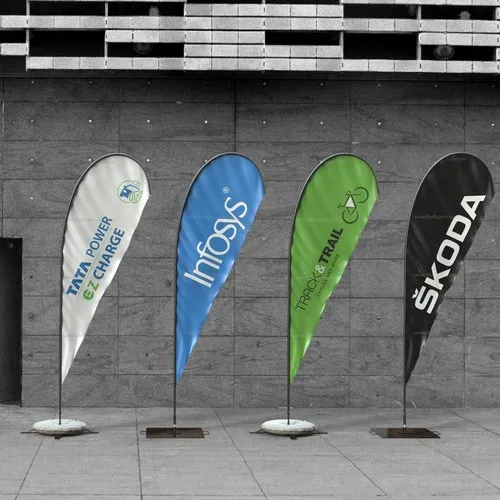
Different flag shapes create different visual effects. Feather-style flags offer a tall, curved profile, while rectangular designs provide a broader area for displaying graphics and text.
The size should be appropriate for the viewing distance and surrounding structures. A flag that is too small may be difficult to notice, while an oversized display may overwhelm a compact venue.
Choose Durable Materials
Flags used at frequent events should be made from materials suited to repeated handling and the intended environment.
Fabric quality, stitching, printing methods, and resistance to fading can all influence long-term performance. The supporting pole and base should also be compatible with the flag’s dimensions.
Focus on Readable Design
An effective flag design communicates its message quickly. Too much text or too many graphic elements can make the display difficult to understand from a distance.
For better readability:
- Use clear, high-contrast colors.
- Display the logo prominently.
- Keep promotional messages short.
- Select fonts that remain legible from a distance.
- Maintain enough empty space around important elements.
Strategic Placement for Better Visibility
Even a well-designed flag may have limited impact if it is positioned poorly. Placement should be planned around how people enter, move through, and interact with the event space.
Entrance areas: Flags near entrances can introduce the event identity and make sponsor branding visible as visitors arrive.
Registration points: Displays around check-in desks can help attendees recognize important service areas.
Main walkways: Positioning flags along pedestrian routes can increase exposure as visitors move between different activities.
Exhibition and vendor zones: Individual exhibitors can use flags to distinguish their booths and make their branding easier to locate.
Stages and presentation areas: Flags placed near stages can reinforce event themes and provide additional sponsor visibility.
Organizers should ensure that displays do not block walkways, emergency exits, signs, or accessible routes.
Practical Tips for Using Event Flags Successfully
A successful flag display involves more than choosing an attractive design. Proper setup, coordination, and maintenance help ensure that promotional materials remain effective throughout the gathering.
- Coordinate the branding: Use consistent visual elements across flags and other promotional materials.
- Avoid overcrowding: Leave enough space between displays so each message remains recognizable.
- Check the installation: Make sure poles, bases, and connectors are assembled correctly.
- Plan for weather: Follow product specifications and avoid using equipment in conditions beyond its recommended limits.
- Inspect displays regularly: Check for loose fittings, damaged fabric, or unstable bases during longer events.
- Consider the audience: Place messages where the intended visitors are most likely to see them.
These measures can improve the appearance of the venue while helping organizers and businesses get more value from their promotional displays.
Common Mistakes to Avoid
Some display decisions can reduce the effectiveness of event flags. Using inconsistent branding, choosing unsuitable bases, or placing flags where they are hidden behind other structures can limit visibility.
Another frequent mistake is including too much information. Public gatherings are often fast-paced, so visitors may only have a few seconds to notice a promotional message. Simple graphics and concise wording are generally more effective.
It is also important not to overlook safety. Flags and their supporting structures should be installed securely and positioned so they do not create hazards for attendees or event staff.
Conclusion
Event flags offer businesses and organizers a flexible way to improve branding and visibility at public gatherings. They can highlight sponsors, identify activity areas, promote products, and create a consistent visual identity across different event spaces.
By selecting suitable designs, choosing appropriate materials, and planning placement carefully, organizations can make their displays more noticeable and useful. When combined with thoughtful branding and proper installation, event flags become a valuable part of an effective event marketing strategy.