Production efficiency is an important factor in manufacturing because it directly affects output, operating costs, product quality, and delivery schedules. Even when a factory has an efficient production process, delays during the final packaging stage can slow down the entire operation. Manual carton handling, inconsistent sealing, repetitive product arrangement, and pallet preparation can create bottlenecks that limit overall productivity.
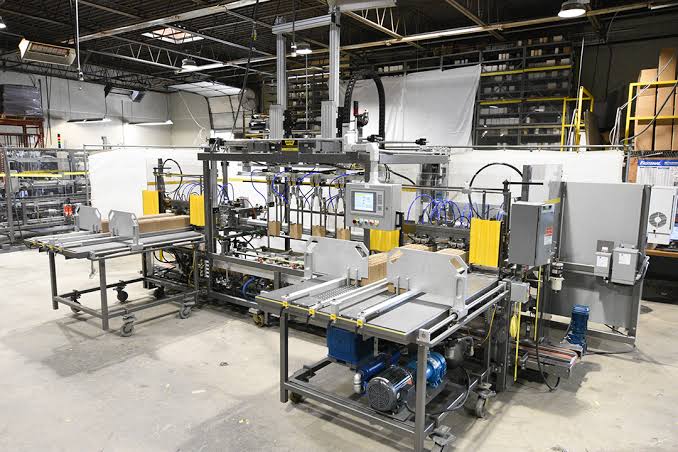
Modern End of Line Packaging Machinery helps manufacturers address these challenges by automating activities performed after products have been filled, wrapped, or placed in their primary packaging. By connecting case forming, packing, sealing, labeling, and palletizing equipment, businesses can create a more organized workflow that moves finished products toward storage and distribution with fewer manual interruptions.
1. Reducing Bottlenecks at the Final Packaging Stage
Packaging bottlenecks occur when finished products arrive faster than employees or machines can process them. For example, a production line may fill hundreds of containers per minute, but manual carton packing and sealing may not keep pace.
This imbalance can lead to product accumulation, temporary line stoppages, and inefficient use of production capacity.
Automated end-of-line systems help synchronize different packaging activities. Case erectors can prepare cartons continuously, case packers can load products, and automatic sealers can close boxes without requiring separate manual operations.
When equipment capacities are properly matched, products can move more smoothly from the primary packaging area to the finished-goods section.
2. Increasing Packaging Speed and Output
Manual packaging requires employees to perform repeated tasks such as picking products, placing them into cartons, folding flaps, and applying tape.
The speed of these activities may vary depending on workload, product dimensions, and staffing levels.
Automatic packaging machines follow programmed operating sequences and can process products at consistent speeds. Their performance depends on equipment design, product characteristics, and production conditions.
Examples include:
- Automatic case packers that load products into shipping cartons.
- Carton sealing machines that close boxes consistently.
- Shrink wrappers that bundle products using protective film.
- Robotic palletizers that arrange cartons into predetermined patterns.
These technologies help manufacturers increase packaging throughput while reducing the time required for repetitive operations.
3. Minimizing Manual Labor and Repetitive Tasks
Many end-of-line activities involve physically demanding work. Employees may need to lift heavy cartons, arrange products, seal boxes, and stack finished cases throughout their shifts.
Automating suitable tasks reduces the amount of repetitive manual handling required.
For example, robotic palletizers can transfer cartons from conveyors to pallets according to programmed stacking patterns. Automatic case packers can handle product placement, while conveyor systems move materials between packaging stations.
This allows employees to focus more on machine supervision, quality checks, material preparation, and maintenance activities.
It can also help reduce physical strain when automation is designed with appropriate workplace safety measures.
4. Improving Packaging Accuracy and Consistency
Packaging errors can result in damaged products, incorrect quantities, poor carton closure, or unsuitable pallet arrangements.
Manual operations may produce variations because of differences in handling methods, employee experience, and workload.
Automated machinery helps reduce these variations through controlled movements and programmed settings.
For instance, a case packing machine can follow a predefined product arrangement, while a carton sealer applies tape along consistent sealing positions.
When combined with inspection systems, automated packaging equipment can also identify selected problems such as missing labels, incorrect package positioning, or damaged cartons.
More consistent packaging can reduce rework and support smoother downstream operations.
5. Reducing Material Waste
Packaging materials represent an important part of manufacturing expenses. Unnecessary tape, stretch film, cartons, and protective materials can increase operating costs.
Modern packaging equipment can help control material usage through adjustable settings and repeatable application processes.
Examples include:
- Stretch wrappers with adjustable film tension and wrapping patterns.
- Carton sealers that apply tape according to box dimensions.
- Shrink wrapping machines with controlled film and heat settings.
- Case forming equipment designed for specific carton specifications.
Correct machine configuration is important. Excessive tension, unsuitable temperature settings, or incorrect material dimensions can still cause waste.
Regular inspections and equipment adjustments help maintain efficient material consumption.
6. Supporting Continuous Production Flow
A production line works more efficiently when each machine can transfer products to the next station without unnecessary delays.
Conveyor systems are an important part of this process. They move cartons, packages, and pallets between different packaging operations.
For example, finished products may travel from a case packing machine to a carton sealer, then to a labeling station and palletizer.
Automated conveyors reduce the need for employees to carry products between these areas. They can also help regulate product movement and maintain suitable spacing between packages.
A well-planned conveyor layout supports continuous material flow and reduces unnecessary handling.
7. Improving Palletizing Efficiency
Palletizing is one of the most labor-intensive activities in many manufacturing facilities.
Employees may need to lift and arrange hundreds of cartons during a shift. Manual stacking can also create inconsistent pallet patterns that affect load stability.
Automatic and robotic palletizers help improve this process by arranging cases according to programmed configurations.
Their benefits may include:
- Consistent carton placement.
- Repeatable pallet patterns.
- Reduced manual lifting.
- Faster preparation of completed loads.
- Better coordination with stretch wrapping and pallet transportation.
Robotic palletizers can be especially useful when manufacturers handle multiple carton sizes or need flexible stacking arrangements.
8. Reducing Product Damage During Handling
Products can become damaged when cartons are handled incorrectly, dropped, compressed, or arranged in unstable pallet loads.
Automated packaging systems help control certain handling activities through programmed movements and suitable product transfer mechanisms.
For example, robotic grippers can be selected according to product shape and weight, while palletizing systems can follow stacking patterns designed to distribute loads appropriately.
Carton sealing and stretch wrapping equipment also help secure packages before transportation.
However, product protection depends on several factors, including packaging material strength, machine settings, pallet design, and transportation conditions.
9. Improving Labor and Equipment Utilization
Manufacturers need to use their available workforce and machinery effectively.
When employees spend most of their time performing repetitive packaging tasks, fewer resources may be available for quality management, production monitoring, and equipment maintenance.
Automation can redistribute responsibilities by allowing machines to handle suitable repetitive operations.
Supervisors can monitor machine performance, while trained operators manage production settings and respond to operational issues.
This approach may improve overall labor utilization, especially in facilities with high packaging volumes.
10. Reducing Downtime Through Better Process Coordination
Unplanned downtime can reduce output and interrupt delivery schedules. Problems at one packaging station may affect the operation of the entire line.
Integrated systems can help reduce certain interruptions by coordinating machine operations and communicating equipment status.
Sensors and control systems can monitor package movement, detect selected faults, and trigger alarms when operating conditions become abnormal.
For example, a sensor may identify a carton jam and stop the affected section before additional products accumulate.
Manufacturers can further improve reliability through preventive maintenance, operator training, and regular inspection of mechanical and electrical components.
11. Making Production Planning More Predictable
Production planning depends on knowing how much finished product can be processed within a specific period.
Manual packaging operations may experience greater variations because output can change with staffing levels, workloads, and handling conditions.
Automated machinery provides more repeatable operating processes when equipment is correctly configured and maintained.
Manufacturers can use production information such as cartons processed per hour, machine availability, downtime, and rejection rates to evaluate performance.
This information supports better planning of production schedules, staffing requirements, and shipping activities.
12. Improving Integration with Warehouse Operations
Production efficiency does not end when cartons are sealed. Finished products must also be identified, moved, stored, and prepared for dispatch.
End-of-line equipment can connect with warehouse operations through pallet conveyors, automated identification systems, and inventory software.
For example, a pallet labeling system can apply identification information before a completed load enters the warehouse.
When integrated with warehouse management systems, this information can help improve inventory visibility and reduce manual data entry.
Better coordination between packaging and warehousing can prevent finished goods from accumulating unnecessarily in production areas.
13. Supporting Flexible Production Requirements
Manufacturers often need to process different products, package sizes, and carton formats on the same production line.
A system designed for only one packaging configuration may require significant manual adjustments when production requirements change.
Modern packaging machinery may include adjustable guides, programmable settings, automatic changeover features, and interchangeable tooling.
These capabilities allow selected machines to accommodate different product formats more efficiently.
For example, a carton sealing machine with adjustable width and height settings may handle several box sizes without requiring a complete equipment replacement.
The level of flexibility depends on the machine’s design and the range of products it is intended to process.
14. Measuring the Impact on Production Efficiency
To understand whether automation is improving performance, manufacturers should monitor measurable operating indicators.
Useful measurements include:
| Performance indicator | What it measures |
|---|---|
| Packaging throughput | Number of packages or cartons processed per hour |
| Equipment availability | Percentage of scheduled time that machinery is operational |
| Downtime | Time lost because of machine faults, adjustments, or other interruptions |
| Rejection rate | Percentage of packages that fail quality requirements |
| Changeover time | Time needed to switch between product or packaging formats |
| Material consumption | Amount of packaging material used per finished unit |
| Labor productivity | Output compared with the labor resources required |
Tracking these indicators before and after automation can help businesses identify improvements and determine whether their investment is delivering practical value.
Best Practices for Getting More Efficiency from Packaging Machinery
Purchasing automated equipment is only one part of improving production performance. Proper planning and ongoing management are equally important.
Manufacturers can follow several practices to achieve better results:
- Analyze existing processes: Identify packaging bottlenecks, repetitive tasks, and sources of product damage.
- Select suitable machine capacity: Ensure that each machine can keep pace with the expected production rate.
- Plan equipment integration: Coordinate conveyors, sensors, controls, and packaging machines to support smooth product movement.
- Train employees: Make sure operators understand machine settings, safety procedures, and basic troubleshooting.
- Schedule regular maintenance: Inspect moving components, sensors, sealing mechanisms, and electrical systems.
- Monitor production data: Review throughput, downtime, material consumption, and rejection rates.
- Plan for future needs: Consider product variety, production expansion, and possible equipment upgrades.
These steps help manufacturers avoid common automation problems and maintain reliable packaging operations over time.
Conclusion
End-of-line packaging automation improves production efficiency by increasing packaging speed, reducing repetitive manual work, maintaining consistent results, and coordinating the movement of finished products. Equipment such as case packers, carton sealers, conveyor systems, stretch wrappers, and robotic palletizers can work together to create a more organized and productive packaging process.
However, the benefits depend on selecting machinery that matches the facility’s production capacity, product characteristics, packaging materials, and available space. Careful integration, employee training, and regular maintenance are also essential for achieving reliable results.
For manufacturers planning to modernize their packaging operations, Techflow Pack offers an industry reference for exploring integrated machinery solutions that support efficient end-of-line processes and long-term production requirements.