Industrial facilities often generate airborne dust during manufacturing, material transportation, grinding, mixing, crushing, and packaging processes. If these particles are not properly controlled, they can affect workplace air quality, create housekeeping challenges, damage equipment, and interfere with production activities. Maintaining a clean working environment is therefore an important part of industrial safety and operational management.
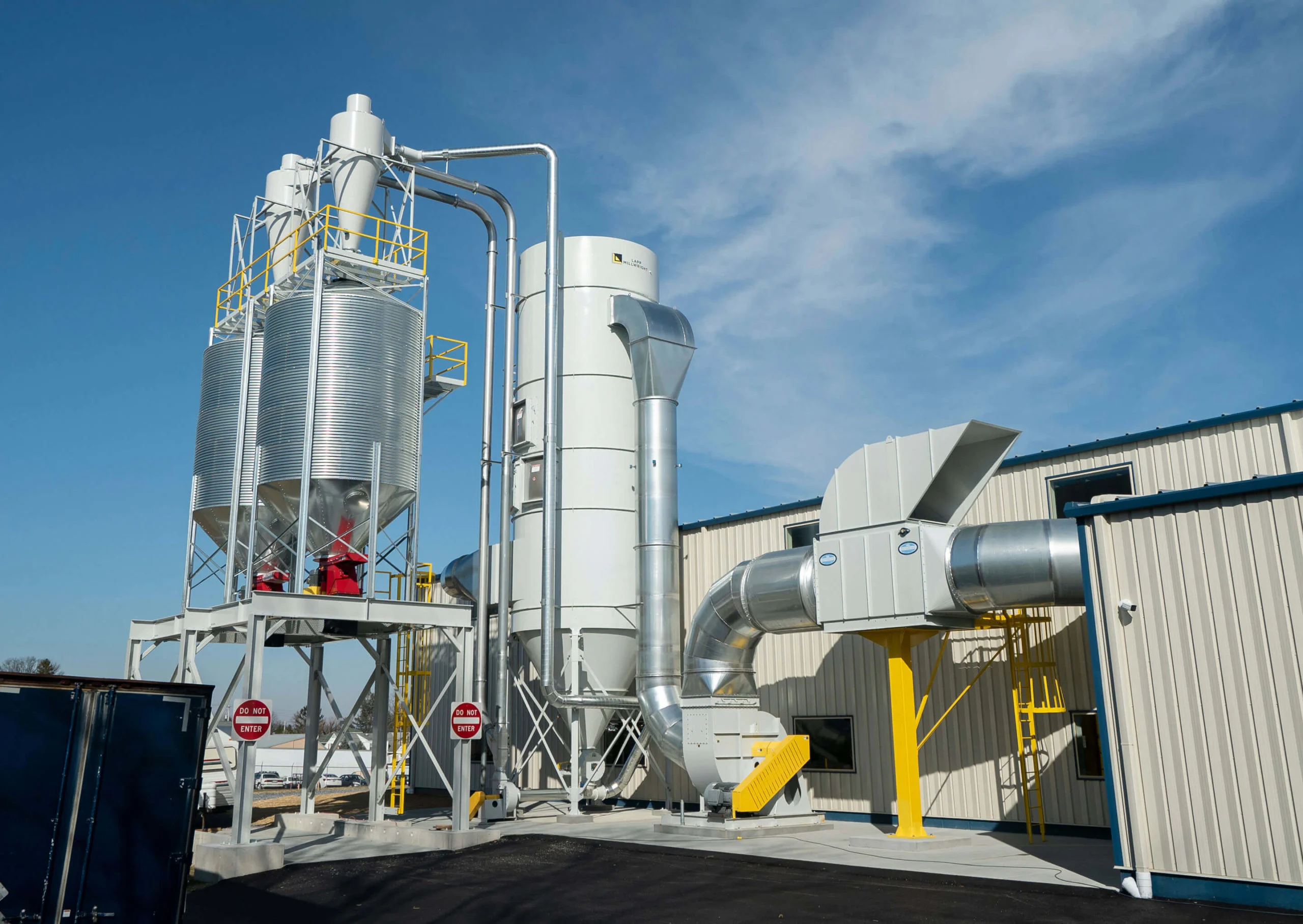
Modern dust control systems help businesses manage airborne particles through specialized filtration and extraction technologies. A properly selected Dust Collector captures dust at its source or removes suspended particles from industrial air, helping maintain cleaner workspaces and more reliable production conditions. These systems are widely used in cement plants, mining facilities, metalworking operations, chemical processing, and other industries where dust generation is a regular concern.
Understanding Industrial Dust Collection Systems
An industrial dust collection system is designed to capture, transport, and separate airborne particles from the surrounding air. It generally consists of a collection hood, ductwork, an air-moving device, filtration components, and a dust discharge arrangement.
When dust is generated during an industrial process, extraction equipment draws contaminated air into the system. The air passes through filtration components that separate dust particles before cleaner air is returned to the workplace or discharged through an appropriate exhaust arrangement.
Different systems are designed to handle specific particle sizes, dust concentrations, airflow requirements, and operating conditions.
Common Types of Industrial Dust Collectors
Selecting the appropriate dust collection technology depends on the nature of the material and the requirements of the facility.
1. Baghouse Dust Collectors
Baghouse systems use fabric filter bags to capture airborne particles as contaminated air passes through them.
Dust accumulates on the filter surfaces, while cleaned air moves through the filtration media. Many industrial baghouses use pulse-jet cleaning systems that periodically release compressed air to remove accumulated dust.
These systems are widely used in cement manufacturing, mining, steel production, and bulk material processing.
2. Cartridge Dust Collectors
Cartridge collectors use pleated filter elements to provide a relatively large filtration surface within a compact housing.
They are commonly used in metalworking, welding, pharmaceutical manufacturing, and other applications involving fine airborne particles.
Their design can support efficient filtration while making filter replacement and maintenance relatively straightforward.
3. Cyclone Dust Collectors
Cyclone collectors use centrifugal force to separate larger particles from an incoming air stream.
As dusty air enters the cylindrical or conical chamber, it moves in a rotating pattern. Heavier particles are driven toward the outer wall and fall into a collection hopper.
Cyclones are frequently used as pre-separators before more advanced filtration equipment.
4. Wet Scrubbers
Wet scrubbers use liquid, usually water or a suitable process solution, to capture particles from contaminated air.
They can be useful in applications where certain dust characteristics make conventional dry filtration less suitable.
However, wet systems require appropriate liquid management, wastewater handling, and maintenance arrangements.
How Dust Collectors Improve Workplace Air Quality
1. Reduction of Airborne Particles
The primary purpose of industrial dust collection is to reduce the concentration of airborne particles.
Dust generated during cutting, grinding, conveying, and processing can remain suspended in the air and spread throughout a facility.
Extraction hoods and filtration systems capture these particles before they circulate extensively, helping create a cleaner working environment.
2. Better Employee Health Protection
Long-term exposure to certain industrial dusts can cause respiratory problems and other health concerns.
Depending on the material, airborne particles may contain substances such as crystalline silica, metal compounds, or chemical residues.
Effective dust control helps reduce employee exposure when supported by suitable workplace ventilation, exposure monitoring, and appropriate respiratory protection.
3. Improved Workplace Visibility
Excessive airborne dust can reduce visibility around machinery, production lines, and storage areas.
Dust collection systems help control suspended particles, making workspaces easier to monitor and supporting safer industrial operations.
4. Reduced Dust Accumulation
Dust can settle on floors, machinery, electrical equipment, and other surfaces.
A properly designed extraction system helps reduce the amount of airborne material that eventually accumulates throughout the facility.
This can simplify housekeeping activities and reduce the frequency of equipment cleaning.
How Industrial Dust Collectors Improve Production Efficiency
Reduced Equipment Contamination
Dust accumulation can affect motors, bearings, electrical components, sensors, and other machinery.
By controlling airborne particles, industrial filtration systems help reduce contamination around sensitive equipment.
This can support more reliable operation and reduce certain maintenance requirements.
Fewer Production Interruptions
Excessive dust can interfere with processing activities and create additional cleaning requirements.
Capturing particles near their source helps maintain cleaner production areas and reduces the likelihood of dust-related operational disruptions.
Improved Product Quality
In industries such as food processing, pharmaceuticals, chemicals, and electronics manufacturing, airborne contamination can affect product quality.
Appropriate dust collection systems help control unwanted particles and support cleaner manufacturing conditions.
The filtration design must match the specific cleanliness and contamination-control requirements of the production process.
Better Material Recovery
Some industrial dust contains valuable raw materials or recoverable product particles.
Depending on the material and process design, collection systems can capture these particles for possible reuse or controlled disposal.
This can reduce material waste and improve resource utilization.
Important Factors to Consider When Selecting an Industrial Dust Collector
Choosing suitable dust collection equipment requires more than comparing filter sizes or motor specifications.
Several technical and operational factors should be evaluated.
1. Dust Characteristics
The physical and chemical properties of the dust determine which filtration technology is appropriate.
Important characteristics include:
- Particle size and distribution.
- Dust concentration in the air.
- Moisture content.
- Abrasiveness and corrosiveness.
- Temperature of the incoming air.
- Chemical composition and potential toxicity.
- Combustibility and explosion characteristics.
For example, fine particles may require specialized filter media, while abrasive dust may require more durable internal components.
2. Airflow Capacity
A dust collector must provide sufficient airflow to capture airborne particles effectively.
The required airflow depends on the number of extraction points, hood design, duct dimensions, particle generation rate, and distance between collection points.
An undersized system may allow dust to escape into the workplace, while an oversized installation can increase energy consumption unnecessarily.
3. Filtration Efficiency
Filtration efficiency determines how effectively the system removes particles from contaminated air.
The appropriate filter media should be selected according to particle size, operating temperature, moisture exposure, and required emission limits.
Facilities should also consider filter cleaning methods, pressure drop, and replacement intervals.
4. Installation Space and System Layout
The physical layout of a facility influences dust collection system design.
Ductwork routes, extraction hood positions, equipment access, and available installation space should be evaluated before installation.
Locating extraction points close to dust-generating processes generally improves collection performance and reduces the amount of airborne material that spreads throughout the facility.
5. Energy Consumption and Operating Costs
Fans, motors, compressed air systems, and filtration components contribute to the operating cost of dust collection equipment.
Energy-efficient motors, suitable fan selection, optimized ductwork, and automatic cleaning controls can help reduce unnecessary power consumption.
Businesses should evaluate the total cost of ownership, including electricity, filter replacement, maintenance, and disposal expenses.
The Role of Automation in Modern Dust Collection Systems
Automation is improving the monitoring and operation of industrial dust collection equipment.
Modern systems can incorporate sensors and control devices that monitor operating conditions and adjust equipment performance according to process requirements.
Common features include:
- Differential pressure monitoring across filters.
- Automatic pulse-jet filter cleaning.
- Fan speed regulation.
- Temperature monitoring.
- Airflow measurement.
- Fault detection and operating alarms.
Differential pressure monitoring is particularly useful because it helps operators identify when filters are becoming loaded with accumulated dust.
Automated cleaning systems can then remove collected particles according to programmed settings or measured operating conditions.
These features support more consistent filtration performance and help maintenance teams plan servicing activities.
Safety and Environmental Considerations
Industrial dust control is closely connected to workplace safety and environmental compliance.
Certain combustible dusts, including some organic powders and metal particles, can create fire or explosion hazards under specific conditions.
Facilities handling these materials should conduct appropriate dust hazard assessments and implement suitable engineering controls.
Depending on the application, safety measures may include explosion venting, isolation systems, suppression equipment, grounding, and ignition source control.
Environmental considerations are also important. Dust collection systems should be designed to meet applicable emission requirements and manage collected material safely.
Returning filtered air indoors should only be considered where permitted and where the system provides appropriate filtration and safeguards for the specific application.
Maintenance Practices for Long-Term Performance
Regular maintenance is necessary to keep industrial dust collectors operating effectively.
A preventive maintenance program should include:
- Inspecting filter bags or cartridge elements for damage and excessive buildup.
- Checking differential pressure readings and airflow performance.
- Inspecting fans, motors, bearings, and drive components.
- Checking ductwork connections for leakage.
- Cleaning dust hoppers and inspecting discharge mechanisms.
- Examining compressed air systems used for filter cleaning.
- Testing monitoring devices and safety controls.
Maintenance schedules should follow manufacturer recommendations and reflect the type and concentration of dust being handled.
Timely servicing helps maintain filtration performance, reduce equipment downtime, and extend component service life.
Future Developments in Industrial Dust Collection Technology
Industrial dust collection technology continues to evolve through improvements in filtration materials, automation, and energy management.
Advanced filter media are being developed to provide improved particle capture and longer service intervals under suitable operating conditions.
Smart monitoring systems can also analyze pressure, airflow, temperature, and equipment performance to identify developing problems.
Another important development is the integration of dust collection equipment with broader industrial ventilation and environmental management systems.
These improvements are helping facilities manage airborne contaminants more effectively while optimizing operating costs.
Conclusion
Industrial dust collectors play an essential role in maintaining workplace air quality and supporting efficient production operations. By capturing airborne particles, reducing equipment contamination, improving housekeeping, and helping protect employees from dust exposure, these systems provide important benefits across multiple industrial sectors.
Selecting the right equipment requires careful consideration of dust characteristics, airflow capacity, filtration efficiency, installation conditions, and maintenance requirements.
When combined with appropriate ventilation design, automation, preventive maintenance, and safety controls, an effective dust collection system can help industrial facilities create cleaner working environments and maintain more reliable long-term operations.