

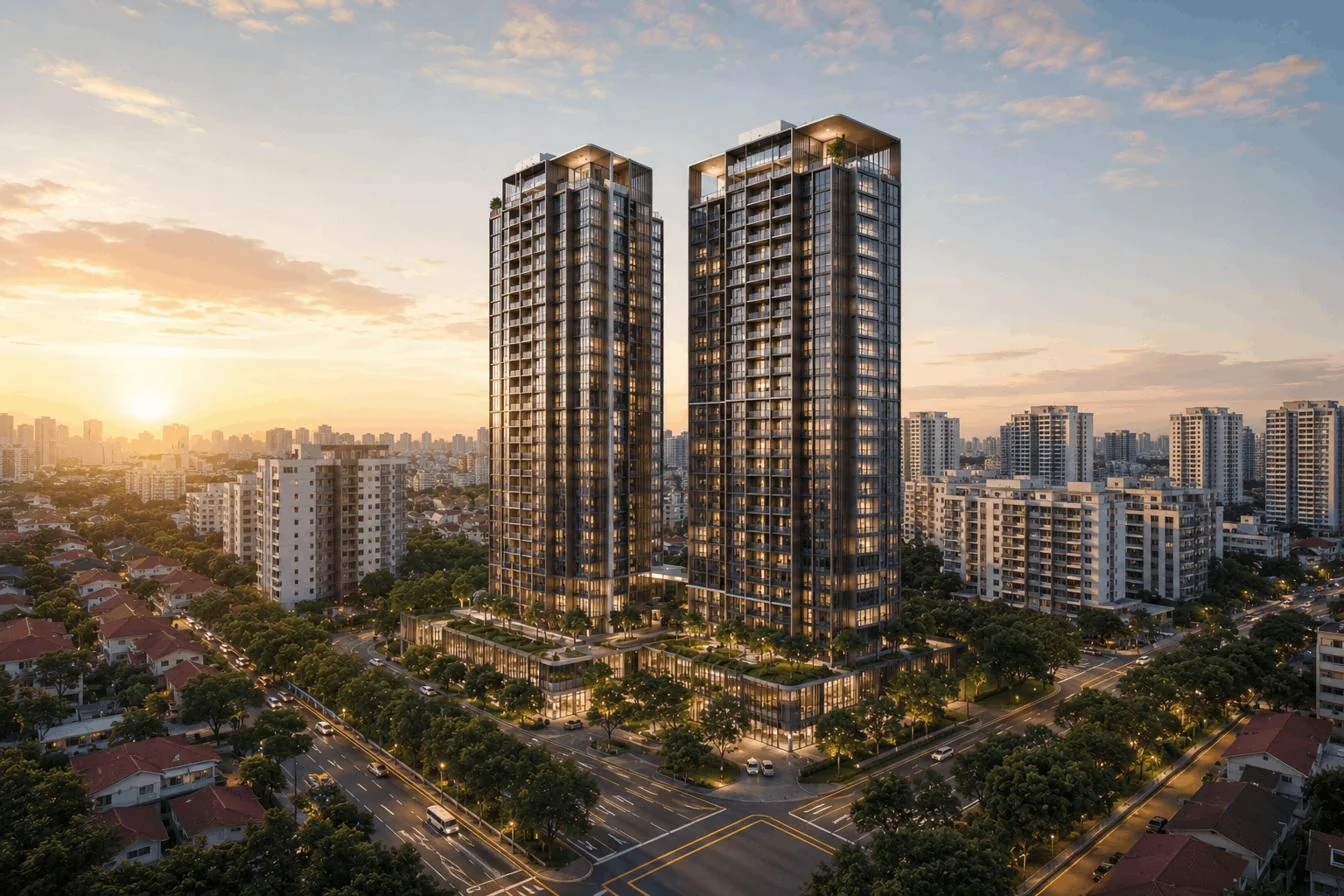
The residential environment surrounding a home can influence everyday routines as much as the property itself. Factors such as neighbourhood character, transport access, nearby amenities, green spaces, and the arrangement of residential areas can all shape how a location functions for its residents.
For those researching Dorset Gardens, the development’s Farrer Park setting provides an established urban environment with a mixture of residential, commercial, community, and recreational spaces. Understanding these surrounding characteristics can help prospective residents assess the location from a practical perspective.
An Established Urban Neighbourhood
The area around Dorset Road forms part of the established Farrer Park district. Rather than being a newly built residential zone, the neighbourhood has a mixture of older properties, newer developments, local businesses, and community facilities.
This combination contributes to a varied streetscape. Residents can experience the convenience of a mature neighbourhood while also having access to modern services and facilities in the surrounding area.
Residential Character
The wider neighbourhood includes different types of residential properties, creating a diverse urban setting. The character of individual streets can vary depending on building type, road activity, and nearby commercial uses.
For prospective residents, this makes it useful to assess the immediate surroundings of an individual unit. Factors such as views, neighbouring buildings, pedestrian activity, and proximity to busier roads may differ from one position to another.
Public Transport Access
Transport accessibility is an important part of the residential environment. Farrer Park MRT station provides access to the North East Line, connecting residents with various parts of Singapore.
Bus services in the surrounding area provide additional travel options. The availability of multiple forms of public transportation can be useful for households with different commuting patterns.
Nearby Shopping and Services
An established neighbourhood generally provides access to everyday services without requiring residents to travel long distances. The area around Farrer Park includes shopping destinations, supermarkets, local retailers, restaurants, and other businesses.
City Square Mall and Mustafa Centre are notable retail destinations in the wider vicinity. Smaller shops and independent businesses also contribute to the everyday character of the surrounding streets.
Dining and Local Food Culture
Food is another notable part of the local environment. Farrer Park and nearby Little India offer a variety of restaurants, cafes, hawker stalls, and traditional food establishments.
Pek Kio Market and Food Centre provides another option for local meals and fresh provisions. The diversity of nearby food choices can be useful for residents with different dining habits and budgets.
Access to Healthcare
Healthcare facilities are also relevant when considering the practicality of a residential location. Farrer Park Hospital and Farrer Park Medical Centre are located within the broader Farrer Park precinct.
Other healthcare institutions are accessible from the neighbourhood by public transport and road. Residents can therefore consider both nearby services and wider healthcare connections when assessing the area.
Educational Facilities
Families may place particular importance on nearby schools and educational institutions. The wider Farrer Park and central Singapore area includes several schools and learning facilities.
However, school proximity should be considered separately from admission eligibility. Parents should verify current school policies, registration requirements, catchment information, and vacancies before making decisions based on education access.
Green Spaces and Recreation
Although the neighbourhood has an urban character, recreational and green spaces are available nearby. Parks, sports facilities, and community spaces can provide opportunities for outdoor activities and leisure.
These facilities can be especially useful for residents who want to incorporate exercise or time outdoors into their regular routines.
Community Facilities
Community centres and public facilities form another part of the neighbourhood environment. They may provide programmes, activities, and services for residents across different age groups.
Such facilities can also create opportunities for community interaction and provide additional resources beyond those available within an individual residential development.
Noise, Traffic, and Surrounding Activity
An established central location can bring convenience, but it may also involve more activity than quieter suburban areas. Traffic, public transport use, commercial activity, and pedestrian movement can vary throughout the day.
Prospective residents should consider these factors when evaluating individual units. Visiting the area during morning, afternoon, evening, and weekend periods can help provide a more representative impression of the environment.
What Prospective Residents Should Examine
Before choosing a home, it can be useful to assess the residential environment using a practical checklist:
- Accessibility to MRT stations and bus stops
- Walking routes and pedestrian conditions
- Nearby shopping and food options
- Schools and healthcare facilities
- Availability of parks and recreational spaces
- Traffic and noise levels
- Surrounding buildings and views
- Community facilities
- Convenience of regular commuting routes
The importance of each factor will depend on individual household requirements.
Looking at the Development in Context
A residential development should not be evaluated separately from its surroundings. The neighbourhood determines many of the services, transport options, and lifestyle opportunities available outside the home.
For anyone considering Dorset Gardens, examining the development together with the wider Farrer Park environment can provide a more complete perspective. A neighbourhood visit can also reveal practical details that may not be obvious from maps, photographs, or floor plans.
Final Thoughts
The residential environment around Dorset Gardens combines an established urban setting with access to transportation, shopping, dining, healthcare, education, recreation, and community facilities. These elements can influence the practical experience of living in the area.
Prospective residents should assess the location according to their own routines and priorities. Reviewing the immediate surroundings, testing daily travel routes, and visiting at different times can help provide a clearer understanding of the residential environment before making a decision.

