A strong visual identity helps a business become recognizable and memorable in a competitive market. From logos and brand colors to storefront displays and interior decorations, every visual element contributes to how customers perceive a company. Commercial signage is especially important because it communicates a brand’s presence both inside and outside its physical location.
LED neon signs offer businesses a flexible way to display their names, logos, slogans, and distinctive design elements. By providing customized lighting solutions, experienced LED Neon Sign Manufacturers help companies translate their branding concepts into illuminated displays that reflect their personality and design preferences. These signs can support brand recognition while creating a consistent visual experience across different commercial spaces.
1. Turning Brand Logos into Illuminated Displays
A business logo is one of the most recognizable parts of its visual identity. Displaying it through LED neon lighting can make the design more noticeable and create a distinctive feature within a commercial environment.
Manufacturers can work with supplied artwork to develop signs that reproduce brand symbols, lettering, and graphic elements. The design process may involve adjusting proportions, simplifying complex details, and selecting suitable lighting materials to achieve a clear result.
Accurate logo reproduction helps businesses maintain visual consistency while introducing a new form of signage.
2. Maintaining Consistent Brand Colors
Color plays an important role in brand recognition. Customers often associate particular colors with a company, product category, or business personality.
LED neon signs are available in different colors, allowing businesses to incorporate their established brand palette into illuminated displays. Manufacturers can help determine which colors are suitable for the design and how they will appear under different lighting conditions.
For businesses with detailed branding guidelines, confirming color choices during the design approval stage can help maintain consistency across signage and other marketing materials.
3. Creating Memorable Storefront Signage
Storefront signage is often the first visual introduction customers have to a physical business. A well-designed illuminated sign can make a location easier to identify and help it stand out among nearby shops or commercial properties.
LED neon signs can display business names, logos, short messages, and decorative graphics. Their flexible design options allow companies to create signage that reflects the character of their brand rather than relying on generic display formats.
Readability should remain a priority. Letter size, contrast, brightness, and viewing distance all influence how effectively a storefront sign communicates its message.
4. Strengthening Interior Brand Experiences
Visual identity is not limited to exterior signage. The appearance of a business interior also influences how customers experience and remember a brand.
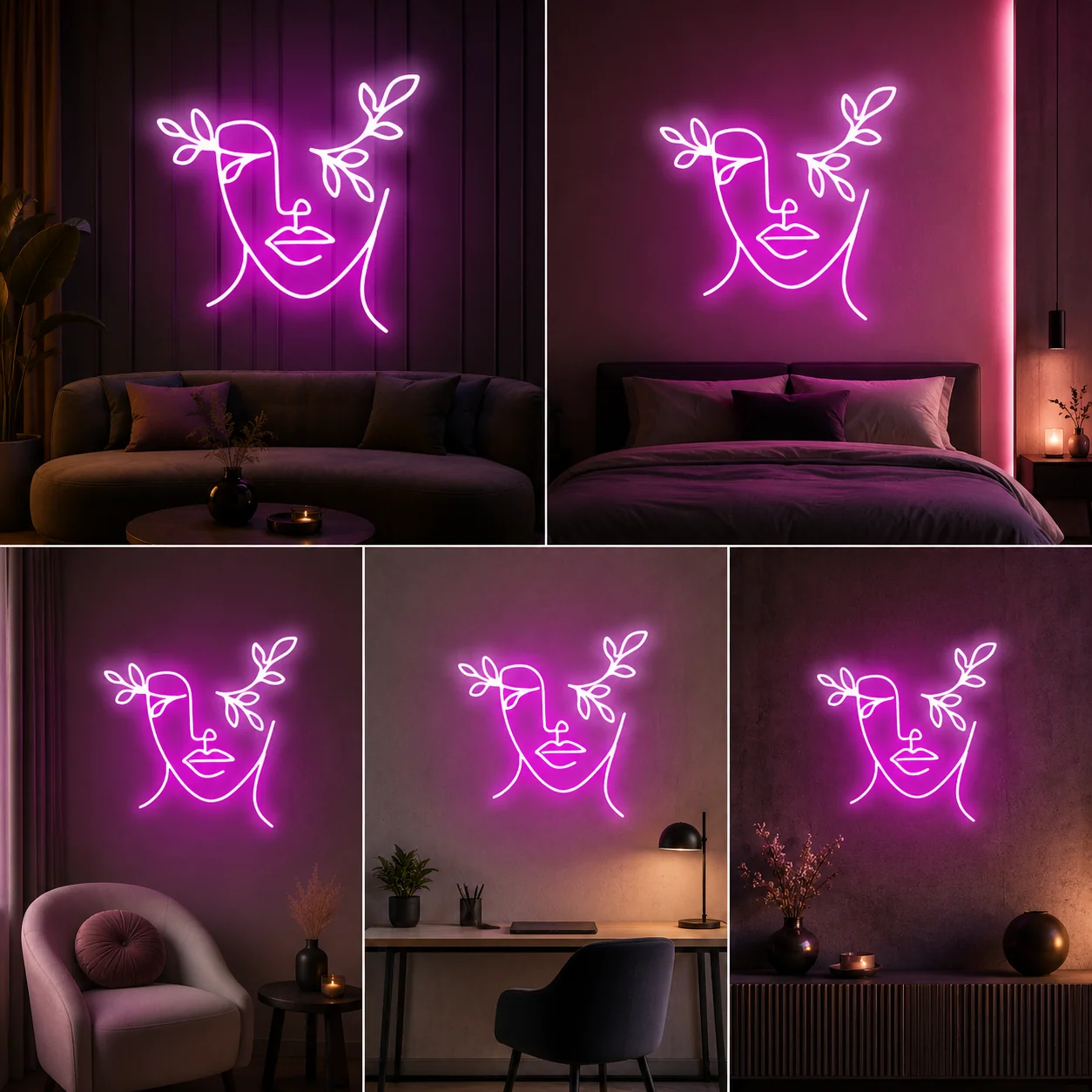
LED neon signs can be incorporated into reception areas, feature walls, product displays, restaurants, and customer waiting spaces. An illuminated logo behind a reception desk, for example, can reinforce brand recognition while contributing to the overall interior design.
Businesses can also use short brand messages or signature graphics to create visually consistent spaces throughout their premises.
5. Supporting Custom Design Requirements
Every business has different branding needs. A technology company may prefer a clean, modern design, while a café might choose playful lettering and decorative illustrations.
Custom manufacturing allows businesses to select design elements that reflect their intended image. Common options include:
- Customized lettering and typography.
- Brand logos and graphic symbols.
- Different dimensions and sign shapes.
- Single-color or multicolor lighting.
- Decorative outlines and visual accents.
These options help companies create displays that feel connected to their brand rather than appearing like standard, mass-produced signage.
6. Improving Brand Visibility in Different Environments
Businesses often use signage in several locations, including storefronts, exhibitions, offices, shopping centers, and promotional events. LED neon displays can be designed for different environments while maintaining recognizable branding elements.
A company might use a large illuminated logo at its main entrance and smaller branded displays in meeting rooms or exhibition booths. Repeating key visual elements across these locations helps create a more unified identity.
The manufacturer should consider the intended installation environment when selecting materials, brightness levels, and mounting arrangements.
7. Helping Businesses Create Social Media-Friendly Spaces
Physical spaces increasingly contribute to a company’s online visibility. Customers may photograph distinctive interiors, decorative walls, or illuminated brand messages and share them on social media.
A thoughtfully designed LED neon display can become a recognizable background for customer photos and promotional content. Restaurants, cafés, retail stores, and entertainment venues may use these displays to create visually appealing spaces.
However, the sign should still serve the business’s overall design and communication goals. A display that clearly reflects the brand is generally more useful than one chosen only for decoration.
8. Communicating Brand Personality Through Lighting
Different visual styles can create different impressions. Minimal lettering and subtle illumination may suit a professional office, while bright colors and creative shapes may better match an entertainment venue or casual retail brand.
LED neon signs give businesses opportunities to express these characteristics through typography, color, layout, and lighting intensity.
Manufacturers can help translate the intended design direction into a practical product by considering the available materials, sign dimensions, and technical requirements.
9. Supporting Brand Consistency Across Multiple Locations
Businesses with several branches need signage that maintains a recognizable appearance across different locations. Inconsistent logos, colors, or lettering can weaken the overall brand presentation.
Custom LED neon signs can be produced using consistent design specifications, helping companies repeat important visual elements across their locations. Before ordering multiple signs, businesses should confirm dimensions, colors, materials, and artwork details.
Standardized specifications can also make future replacement orders or additional installations easier to coordinate.
10. Combining Visual Appeal with Practical Performance
A strong visual identity needs signage that looks attractive while remaining suitable for everyday business use. Lighting quality, material selection, electrical safety, and installation requirements all influence the final result.
Manufacturers should explain the differences between indoor and outdoor specifications, available power options, mounting methods, and maintenance needs. Businesses should also review warranty information and product details before placing an order.
Balancing design and practical performance helps ensure that illuminated branding remains effective in its intended environment.
Conclusion
LED neon signs give businesses a versatile way to communicate their identity through illuminated logos, customized lettering, brand colors, and decorative displays. They can strengthen storefront recognition, support interior design, and create consistent visual experiences across different commercial locations.
By considering design accuracy, lighting performance, material quality, and installation requirements, businesses can develop signage that reflects their brand personality and serves a clear purpose. A well-planned LED neon display can become a lasting part of a company’s visual identity and customer experience.