Solar power systems convert sunlight into electricity, providing a renewable energy source for homes, businesses, industries, and utility-scale power plants. However, generating electricity is only one part of the process. Efficiently converting, managing, and delivering that electricity to the grid or end users is equally important. Electrical equipment must work together to maintain stable voltage, minimize losses, and support reliable power transmission.
A Solar Transformer plays an important role in this process by adjusting voltage levels to match the requirements of solar inverters, distribution networks, and utility grids. Choosing suitable transformer equipment can help reduce electrical losses, improve system reliability, and support the long-term performance of solar installations.
What Is a Solar Transformer?
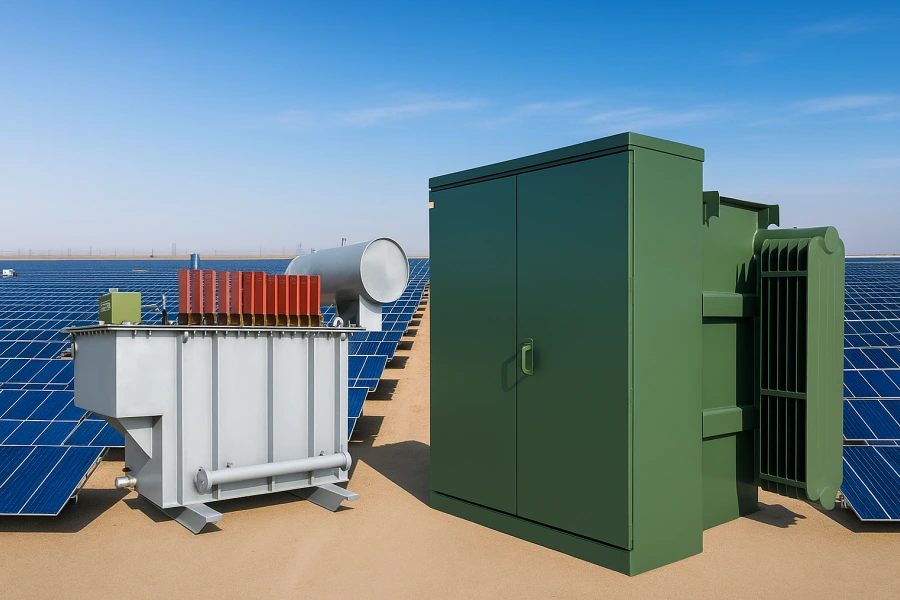
A solar transformer is an electrical transformer designed for use in photovoltaic power generation systems. Its primary function is to transfer electrical energy between circuits while increasing or decreasing voltage to suit the needs of the installation.
Solar panels generate direct current (DC), which is converted into alternating current (AC) by inverters. Depending on the system configuration, a transformer may then raise the AC voltage for grid connection or adjust it for local distribution and equipment requirements.
Solar transformers are used in residential and commercial installations, industrial solar projects, and large solar farms. Their ratings and design characteristics vary according to system capacity, operating conditions, and grid interconnection requirements.
How Solar Transformers Improve Energy Conversion
Transformers do not directly convert sunlight into electricity or change DC power into AC power. Instead, they support the electrical conversion process by managing AC voltage after the inverter stage and helping deliver power efficiently to its intended destination.
1. Matching Voltage Levels
Solar inverters typically produce AC electricity at a voltage suitable for the inverter output and associated equipment. However, the voltage needed for a utility connection or distribution network may be considerably higher.
A step-up transformer increases the voltage to the required level, allowing electricity to be transmitted with lower current for the same power transfer. In other installations, step-down transformers reduce voltage to levels suitable for local loads.
Correct voltage matching helps the solar system operate within the electrical limits specified by the grid operator and equipment manufacturers.
2. Reducing Electrical Transmission Losses
Electrical conductors experience resistive losses as current flows through them. These losses increase with the square of the current, making current management an important consideration in power distribution.
For a given amount of power, increasing transmission voltage generally reduces the current required. A suitable step-up transformer can therefore help reduce losses in downstream conductors, provided the system is designed and operated correctly.
Transformers also consume some energy through winding resistance and core losses. Selecting an efficient model and operating it within an appropriate loading range helps balance these losses against the benefits of voltage transformation.
3. Supporting Stable Grid Integration
Solar power output varies with sunlight intensity, weather conditions, and panel temperature. These variations can affect the amount of electricity delivered to the grid throughout the day.
A properly selected transformer helps provide the voltage interface required for grid connection. However, voltage regulation and grid stability also depend on inverter controls, protection systems, network characteristics, and utility requirements.
Coordinated design across these components helps a solar installation respond appropriately to changing operating conditions.
Types of Transformers Used in Solar Power Systems
Different solar projects require different transformer configurations. The most suitable type depends on system capacity, voltage requirements, installation environment, and connection architecture.
Step-Up Transformers
Step-up transformers increase the AC voltage produced by solar inverters. They are commonly used in commercial installations and utility-scale solar farms where electricity must be transferred to a medium-voltage collection network or grid connection point.
Their capacity should account for expected power output, inverter characteristics, ambient temperature, harmonics, and potential future expansion.
Step-Down Transformers
Step-down transformers reduce voltage to a level suitable for local distribution or electrical equipment. They may be used where solar-generated electricity needs to supply building loads, industrial facilities, or other downstream systems.
Correct sizing helps ensure that the transformer can handle expected demand without excessive losses or overheating.
Distribution Transformers
Distribution transformers are used to supply electricity at voltage levels appropriate for local networks and end users. In solar applications, they may form part of the connection between a photovoltaic installation and a distribution grid.
Their design must suit the direction and pattern of power flow, expected loading, and utility interconnection requirements.
Oil-Immersed Transformers
Oil-immersed transformers use insulating liquid for electrical insulation and heat transfer. They are commonly considered for outdoor and larger-capacity installations where their cooling performance and established design characteristics suit the project.
Selection should account for fire safety, fluid containment, environmental requirements, maintenance access, and the properties of the insulating liquid.
Dry-Type Transformers
Dry-type transformers use solid insulation and air-based or other non-liquid cooling arrangements rather than insulating oil. They may be suitable for indoor installations, commercial buildings, and locations where liquid containment is undesirable.
The appropriate design depends on ventilation, ambient conditions, fire protection requirements, enclosure rating, and the electrical load.
Key Factors That Influence Solar Transformer Efficiency
Transformer efficiency depends on more than its rated capacity. Several technical and environmental factors influence energy losses and operating performance.
Transformer Loading
Transformers experience core losses when energized and load-related losses that generally increase with current. A transformer that is significantly oversized may spend much of its operating life at low load, while an undersized unit may experience excessive heating and loading during periods of high solar output.
Engineers should evaluate expected generation profiles, inverter ratings, load patterns, and permissible overload conditions when selecting transformer capacity.
Core and Winding Materials
Core materials influence magnetic losses, while conductor materials and winding design affect electrical resistance and heat generation.
High-efficiency core designs and appropriately sized windings can reduce losses throughout the operating life of a transformer. However, material selection should be assessed alongside purchase cost, temperature rise, reliability, and applicable efficiency requirements.
Cooling and Temperature Management
Solar installations may operate in hot outdoor environments, where elevated ambient temperatures affect transformer cooling and insulation aging.
Appropriate cooling arrangements, ventilation, temperature monitoring, and installation clearances help maintain acceptable operating temperatures. The cooling system must be suitable for the expected load and environmental conditions.
Harmonic Distortion
Inverters use power electronics that can introduce harmonic components into electrical waveforms. Depending on the inverter design and system configuration, these harmonics may increase transformer heating and losses.
Transformer selection should consider the expected harmonic spectrum, neutral current where relevant, and any special duty requirements specified by the project engineer or manufacturer.
Voltage Regulation and Impedance
Transformer impedance affects voltage drop, short-circuit current, and interactions with the wider electrical network. Poorly matched equipment can contribute to voltage variation or complicate protection coordination.
Engineers should verify transformer impedance, tap settings, voltage ratio, and regulation requirements during system design.
How to Choose the Right Solar Transformer
Selecting an appropriate transformer begins with a detailed review of the solar installation and its grid connection.
Determine the Required Capacity
Transformer capacity should be matched to inverter output, expected operating conditions, and the maximum permitted power flow. Engineers should also consider ambient temperature, altitude, harmonics, reactive power requirements, and any applicable derating factors.
A well-planned capacity assessment helps avoid unnecessary capital expenditure while maintaining adequate operating margins.
Confirm Primary and Secondary Voltages
The transformer’s voltage ratio must match the inverter output and the receiving network. The design should also specify the required tap range, insulation level, frequency, and connection arrangement.
These details are particularly important for installations connecting to medium-voltage distribution systems or higher-voltage networks.
Evaluate Installation Conditions
Outdoor solar farms may require weather-resistant enclosures and protection against dust, moisture, corrosion, and high ambient temperatures. Indoor installations may have different ventilation, fire protection, and access requirements.
The transformer location should provide suitable clearances, safe access for maintenance, and appropriate protection against environmental hazards.
Review Standards and Testing
Transformer equipment should comply with applicable national regulations, utility requirements, and relevant international standards, such as the appropriate parts of the IEC 60076 series.
Before procurement, project teams should review technical specifications, routine test reports, type-test evidence where applicable, and manufacturer documentation. Grid operators may also require specific interconnection studies or equipment approvals.
Compare Total Cost of Ownership
The purchase price is only one part of the total cost of a transformer. Energy losses, maintenance requirements, expected service life, spare-parts availability, and downtime risks can all influence long-term project costs.
Comparing these factors helps developers evaluate whether a higher-efficiency model offers meaningful savings over the planned operating period.
Maintenance Practices for Long-Term Performance
Routine maintenance helps identify developing problems before they cause equipment failure or power interruptions. Inspection requirements vary according to transformer type, operating environment, manufacturer guidance, and local regulations.
Typical maintenance activities include:
- Inspecting bushings, terminals, connections, and enclosure condition.
- Monitoring operating temperature and loading levels.
- Checking for unusual noise, vibration, overheating, or signs of leakage.
- Testing protective devices and reviewing alarm records.
- Examining insulating liquid condition in oil-immersed units where appropriate.
- Keeping accurate inspection, testing, and maintenance records.
Electrical testing and servicing should be performed by qualified personnel following approved isolation procedures. Maintenance intervals should be based on manufacturer recommendations and the actual operating conditions of the installation.
Common Solar Transformer Challenges
Even a well-designed solar power system can experience transformer-related issues if equipment is poorly selected, installed, or maintained.
Overheating may result from excessive loading, high ambient temperatures, inadequate cooling, harmonics, or deteriorated connections. Monitoring temperatures and investigating abnormal readings can help identify the cause.
Voltage fluctuations may arise from changing solar output, grid conditions, unsuitable transformer settings, or interactions between inverters and the network. Correct transformer specifications and coordinated inverter controls help address these issues.
Insulation deterioration can develop through thermal stress, moisture ingress, contamination, or aging. Appropriate environmental protection and condition-based maintenance help reduce the likelihood of unexpected failures.
Unexpected shutdowns may be linked to protective device operation, internal faults, or external network disturbances. Reviewing event records and conducting systematic fault analysis can help determine the underlying cause.
The Role of Solar Transformers in Renewable Energy Growth
As solar installations expand, reliable voltage transformation becomes increasingly important for integrating renewable generation into existing electrical networks. Transformers support the connection between inverter systems, collection networks, distribution infrastructure, and utility grids.
Their performance can influence energy losses, system availability, maintenance costs, and the ability of a solar installation to meet grid connection requirements. As a result, transformer selection should be treated as an integral part of the overall electrical design rather than an isolated purchasing decision.
Modern monitoring technologies and improved transformer designs can further support condition assessment, efficient operation, and long-term asset management.
Conclusion
Solar transformers help photovoltaic systems deliver electricity at the voltage levels required by local loads and power networks. By supporting efficient power transfer, appropriate voltage matching, and reliable grid integration, they contribute to the overall performance of renewable energy installations.
Achieving these benefits requires careful consideration of transformer capacity, efficiency, cooling, harmonics, insulation, environmental conditions, and maintenance requirements. When selected and managed as part of a coordinated electrical system, the right transformer can help solar projects reduce avoidable losses, improve reliability, and deliver dependable energy over their operating life.