Philodendrons have become important plants in the tropical horticulture industry because of their attractive foliage, diverse growth habits, and suitability for indoor and ornamental landscapes. From familiar green varieties to distinctive cultivars with colorful or textured leaves, they offer opportunities for nurseries, commercial growers, and plant retailers to serve different customer markets. As demand for ornamental tropical plants continues to develop, growers are looking for propagation methods that provide reliable production and consistent plant quality.
Tissue Culture Philodendron propagation is an increasingly valuable approach for modern plant production. By multiplying selected plant material under controlled laboratory conditions, tissue culture enables growers to produce numerous young plants from carefully chosen source material. When combined with proper acclimatization and nursery management, this technique can support efficient production, variety preservation, and the expansion of commercial Philodendron collections.
1. Understanding Tissue Culture Propagation
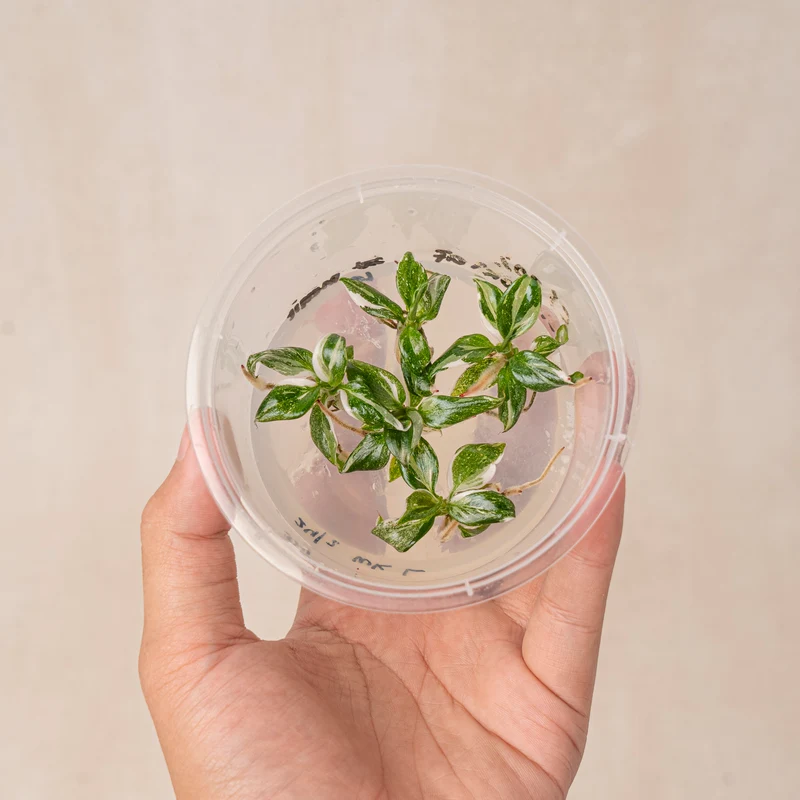
Tissue culture, also known as micropropagation, is a plant propagation technique that uses small sections of plant tissue to produce new plants in a controlled environment. The process typically takes place in sterile laboratory containers containing a nutrient medium designed to support plant development.
For Philodendrons, this method allows selected varieties to be multiplied without depending entirely on conventional stem cuttings or division. Depending on the plant variety and laboratory protocol, tissue culture can produce multiple plantlets from a limited amount of starting material.
The process generally involves several stages:
- Selection of source material: Healthy mother plants are selected to provide suitable explants.
- Surface sterilization: Plant material is treated to reduce contamination before laboratory cultivation.
- Culture initiation: Prepared tissue is placed on a suitable nutrient medium.
- Shoot multiplication: Controlled conditions encourage the development of new shoots.
- Root development: Plantlets are transferred to conditions that support root formation.
- Acclimatization: Young plants gradually adapt to greenhouse or nursery environments.
Each stage requires appropriate techniques and environmental control to maintain healthy plant development.
2. Supporting Large-Scale Philodendron Production
One of the main advantages of tissue culture is its potential to support large-scale propagation. Traditional methods may require substantial quantities of mother plants and considerable time to produce enough cuttings for commercial orders.
Micropropagation offers an alternative by allowing selected plant material to multiply under controlled conditions. This can help laboratories produce larger numbers of young plants while making more efficient use of limited starting material.
For commercial nurseries, a scalable supply of young Philodendrons can support:
- Regular inventory planning
- Larger wholesale orders
- Expansion into new plant varieties
- More organized production schedules
- Supply for garden centers and retailers
Actual production capacity depends on the variety, laboratory protocols, available facilities, and production cycle. Businesses should discuss expected quantities and delivery schedules with their suppliers before planning large orders.
3. Improving Plant Uniformity and Variety Consistency
Consistency is important in commercial plant production. Retailers and wholesale buyers generally prefer plants that have recognizable characteristics and meet expected quality standards.
Tissue culture can help maintain uniformity when suitable source material and reliable propagation protocols are used. This is particularly valuable for businesses producing named Philodendron cultivars, where leaf shape, coloration, and growth characteristics influence customer expectations.
However, uniformity is not automatic. The choice of source plant, culture conditions, and propagation techniques can influence the final results. Some varieties, particularly those with distinctive variegation, may require additional selection and quality control.
Growers should therefore work with suppliers who can provide accurate variety identification and information about their production standards.
4. Expanding Access to Popular Philodendron Varieties
Philodendrons include many varieties with different foliage characteristics and commercial appeal. Some are widely recognized for their attractive leaves, while others are valued by collectors for unusual colors, textures, or growth patterns.
Popular examples include:
- Philodendron Birkin: Recognized for its dark green leaves with contrasting pale patterns.
- Philodendron Pink Princess: Valued for its distinctive pink and green foliage.
- Philodendron gloriosum: Known for its large, velvety leaves and prominent veins.
- Philodendron hederaceum: A versatile climbing plant with heart-shaped leaves.
- Philodendron selloum: Appreciated for its large, deeply divided foliage.
- Philodendron micans: Popular for its soft-textured leaves and subtle color variations.
Tissue culture can help suppliers multiply selected varieties and make them available to a broader range of growers. Buyers should confirm the exact cultivar and expected characteristics before ordering, especially when purchasing specialty or premium varieties.
5. Supporting Disease Management Through Controlled Production
Plant health is a major concern in commercial propagation. Diseases and pests introduced through propagation material can spread across nursery stock and create financial losses.
Tissue culture uses controlled laboratory environments and sterilization procedures to reduce the risk of contamination during propagation. Starting with carefully selected source plants and following appropriate laboratory practices can help produce healthier planting material.
Nevertheless, tissue culture does not automatically guarantee that every plant is completely free of pathogens. Contamination can occur during production, handling, acclimatization, or transportation.
Commercial growers should consider the following precautions:
- Purchase from suppliers with established quality control procedures.
- Request relevant plant health documentation when available.
- Inspect shipments immediately after arrival.
- Separate new plants from established nursery stock when appropriate.
- Maintain clean growing areas and suitable watering practices.
- Monitor young plants regularly for signs of disease or pests.
Combining controlled propagation with responsible nursery hygiene provides a stronger foundation for healthy production.
6. Making Better Use of Nursery Space and Resources
Modern nurseries need to manage growing space, labor, and production costs carefully. Tissue culture plants are generally supplied as young plantlets, which can be transferred into suitable growing systems after the appropriate acclimatization stage.
Because young plants can be cultivated in relatively compact containers during early development, growers can organize production areas around different growth stages. This makes it easier to plan space for newly received plantlets, developing plants, and specimens approaching retail size.
Efficient nursery management may include:
- Using dedicated areas for acclimatization.
- Grouping plants according to variety and growth requirements.
- Maintaining suitable humidity and temperature.
- Applying appropriate growing media.
- Organizing irrigation according to plant needs.
- Tracking plant development and losses.
These practices help nurseries manage production more systematically as their Philodendron inventory increases.
7. Improving Production Planning and Supply Reliability
Commercial buyers often need to coordinate plant purchases with seasonal demand, greenhouse capacity, and customer orders. Unpredictable propagation times can make it difficult to maintain a dependable supply.
Tissue culture can support more structured production planning when suppliers maintain consistent laboratory schedules and communicate availability clearly.
For example, a nursery can arrange orders based on anticipated sales, allowing time for transportation, acclimatization, and further cultivation before plants reach the required market size.
To improve supply planning, buyers should discuss:
- Available varieties and production quantities
- Estimated lead times
- Plantlet growth stages at shipment
- Packaging and transportation methods
- Seasonal availability
- Minimum order requirements
Clear communication between suppliers and growers can reduce uncertainty and support more reliable inventory management.
8. The Importance of Acclimatization After Delivery
Although tissue culture plants are produced under controlled conditions, they need careful handling when transferred to a greenhouse or nursery. Laboratory-grown plantlets may have different environmental requirements from established plants because they have developed under high humidity and controlled light conditions.
Acclimatization helps young Philodendrons gradually adjust to normal growing conditions. This stage is essential for reducing transplant stress and encouraging healthy root and leaf development.
A suitable acclimatization process generally includes:
- Removing plantlets carefully from their culture containers.
- Cleaning away residual culture medium when necessary.
- Transferring them into an appropriate, well-draining growing medium.
- Maintaining higher humidity during initial recovery.
- Providing gentle, suitable lighting.
- Gradually adjusting humidity and ventilation.
- Monitoring root development and new leaf growth.
The exact procedure should be adapted to the variety and condition of the incoming plants. Rushing acclimatization can increase plant losses and reduce the benefits of controlled propagation.
9. Supporting Commercial and Specialty Plant Markets
Tissue culture Philodendrons can serve several areas of the ornamental plant industry. Their diversity makes them suitable for both high-volume retail production and specialty plant businesses.
Commercial nurseries may focus on familiar varieties that appeal to general customers, while specialist retailers may prioritize unusual cultivars with distinctive foliage.
Potential market segments include:
- Indoor plant retailers
- Garden centers
- Wholesale ornamental plant distributors
- Landscape and interior plant businesses
- Online plant stores
- Specialty tropical plant collectors
By studying customer preferences and selecting suitable varieties, businesses can develop product ranges that balance popular plants with more specialized offerings.
10. Choosing a Reliable Tissue Culture Supplier
The success of a commercial propagation program depends partly on the quality and reliability of its supplier. A supplier should be able to explain its production methods, product specifications, and shipping arrangements.
Before placing a wholesale order, buyers should evaluate several factors.
Variety identification: Confirm that the supplied plants match the requested Philodendron cultivar.
Plant quality: Ask about plantlet size, rooting condition, and general health.
Production standards: Understand the supplier’s laboratory hygiene and quality control procedures.
Order capacity: Check whether the supplier can meet current and future quantity requirements.
Packaging and shipping: Confirm how plants are protected during transportation.
Documentation: Review the availability of relevant phytosanitary and export documents for international shipments.
Communication: Choose a supplier that provides clear information about availability, pricing, and delivery schedules.
Starting with a sample or smaller order can help buyers evaluate plant quality and acclimatization performance before increasing purchase volumes.
11. Future Opportunities for Tissue Culture Philodendron Production
The tropical ornamental plant market continues to create opportunities for propagation businesses that can offer diverse varieties and dependable products. Tissue culture provides a useful foundation for meeting these needs by supporting the multiplication of selected plants under controlled conditions.
As laboratory techniques and nursery production systems develop, growers may benefit from improved propagation protocols, better quality monitoring, and more organized supply chains.
There is also growing potential for businesses to combine tissue culture with digital inventory management and demand forecasting. These tools can help nurseries coordinate purchasing, cultivation, and sales more effectively.
Successful adoption will continue to depend on skilled production teams, appropriate facilities, careful variety selection, and responsible plant handling.
Conclusion
Tissue culture Philodendron plants support modern tropical plant propagation by offering a scalable method for multiplying selected varieties, improving production planning, and expanding access to diverse ornamental plants. For commercial nurseries, this technique can create opportunities to manage inventory more efficiently and serve a wider range of customers.
However, successful production requires more than laboratory propagation. Supplier quality, plant health monitoring, proper acclimatization, and suitable growing conditions all play important roles. By combining reliable tissue culture sourcing with effective nursery management, growers can build a stronger and more sustainable Philodendron production program.