Sludge management is an important part of wastewater treatment because municipal and industrial treatment processes generate residual solids that contain significant amounts of water. Handling untreated sludge can require considerable storage space, transportation capacity, and disposal expenses. Effective dewatering helps reduce excess moisture, minimize sludge volume, and make residual waste easier to manage.
A Sludge Dewatering Screw Press is a mechanical dewatering system designed to separate water from sludge through gradual compression and filtration. It uses a rotating screw inside a cylindrical screening structure to move and compress sludge while allowing separated water to drain away. This process produces a more concentrated sludge cake that can be handled and transported more efficiently. When properly selected and operated, screw presses can support reliable sludge management and improve wastewater treatment plant operations.
What Is a Sludge Dewatering Screw Press?
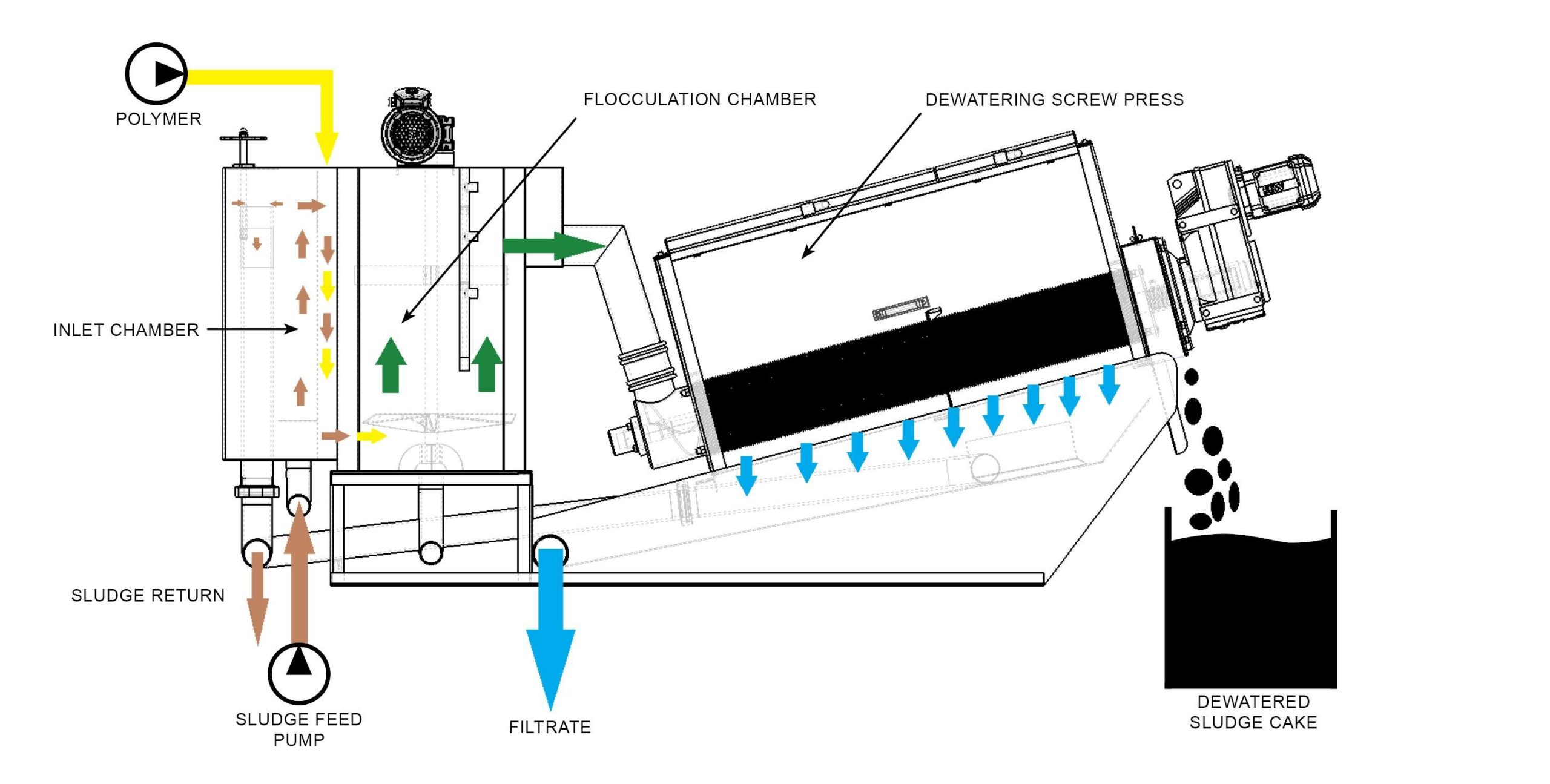
A sludge dewatering screw press is a machine used to reduce the water content of sludge generated during wastewater treatment. It typically consists of a rotating screw shaft, a cylindrical filtration screen, a driving mechanism, and a discharge arrangement.
As sludge enters the machine, the rotating screw gradually moves it through the dewatering chamber. The available space becomes more restricted toward the discharge end, increasing compression and encouraging water to pass through the surrounding screen.
The separated liquid, known as filtrate, is collected for appropriate treatment or return to the wastewater process. The remaining concentrated material is discharged as sludge cake.
Screw presses are commonly used in municipal sewage treatment plants, industrial wastewater facilities, food processing operations, and other industries that generate sludge requiring mechanical dewatering.
How a Sludge Dewatering Screw Press Works
The screw press uses a continuous mechanical process to separate liquid from solid material.
1. Sludge Feeding
Sludge is collected from the treatment process and transferred into the screw press using a suitable feed pump. The incoming sludge concentration and flow rate influence the machine’s operating conditions.
2. Sludge Conditioning
Some sludge types require chemical conditioning before entering the press. Polymer is commonly used to help fine particles form larger flocs, making it easier for water to separate from the solids.
The appropriate chemical dosage depends on sludge characteristics and should be determined through testing.
3. Initial Filtration
As sludge enters the dewatering chamber, free water passes through the screen openings. The solid particles remain inside the chamber and continue moving forward.
4. Gradual Compression
The rotating screw moves sludge toward the discharge end, where the available space and discharge resistance create increasing compression.
This pressure encourages additional water to separate from the sludge.
5. Sludge Cake Discharge
The dewatered material is discharged as sludge cake. Its solids concentration depends on the incoming sludge properties, conditioning method, equipment design, and operating settings.
6. Filtrate Collection
Water separated during the process is collected and directed to an appropriate treatment stage. Its quality should be monitored to ensure that it is managed correctly within the facility.
Key Benefits of Using a Sludge Dewatering Screw Press
Screw presses offer several operational advantages when compared with conventional sludge handling methods.
1. Reduced Sludge Volume
One of the most important benefits is the reduction in sludge volume.
By removing excess water, a screw press produces a more concentrated material that requires less storage and transportation capacity. This can help wastewater facilities manage residual solids more efficiently.
2. Continuous Operation
Many screw press systems are designed for continuous sludge feeding and discharge.
This allows facilities to process sludge steadily rather than relying entirely on batch-based dewatering cycles. Continuous operation can simplify sludge handling schedules and support consistent processing.
3. Lower Energy Consumption in Suitable Applications
Screw presses generally operate through gradual mechanical compression rather than relying on very high-pressure filtration throughout the process.
Depending on the sludge characteristics and equipment configuration, they may offer relatively low energy requirements compared with some alternative dewatering technologies.
Actual energy consumption should be evaluated using the expected throughput, motor specifications, conditioning requirements, and operating conditions.
4. Compact Equipment Design
Screw presses are often designed with a relatively compact footprint.
This can make them suitable for treatment facilities with limited installation space or plants upgrading existing sludge management areas.
The required space still depends on machine capacity, feed pumps, polymer preparation equipment, access requirements, and auxiliary systems.
5. Lower Cleaning Water Requirements
Some screw press designs use self-cleaning or automatic washing arrangements to reduce screen blockage.
Compared with certain belt-based dewatering systems, they may require less continuous cleaning water, depending on the equipment design and sludge characteristics.
6. Reduced Operator Intervention
Modern screw press systems can include automated feeding, polymer dosing, speed adjustment, and operating controls.
Automation helps maintain consistent operation and reduces the need for frequent manual adjustments. Operators must still inspect the machine and monitor sludge quality regularly.
7. Improved Sludge Handling
Dewatered sludge is generally easier to collect, store, and transport than untreated liquid sludge.
Reducing moisture content can improve downstream handling and make subsequent treatment or disposal operations more manageable.
Applications of Sludge Dewatering Screw Presses
Screw presses are used in a variety of industries where wastewater treatment produces residual sludge.
Municipal Wastewater Treatment Plants
Municipal sewage treatment plants generate primary and biological sludge during wastewater treatment.
A screw press can reduce the moisture content of these residual solids, helping facilities manage sludge storage, transportation, and disposal more efficiently.
Industrial Wastewater Treatment
Industrial wastewater may contain suspended solids, organic matter, and process-specific residues.
Screw presses can be used to dewater suitable industrial sludge streams. Equipment materials and operating conditions should be selected according to the sludge’s chemical composition and physical characteristics.
Food and Beverage Processing
Food processing facilities generate wastewater containing organic matter, fats, and suspended particles.
Biological treatment and separation processes can produce sludge that requires dewatering. Screw presses may help reduce its volume before further processing or disposal.
Paper and Pulp Industry
Paper and pulp operations generate sludge containing fibers, fillers, and other suspended materials.
Mechanical dewatering can reduce the water content of these residues and improve their handling during subsequent management stages.
Chemical and Manufacturing Industries
Manufacturing and chemical facilities may produce sludge with varying concentrations of inorganic and organic substances.
Before selecting a screw press, operators should evaluate the sludge’s abrasiveness, corrosiveness, chemical composition, and any hazardous properties.
Important Factors to Consider When Selecting a Screw Press
Choosing the right machine requires evaluating the characteristics of the sludge and the operational requirements of the treatment facility.
1. Sludge Characteristics
Sludge properties have a direct influence on dewatering performance.
Important parameters include:
- Total solids concentration.
- Organic and inorganic content.
- Particle size distribution.
- Viscosity and flow behavior.
- Oil and grease content.
- Chemical composition.
- Potentially abrasive or corrosive substances.
Laboratory analysis and dewatering trials can help determine whether a screw press is suitable for a particular sludge stream.
2. Processing Capacity
The machine must handle the expected sludge flow and dry solids loading.
Selecting equipment with insufficient capacity can create processing bottlenecks, while oversized equipment may increase initial investment and operating costs.
Capacity should be evaluated using both hydraulic flow and the mass of dry solids processed per hour.
3. Required Cake Solids Content
Different facilities have different requirements for the final sludge cake.
The target solids concentration depends on transportation arrangements, disposal regulations, and downstream processing requirements.
Manufacturers’ performance claims should be assessed against actual sludge characteristics and tested operating conditions.
4. Polymer Consumption
Chemical conditioning can significantly influence screw press performance.
The polymer type, dosage, and mixing conditions affect floc formation, filtrate quality, and cake solids content.
Facilities should consider chemical consumption as part of the total operating cost rather than evaluating the machine based on mechanical performance alone.
5. Screen Design and Filtration Performance
The screen allows separated water to leave the dewatering chamber while retaining solids.
Screen opening size, material, and construction influence filtration performance, resistance to blockage, and maintenance requirements.
The selected screen should be compatible with the particle characteristics of the incoming sludge.
6. Energy and Water Consumption
Motor power, feed pump requirements, polymer preparation, and cleaning arrangements all contribute to operating expenses.
Comparing total energy and water requirements helps facilities identify a suitable machine for long-term operation.
7. Maintenance and Equipment Durability
The screw press should be designed to withstand the operating environment and expected sludge properties.
Important considerations include corrosion resistance, wear protection, screen durability, access to replacement parts, and ease of inspection.
Maintenance Practices for Reliable Screw Press Operation
Regular maintenance helps maintain dewatering performance and reduce unexpected equipment downtime.
Recommended practices include:
- Inspect the screen: Check for blockage, wear, or physical damage.
- Monitor screw operation: Look for unusual vibration, noise, or changes in motor load.
- Check polymer dosing: Confirm that chemical conditioning remains appropriate for the incoming sludge.
- Clean the filtration surfaces: Follow manufacturer-approved procedures to prevent material accumulation.
- Inspect bearings and drive components: Check lubrication, seals, and mechanical connections.
- Monitor filtrate quality: Changes in liquid clarity may indicate problems with flocculation or solids retention.
- Measure cake solids content: Regular testing helps determine whether the machine is meeting the required dewatering target.
A preventive maintenance schedule can extend equipment service life and support consistent performance.
Screw Press Compared With Other Sludge Dewatering Technologies
Different dewatering technologies are designed for different operating requirements. A screw press should be compared with alternatives according to sludge properties, required cake dryness, processing capacity, and total operating costs.
Screw Press vs. Belt Filter Press
A belt filter press uses moving filter belts and mechanical pressure to remove water from sludge. It is commonly used for continuous processing and can handle substantial sludge volumes.
A screw press uses a rotating screw and filtration screen to gradually compress sludge. It may offer a more compact arrangement and lower cleaning water requirements in suitable applications.
Screw Press vs. Plate and Frame Filter Press
A plate and frame filter press uses pressure to force liquid through filter cloths inside a series of chambers.
It can achieve relatively high cake solids concentrations for certain sludge types, but typically operates in batch cycles and requires cake discharge and filter cloth maintenance.
A screw press is generally designed for continuous operation, although the achievable cake dryness may differ depending on sludge characteristics.
The most suitable technology depends on the treatment facility’s performance targets and operating priorities.
How Screw Press Dewatering Improves Overall Wastewater Management
Effective sludge dewatering helps wastewater treatment facilities manage the solid residues generated during treatment.
By reducing the amount of water retained in sludge, screw presses can decrease the volume and weight of material requiring downstream handling. This may reduce transportation requirements, improve storage management, and simplify subsequent treatment or disposal.
The filtrate can also be collected and returned to an appropriate treatment stage when permitted by the facility’s process design and liquid quality.
However, mechanical dewatering is only one part of sludge management. Thickening, stabilization, contaminant testing, regulatory compliance, and final disposal or recovery must also be considered.
Conclusion
A sludge dewatering screw press is an effective mechanical solution for reducing the moisture content of suitable wastewater sludge. Its continuous operation, compact design, and gradual compression process can help improve solid-liquid separation and make residual sludge easier to handle.
Selecting the right equipment requires careful consideration of sludge characteristics, processing capacity, target cake solids, polymer consumption, energy requirements, and maintenance needs. When properly selected and operated, a sludge dewatering screw press can support efficient sludge management, reduce handling expenses, and contribute to more reliable wastewater treatment plant operations.