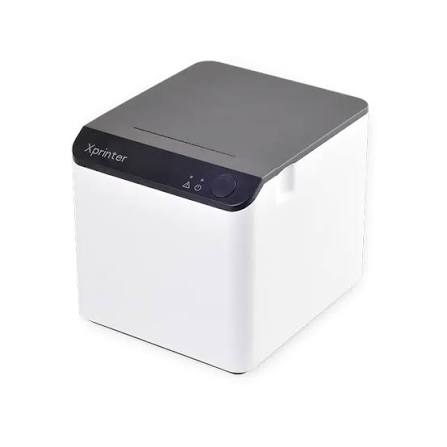
Receipt printers play an important role in modern business operations by producing transaction records, payment confirmations, order details, and other essential documents. From retail stores and restaurants to healthcare facilities and transportation services, these devices help organizations manage daily transactions efficiently. As businesses increasingly rely on digital point-of-sale systems, receipt printing technology has become an important part of their operational infrastructure.
Different industries have different printing requirements, including variations in transaction volume, paper size, connectivity, and printing speed. Choosing suitable equipment can help businesses maintain smooth workflows and improve customer service. A reliable Xprinter Receipt Printer can support a wide range of commercial applications, depending on its specifications, compatibility, and intended operating environment.
1. Retail Stores and Supermarkets
Retail businesses are among the most common users of receipt printers. Every completed purchase typically requires a receipt showing product names, quantities, prices, taxes, discounts, and payment details. Printing this information helps customers verify their purchases while providing businesses with a clear transaction record.
Supermarkets and large retail stores often handle a high number of transactions throughout the day. Thermal receipt printers are useful in these environments because they can produce receipts quickly without requiring ink cartridges or ribbons. Their straightforward operation also makes them suitable for busy checkout counters.
2. Restaurants and Food Service Businesses
Restaurants, cafes, bakeries, and takeaway outlets use receipt printers to manage customer payments and food orders. At the checkout counter, printers generate receipts containing order details, item prices, service charges, and payment information.
In kitchen environments, compatible printers can also produce order tickets that help staff prepare meals accurately. These tickets may include table numbers, selected dishes, special instructions, and order modifications. Clear printing reduces misunderstandings between front-of-house employees and kitchen teams.
Different food service businesses may require different printer configurations. Compact models can suit small cafes, while establishments with higher order volumes may need faster devices with suitable connectivity options.
3. Hospitality and Hotel Operations
Hotels and other hospitality businesses handle various transactions throughout the customer journey. Receipt printers can support front-desk payment processing, restaurant billing, room service orders, and additional service charges.
For example, hotel reception staff may print payment confirmations for room bookings or additional services. Restaurants inside hotels can use receipt printers to generate customer bills and kitchen order tickets. These printed records help employees communicate transaction details and maintain organized documentation.
The ability to connect with compatible property management or point-of-sale systems is an important consideration when selecting printers for hospitality operations.
4. Healthcare Facilities and Pharmacies
Healthcare facilities use printing equipment for administrative and payment-related tasks. Clinics, medical laboratories, and pharmacies may print receipts for consultation fees, diagnostic services, prescription purchases, and other transactions.
In pharmacies, receipts can provide customers with product descriptions, quantities, prices, and payment details. Healthcare administrators can also use printed transaction records to support routine accounting and customer service activities.
When choosing a receipt printer for healthcare environments, businesses should consider system compatibility, reliable operation, and the ability to produce clear, readable text. Sensitive patient information should only be printed when necessary and handled according to applicable privacy requirements.
5. Banking and Financial Services
Banks, financial institutions, and payment service providers use receipt printers to produce transaction confirmations. These documents may be generated after deposits, withdrawals, bill payments, account services, or other financial activities.
Automated teller machines and self-service payment terminals also rely on compact receipt printing mechanisms to provide customers with transaction records. Printing speed and consistent output are particularly important because these devices may operate continuously and serve many users.
For financial applications, printers must be compatible with the equipment’s software and hardware requirements. Reliable paper feeding and clear text reproduction are also essential for producing useful transaction records.
6. Transportation and Ticketing Services
Transportation companies use receipt and ticket printers in environments such as bus stations, railway terminals, parking facilities, and travel agencies. These devices can produce payment receipts, booking confirmations, parking tickets, and other transaction-related documents.
In ticketing applications, printed information may include travel dates, departure times, route details, ticket numbers, and passenger information. Compact printers are often useful for counters and self-service terminals where available space is limited.
Transportation operators should evaluate printing speed, connectivity, paper capacity, and durability when selecting equipment for frequently used ticketing systems.
7. E-Commerce and Warehouse Operations
Although many online transactions are completed digitally, e-commerce businesses still require printing equipment for order management and administrative activities. Receipt printers can support payment confirmation at collection counters, customer pickup points, and physical retail locations connected to online stores.
Warehouses and distribution facilities may also use compatible printing systems for internal transaction records and operational documentation. Depending on the equipment, businesses may print order summaries, packing information, or other short-format documents.
It is important to distinguish receipt printers from dedicated label printers. Receipt printers are designed primarily for paper receipts and similar documents, while shipping labels and product identification labels generally require printers specifically designed for those materials.
8. Parking Management and Self-Service Kiosks
Parking facilities often use automated systems to manage vehicle entry, exit, and payment. Receipt printers can generate parking tickets and payment confirmations containing timestamps, transaction numbers, and fee information.
Self-service kiosks in shopping centers, entertainment venues, and public facilities also use compact printers to provide customers with printed records. These systems benefit from equipment that can integrate with automated payment software and operate with limited staff supervision.
For kiosk applications, businesses should consider the printer’s physical dimensions, mounting requirements, paper-loading process, and compatibility with the terminal’s control system.
9. Small Businesses and Service Providers
Small businesses such as salons, repair shops, convenience stores, and independent service providers also benefit from receipt printing. Printed receipts help customers review service charges, product purchases, taxes, and payment methods.
For businesses with limited counter space, compact receipt printers can provide a practical solution. USB, serial, Ethernet, or wireless connectivity may be available depending on the model, allowing businesses to select equipment that matches their existing point-of-sale setup.
A suitable printer can also help small businesses maintain more consistent transaction documentation without introducing unnecessary operational complexity.
10. Key Factors When Selecting a Receipt Printer for Different Applications
Although receipt printers serve similar basic purposes, their ideal specifications vary by industry. Businesses should assess their actual operating requirements before purchasing equipment.
Important factors include:
- Printing technology: Thermal printing is widely used for receipts because it does not require traditional ink or toner. Impact printing may be more appropriate for certain multi-copy forms.
- Printing speed: High-volume environments may require faster output to reduce waiting times during busy periods.
- Connectivity: USB, serial, Ethernet, Bluetooth, and Wi-Fi options can support different point-of-sale and kiosk configurations.
- Paper compatibility: Businesses should confirm the supported paper width, roll diameter, and paper specifications.
- Software compatibility: The printer should work with the operating system, POS software, and relevant applications already in use.
- Operating environment: Temperature, dust, usage frequency, and available installation space can influence equipment selection.
- Maintenance requirements: Easy paper replacement, accessible components, and straightforward troubleshooting can simplify daily operations.
Evaluating these factors helps businesses avoid compatibility problems and select equipment that meets their specific printing needs.
Conclusion
Xprinter receipt printers can support a variety of business applications, including retail checkout, restaurant billing, hotel operations, healthcare payments, banking services, transportation ticketing, and self-service kiosks. Their usefulness depends on selecting a model with the appropriate printing technology, connectivity, speed, and system compatibility.
As businesses continue to improve their transaction processes, receipt printers remain valuable tools for producing clear payment records and supporting efficient workflows. Understanding the requirements of each application makes it easier to choose suitable printing equipment and maintain reliable day-to-day operations.