Large buildings, bridges, industrial facilities, and infrastructure systems depend on carefully selected structural materials. Their frames must resist loads while maintaining stability, serviceability, and compatibility with construction methods. Section steel plays a central role because it is manufactured into standardized profiles that provide useful strength and stiffness for different structural functions.
Section Steel refers broadly to steel products manufactured with defined cross-sectional shapes, including beams, channels, angles, and other structural profiles. These sections are used in frameworks, supports, machinery, platforms, and infrastructure. The correct profile depends on the loading conditions, span, connection arrangement, fabrication requirements, and relevant design standard.
The Importance of Cross-Sectional Design
A steel section’s geometry determines how efficiently it resists bending, compression, shear, and torsion. For example, an I-shaped beam places much of its material in the flanges, which are positioned away from the neutral axis and contribute significantly to bending resistance.
Channels provide a different profile that can be useful in edge framing, supports, and secondary structures. Angles suit bracing and connections, while hollow structural sections can provide resistance to loads from multiple directions and a clean external appearance.
No single section is suitable for every purpose. Structural calculations must consider section properties, member length, restraint, load combinations, and connection behavior.
Common Structural Profiles
I-beams and H-beams are widely used in building frames, industrial platforms, and bridge-related structures. Their proportions and dimensions vary, and engineers select them according to the required strength and stiffness.
Channels are often used in secondary framing, equipment supports, stair structures, and edge members. Angle sections are common in bracing, trusses, brackets, and connection assemblies.
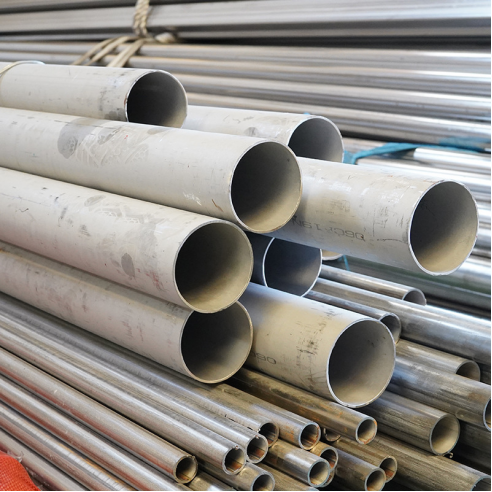
Hollow sections, including square and rectangular profiles, are used in columns, frames, architectural structures, and machinery. Their closed shape can offer useful torsional characteristics and may simplify certain design details.
Applications in Construction and Infrastructure
Commercial buildings and industrial facilities use structural sections for columns, beams, roof systems, mezzanines, walkways, and equipment platforms. Steel construction can support prefabrication and rapid site assembly when components are designed and coordinated properly.
Infrastructure projects use section steel in bridges, transport facilities, utility structures, barriers, and support systems. These applications may involve fatigue, vibration, wind, temperature variation, and environmental exposure.
The design process must consider more than the capacity of individual members. Stability, deflection, fire performance, corrosion protection, and the behavior of connections are all essential to the completed structure.
Industrial and Equipment Applications
Factories and processing plants rely on section steel for machine bases, support frames, maintenance platforms, conveyor structures, racks, and access systems. Standardized profiles can reduce fabrication complexity and make replacement or modification easier.
Equipment manufacturers may select specialized sections to meet weight, rigidity, and assembly requirements. A profile that allows straightforward bolting or welding can reduce production time, although the connection design must still satisfy the intended load.
In dynamic applications, engineers should account for vibration and cyclic loading. A member that performs adequately under static loading may require additional assessment when subjected to repeated forces.
Material Grades and Manufacturing Quality
Structural sections are available in different steel grades with specified mechanical properties. The required grade should be determined by the design conditions and applicable standard. Higher strength is not automatically beneficial if it complicates welding, toughness requirements, or fabrication.
Dimensional accuracy matters because deviations in flange width, web thickness, straightness, or length can affect fit-up and structural alignment. Surface defects and handling damage should also be inspected before installation.
Buyers should request material certificates and confirm traceability. For critical projects, inspection may include dimensional checks, mechanical testing, and verification of the specified grade.
Fabrication, Transport, and Erection
Section steel often requires cutting, drilling, welding, surface preparation, and coating before delivery to the site. These operations should follow approved drawings and procedures.
Transport planning is important because long or heavy sections need appropriate lifting and storage arrangements. During erection, temporary stability and safe connection sequencing must be managed by qualified personnel.
Supporting Stronger Project Planning
Section steel provides the standardized building blocks for many structural and industrial systems. Its versatility allows engineers to select profiles that suit specific load paths, spans, and fabrication methods.
A successful project depends on coordinating design calculations, material specifications, supplier quality, fabrication, and installation. When each stage is properly controlled, structural sections can support durable, efficient, and maintainable infrastructure.