The global solid surface manufacturing industry is evolving as construction methods, interior design preferences, and material technologies continue to change. Architects, contractors, furniture producers, and property developers increasingly look for materials that combine attractive appearance, practical performance, customization, and long-term durability. These changing expectations are encouraging manufacturers to improve production processes, explore new material formulations, and develop products for a wider range of applications.
Innovation is also changing how manufacturers approach product development, quality management, and environmental responsibility. A modern Solid Surface Manufacturer must consider more than basic production capacity. Advanced manufacturing technologies, changing customer requirements, material research, and international quality expectations all influence competitiveness in the global market. Understanding these developments helps buyers recognize which innovations may shape future product availability and industry standards.
1. Growing Demand for Customized Solid Surface Products
Customization is one of the most important trends influencing the solid surface industry. Standard colors and dimensions remain useful, but many commercial and residential projects require materials that match specific architectural concepts.
Manufacturers are responding by expanding their customization capabilities. Depending on their production technology, they may offer a wider selection of colors, patterns, textures, thicknesses, and dimensions.
Customized products are particularly relevant for:
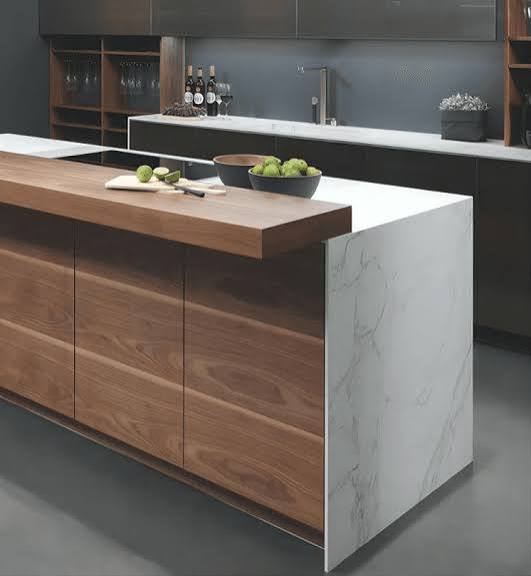
- Kitchen countertops and islands
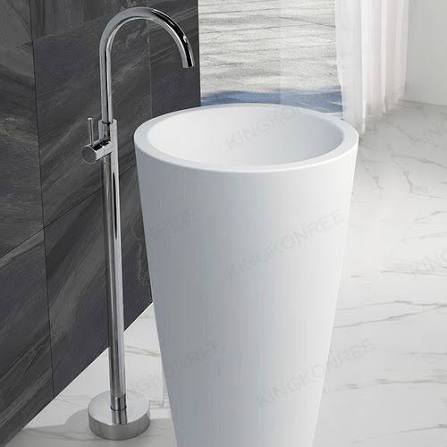
- Bathroom vanity tops and washbasins
- Hotel reception counters
- Retail display fixtures
- Healthcare work surfaces
- Commercial furniture
- Decorative wall panels
Digital design tools and improved production planning also make it easier to coordinate custom requirements with manufacturing processes. As demand for distinctive interiors continues, customization is likely to remain an important area of industry development.
2. Development of More Realistic Colors and Surface Patterns
Interior design trends increasingly emphasize materials that create a natural and cohesive appearance. As a result, solid surface manufacturers are exploring new ways to reproduce the visual characteristics of natural stone, marble, concrete, and other decorative materials.
Modern production techniques can support more varied color combinations, patterns, and visual effects. Manufacturers may also develop products with subtle veining, contrasting particles, or consistent decorative finishes.
These developments give designers more flexibility when planning interiors.
However, visual appeal must be balanced with practical considerations. Buyers should evaluate samples under suitable lighting conditions and check whether the selected pattern remains consistent across different production batches.
3. Greater Use of Automation in Manufacturing
Automation is transforming production operations across many manufacturing industries, including solid surface processing.
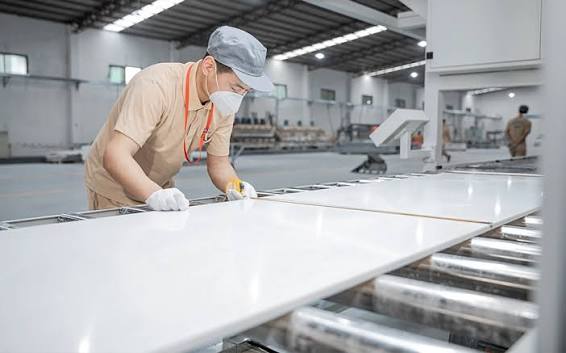
Automated equipment can support material mixing, molding, cutting, polishing, handling, and inspection. When properly integrated, these systems can improve production consistency and reduce repetitive manual work.
Common applications include:
- Automated material dosing
- Computer-controlled mixing systems
- Precision cutting equipment
- CNC machining
- Automated surface finishing
- Digital production monitoring
Automation does not eliminate the need for skilled workers. Instead, it allows technical teams to focus more on process control, product development, maintenance, and quality evaluation.
Manufacturers that combine automation with experienced production personnel can improve efficiency while maintaining attention to product details.
4. Adoption of Digital Manufacturing Technologies
Digital technology is becoming increasingly important for managing complex manufacturing operations.
Computer-aided design (CAD) helps manufacturers prepare accurate product drawings and evaluate design requirements before production begins. Computer-aided manufacturing (CAM) can then translate approved designs into instructions for compatible machinery.
Other digital systems support production scheduling, inventory management, order tracking, and quality documentation.
These technologies offer several advantages:
- Better coordination between design and production
- More accurate product dimensions
- Reduced design-related errors
- Improved production visibility
- More efficient use of materials
- Easier management of customized orders
As digital manufacturing systems become more accessible, their use may expand among companies seeking greater production flexibility and operational control.
5. Increasing Attention to Sustainable Production
Environmental responsibility is becoming a more important consideration for construction material manufacturers. Customers, architects, developers, and project owners increasingly examine how materials are produced, transported, used, and maintained.
Solid surface manufacturers are exploring ways to reduce the environmental impact of their operations.
Potential improvements include:
- More efficient energy consumption
- Better control of production waste
- Reuse or recycling of suitable process materials
- Reduced water consumption
- Improved packaging efficiency
- Responsible raw material sourcing
- Longer-lasting product designs
The feasibility of these measures depends on the material formulation and manufacturing process. Not every solid surface product can be recycled through the same methods, so buyers should request specific information instead of relying on broad sustainability claims.
6. Research into Alternative and Improved Raw Materials
Material development is another important area of innovation.
Solid surface products can contain combinations of mineral fillers, polymer resins, pigments, and other additives. Their composition influences appearance, workability, strength, stain resistance, and other performance characteristics.
Manufacturers continue to investigate how changes in material formulations can improve product performance or support different applications.
Research may focus on:
- Improved resin formulations
- More consistent mineral fillers
- Enhanced pigment stability
- Better bonding between material components
- Reduced production defects
- Alternative material sources
- Formulations suited to specific performance requirements
Any new formulation must be evaluated carefully. Changes that improve one property may affect another, making testing and quality control essential before commercial production.
7. Expansion of Seamless Design Applications
Seamless appearance is a major reason solid surface materials are used in contemporary interior projects.
Certain solid surface systems can be joined using compatible adhesives and suitable fabrication methods to create visually continuous surfaces. This approach is particularly useful for long countertops, reception desks, integrated washbasins, and custom furniture.
Manufacturing and fabrication improvements are helping designers explore more complex shapes and coordinated surface elements.
Seamless construction can also reduce visible joints where dirt and moisture might collect. However, the final result depends on correct material compatibility, joint preparation, installation techniques, and maintenance.
8. Growth of Integrated Solid Surface Products
Another developing trend is the integration of solid surface materials into complete products rather than using them only as flat sheets.
Examples include integrated sinks, washbasins, vanity units, reception counters, and specially shaped furniture components.
Manufacturers with suitable molding and fabrication capabilities can produce coordinated elements that create a consistent appearance across an interior space.
Integrated designs may offer practical advantages, including fewer visible joints and greater freedom in shaping the final product.
As demand grows for coordinated bathroom and commercial interior solutions, integrated product development may become an increasingly valuable manufacturing capability.
9. Improvements in Product Quality Testing
Quality testing is becoming more important as solid surface materials are used in a broader range of environments.
Different applications create different performance requirements. A residential vanity top may need to withstand regular cleaning and cosmetic products, while a commercial countertop may experience frequent use and exposure to various substances.
Manufacturers can use relevant testing procedures to evaluate properties such as:
- Surface hardness
- Impact resistance
- Stain resistance
- Chemical resistance
- Water absorption
- Dimensional stability
- Heat performance
- Color consistency
Testing requirements depend on the product type, applicable standards, and intended application. Reliable documentation helps buyers understand what has actually been tested and under which conditions.
10. Development of Antimicrobial and Hygienic Surface Solutions
Hygiene is an important consideration in healthcare facilities, laboratories, food preparation areas, and other environments where surfaces require regular cleaning.
This has encouraged interest in materials and surface treatments designed to support hygienic use.
Some manufacturers investigate antimicrobial additives or specialized surface technologies. However, the presence of an additive alone does not establish that a finished product provides a specific level of antimicrobial performance.
Buyers should examine independent test reports, approved claims, cleaning instructions, and suitability for the intended environment.
It is also important to remember that no surface material replaces proper cleaning, disinfection, and facility hygiene procedures.
11. Greater Focus on Healthcare and Commercial Applications
The solid surface market is expanding through applications that require a combination of design flexibility and practical performance.
Healthcare environments may use solid surface materials for nurse stations, countertops, washbasins, laboratory furniture, and other interior components. Commercial spaces may use them in reception areas, retail displays, hospitality counters, and public facilities.
These applications often involve specific requirements related to cleaning, durability, maintenance, and installation.
Manufacturers are therefore developing product options and technical support for different market segments. Understanding the intended use helps buyers select materials with appropriate characteristics rather than relying only on appearance.
12. More Flexible Production for Small and Large Orders
Customer demand varies considerably across the global solid surface market.
Large construction projects may require substantial quantities of materials with consistent specifications, while designers and smaller businesses may need limited production runs or specialized components.
Manufacturers are exploring production planning methods that can accommodate different order sizes without sacrificing quality.
Flexible manufacturing may involve modular production systems, improved scheduling software, digital design tools, and better inventory management.
These capabilities can help suppliers respond to changing order requirements while managing production costs and delivery expectations.
13. Advances in CNC Fabrication and Precision Processing
Computer numerical control (CNC) machinery is supporting more accurate and repeatable processing of solid surface materials.
CNC equipment can be used for cutting, routing, drilling, shaping, and creating complex components based on digital designs.
Its advantages may include:
- More consistent dimensions
- Accurate openings and cutouts
- Repeatable component production
- Support for complex shapes
- Reduced manual measuring errors
- Better coordination with digital design files
CNC technology is particularly valuable for customized countertops, integrated furniture elements, decorative components, and large commercial installations.
Nevertheless, correct tooling, machine settings, operator experience, and finishing procedures remain essential for achieving suitable results.
14. Increasing Importance of Product Traceability
As supply chains become more complex, buyers are placing greater importance on knowing where products come from and how they were manufactured.
Traceability systems can help manufacturers connect raw material information, production records, inspection results, and finished product batches.
This information is useful when investigating quality concerns or confirming that repeat orders meet previously approved specifications.
Digital recordkeeping can make traceability more efficient by reducing reliance on disconnected paper documents.
For international buyers, access to reliable product and batch information can also support procurement documentation and quality management procedures.
15. Growth of International Market Competition
The global solid surface manufacturing industry includes suppliers serving different regions, customer groups, and price segments.
International competition encourages manufacturers to improve product quality, expand their ranges, strengthen technical support, and optimize production costs.
Buyers now have access to a broader selection of materials and suppliers, but comparing them requires careful evaluation.
Important comparison factors include:
- Manufacturing experience
- Product specifications
- Quality control systems
- Customization options
- Production capacity
- Export experience
- Technical documentation
- Communication and after-sales support
A competitive quotation should be considered alongside product performance and supplier reliability.
16. Greater Use of Environmental Product Information
Environmental information is becoming increasingly relevant in construction and interior design projects.
Some manufacturers provide Environmental Product Declarations (EPDs), which communicate environmental impacts across defined life cycle stages using established assessment methods.
Other useful information may include material composition, production energy data, packaging details, and waste management practices.
However, an EPD is not automatically proof that a product is environmentally superior. Buyers should review its scope, declared unit, life cycle boundaries, and verification status before making comparisons.
More transparent environmental documentation can help project teams evaluate materials using consistent information.
17. Development of Improved Surface Finishes
Surface finish options are expanding as interior design preferences diversify.
Polished surfaces remain popular, but matte, satin, textured, and other finishes can provide different visual and practical effects.
Manufacturers may use different finishing techniques to create the required appearance and surface characteristics.
The choice of finish can influence:
- Light reflection
- Visible fingerprints
- Appearance of minor scratches
- Cleaning requirements
- Compatibility with surrounding materials
- Overall interior design style
Buyers should request physical samples whenever possible because digital photographs may not accurately represent texture, color, or light reflection.
18. Better Integration Between Design and Manufacturing Teams
Efficient communication between designers and manufacturers can reduce errors and improve project outcomes.
Digital drawings, 3D models, technical specifications, and sample approvals allow teams to discuss requirements before production begins.
Early collaboration is especially valuable for complicated installations involving curved surfaces, integrated sinks, unusual dimensions, or multiple connected components.
Manufacturers can identify technical limitations and recommend practical alternatives during the design stage.
This approach helps reduce expensive modifications after materials have already entered production or reached the installation site.
19. Automation and Data-Driven Quality Management
Manufacturers are increasingly interested in using production data to identify process variations and prevent defects.
Digital monitoring systems can collect information about machinery performance, production conditions, material usage, and inspection results.
When analyzed consistently, this information may help manufacturers recognize patterns that are difficult to identify through occasional manual checks.
Potential applications include:
- Monitoring production parameters
- Identifying recurring defects
- Tracking equipment performance
- Improving maintenance schedules
- Comparing production batches
- Supporting corrective actions
Data-driven systems are most useful when supported by accurate records, appropriate inspection procedures, and trained personnel.
20. Future Outlook for the Solid Surface Manufacturing Industry
The future of the solid surface industry will likely be shaped by several connected developments rather than one single breakthrough.
Material research, automation, digital manufacturing, environmental performance, and customized product development are expected to remain important areas of attention.
Manufacturers may also invest in more flexible production systems that can support both standardized products and specialized architectural requirements.
For buyers, this means that evaluating a supplier will increasingly involve examining its ability to adapt, document performance, maintain consistent quality, and support changing project needs.
Companies that combine technical expertise with effective customer communication and responsible production practices may be better positioned to compete in international markets.
Conclusion
The global solid surface manufacturing industry is experiencing important changes driven by technology, sustainability expectations, customization, and evolving architectural applications. Automation, CNC processing, improved material formulations, digital production systems, and more detailed quality testing are helping manufacturers develop products for increasingly varied requirements.
At the same time, buyers are paying greater attention to traceability, environmental information, product performance, and supplier reliability. Understanding these emerging trends can help architects, distributors, contractors, and project developers make more informed purchasing decisions. As the industry continues to evolve, manufacturers that invest in innovation while maintaining consistent quality and practical customer support will play an important role in shaping the future of solid surface materials.