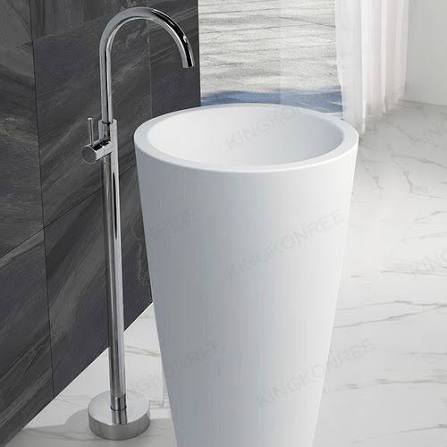
Building a reliable supply chain is essential for businesses involved in construction, interior design, furniture manufacturing, and building material distribution. When sourcing solid surface products internationally, selecting a supplier is only the beginning of the process. Maintaining clear communication, consistent quality expectations, and mutually beneficial commercial arrangements can make a significant difference to long-term business performance.
China is an important sourcing destination for solid surface sheets, countertops, bathroom vanities, integrated sinks, and customized interior components. Businesses exploring opportunities in Solid Surfaces China may find suppliers offering different product ranges, manufacturing capabilities, and customization services. However, a successful partnership requires more than competitive pricing. Buyers need to establish trust, understand supplier capabilities, and develop cooperation practices that support consistent results over time.
1. Identify Suppliers That Match Your Business Requirements
The first step toward building a long-term relationship is selecting a supplier whose capabilities align with your company’s needs.
Different buyers have different sourcing priorities. A distributor may require consistent stock availability, while a hotel contractor may need customized countertops and integrated basins. A furniture manufacturer may prioritize specific sheet dimensions, colors, and fabrication characteristics.
Before approaching potential suppliers, identify your main requirements, including:
- Product categories and material specifications
- Expected order quantities
- Customization requirements
- Target price range
- Quality expectations
- Production and delivery schedules
- Required technical documentation
- Export and packaging capabilities
A supplier that understands your business model is more likely to provide relevant solutions and support future purchasing requirements.
2. Evaluate Manufacturing Capabilities Before Making a Commitment
A supplier’s actual manufacturing capabilities influence its ability to fulfill orders consistently. Buyers should determine whether a business manufactures products directly, works with subcontractors, or operates primarily as a trading company.
Each business model can serve different sourcing needs, but transparency is important.
When evaluating a manufacturer, consider:
- Available production equipment
- Experience with solid surface materials
- Sheet production capabilities
- Custom fabrication services
- Sink and countertop manufacturing
- Production capacity
- Quality inspection procedures
- Previous commercial project experience
Request factory information, product samples, and relevant documentation before entering into a substantial purchasing arrangement.
Understanding these details helps buyers avoid selecting a supplier based only on attractive quotations or online product images.
3. Establish Clear Communication from the Beginning
Effective communication is one of the foundations of a successful international supplier relationship. Buyers and suppliers may operate in different time zones and business environments, making organized communication especially important.
At the beginning of a partnership, agree on preferred communication channels and reasonable response expectations.
Important topics to communicate clearly include:
- Product specifications
- Quotation details
- Order quantities
- Sample approvals
- Production progress
- Quality concerns
- Packaging instructions
- Shipment arrangements
Written communication is particularly useful because it creates a record of decisions and agreed requirements.
For complex projects, buyers should maintain a central specification document so that sales representatives, production teams, quality inspectors, and logistics staff work with the same information.
4. Develop Detailed Product Specifications
Misunderstandings about product specifications can damage supplier relationships and create unnecessary production costs.
Solid surface products are available in different thicknesses, colors, formulations, finishes, and dimensions. Buyers should not assume that a product description alone provides enough information for manufacturing.
A detailed specification should cover:
| Specification | Information to confirm |
|---|---|
| Material type | Acrylic-based, polyester-based, or other formulation |
| Dimensions | Length, width, and thickness |
| Color | Approved color code or physical sample |
| Surface finish | Matte, satin, or gloss |
| Product design | Sheet, countertop, sink, or customized component |
| Fabrication | Cutting, bonding, and edge requirements |
| Tolerances | Acceptable dimensional variations |
| Packaging | Protection and shipping arrangements |
For customized orders, technical drawings should accompany the specifications.
Once approved, these documents can serve as reference points for future orders and help maintain product consistency.
5. Build Trust Through Sample Testing
Samples provide an opportunity to assess a supplier’s products before committing to larger quantities.
Buyers should examine samples carefully rather than relying exclusively on photographs or written descriptions.
Depending on the intended application, evaluation may include:
- Color consistency
- Surface appearance
- Thickness accuracy
- Edge quality
- Material uniformity
- Fabrication characteristics
- Relevant performance test results
For countertops and sinks, it may also be useful to review finished components rather than evaluating only raw sheets.
When a sample is approved, retain a reference piece and document its specifications. This can help both parties compare future production batches against the agreed standard.
6. Agree on Transparent Pricing and Payment Terms
Commercial transparency helps prevent disputes and supports stable purchasing arrangements.
A quotation should explain the basis of the price, including material specifications, product dimensions, customization, packaging, and other relevant charges.
Buyers should also understand whether prices may change because of raw material costs, exchange rates, order quantities, or transportation expenses.
Payment terms should be agreed upon before production begins. Important details include:
- Deposit requirements
- Balance payment conditions
- Accepted payment methods
- Payment milestones
- Currency
- Refund or cancellation conditions
- Procedures for handling order discrepancies
For ongoing business relationships, both parties may consider payment arrangements that reflect order history and commercial risk. Any changes should be documented in a written agreement.
7. Maintain Consistent Quality Control Standards
Product quality is one of the most important factors affecting long-term supplier cooperation. Even a supplier that performs well on an initial order must demonstrate the ability to maintain consistent standards.
Buyers should establish clear inspection requirements before production begins.
Quality control may cover:
- Raw material verification.
- Production batch monitoring.
- Color and appearance inspection.
- Dimensional measurements.
- Surface defect checks.
- Fabrication and joint inspection.
- Final product approval.
- Packaging verification.
For large orders, buyers may arrange third-party inspections at suitable production stages.
If a defect occurs, both parties should investigate its cause and agree on corrective measures. A constructive quality management process is generally more valuable than simply exchanging complaints after delivery.
8. Start with Manageable Orders and Increase Gradually
Starting with a manageable order allows buyers to evaluate a supplier’s performance without taking unnecessary commercial risks.
An initial order can help assess product quality, communication, packaging, production timing, and delivery reliability.
After reviewing the results, buyers can decide whether to increase order quantities or expand the product range.
A gradual approach may include:
- Ordering product samples
- Placing a small trial order
- Evaluating the finished products
- Reviewing delivery performance
- Identifying areas for improvement
- Increasing order volumes when appropriate
This approach gives both businesses time to understand each other’s expectations and develop more effective working procedures.
9. Create Realistic Production and Delivery Schedules
Reliable scheduling is essential for businesses serving construction and interior design projects. Delayed solid surface materials can affect installation work, contractor coordination, and project completion dates.
Buyers should discuss production capacity and expected lead times before confirming orders.
A useful schedule may include:
- Design approval
- Sample confirmation
- Raw material preparation
- Manufacturing
- Quality inspection
- Packaging
- Shipment booking
- Expected delivery
Both parties should also discuss how unexpected production issues will be communicated.
Maintaining reasonable schedule flexibility can help prevent disagreements when raw material availability, transportation conditions, or other external factors affect delivery.
10. Maintain Regular Contact Beyond Individual Orders
Long-term partnerships develop through consistent communication, not just quotation requests and purchase orders.
Regular contact allows buyers to discuss market changes, new product requirements, upcoming projects, and potential improvements.
Useful activities include:
- Periodic business reviews
- Product development discussions
- Updates on purchasing forecasts
- Reviews of quality performance
- Discussions about changing customer preferences
- Feedback on previous deliveries
Suppliers can also provide information about new colors, finishes, fabrication options, and material developments that may be relevant to future projects.
Regular communication helps both parties plan more effectively and identify potential problems before they affect orders.
11. Share Forecasts and Purchasing Plans
Suppliers can manage production more efficiently when they understand a buyer’s expected demand.
Although forecasts do not always represent guaranteed orders, they provide useful information for production planning, raw material purchasing, and inventory management.
Buyers can share:
- Expected monthly or quarterly demand
- Seasonal purchasing patterns
- Upcoming construction projects
- Frequently ordered colors
- Preferred product dimensions
- Potential changes in order volume
Forecasts should be updated when business conditions change.
For suppliers, this information can support better production scheduling. For buyers, it may help improve product availability and reduce the likelihood of unexpected supply delays.
12. Address Problems Professionally and Constructively
Even established supplier relationships may experience challenges. Products can arrive with defects, specifications may be misunderstood, and shipments may be delayed.
The way both parties respond to these situations can influence the future of the relationship.
A practical problem-solving process includes:
- Describe the issue clearly.
- Provide photographs, measurements, or inspection records.
- Compare the product with the approved specifications.
- Ask the supplier to investigate the cause.
- Discuss suitable corrective actions.
- Agree on responsibilities and deadlines.
- Record the final resolution.
Professional communication helps keep discussions focused on solutions rather than personal disagreements.
Both sides should also use recurring problems as opportunities to improve specifications, production procedures, and inspection methods.
13. Understand Cultural and Business Communication Differences
International business relationships often involve differences in communication styles, negotiation practices, and decision-making processes.
When working with Chinese suppliers, buyers should approach discussions with patience, professionalism, and respect for established business practices.
Useful habits include:
- Communicating requirements directly and politely
- Confirming important agreements in writing
- Allowing reasonable time for responses
- Avoiding unclear or contradictory instructions
- Maintaining consistent communication
- Respecting agreed schedules and commitments
Building familiarity through regular business discussions can make cooperation more comfortable over time.
However, cultural understanding should complement—not replace—clear contracts, technical specifications, and professional due diligence.
14. Protect Designs, Technical Drawings, and Business Information
Customized solid surface projects may involve original countertop layouts, product designs, color specifications, and other commercially valuable information.
Buyers should discuss how this information will be handled before sharing sensitive documents.
Depending on the project, appropriate safeguards may include:
- Confidentiality agreements
- Clear design ownership terms
- Written authorization for design changes
- Controlled access to technical drawings
- Agreed restrictions on third-party production
- Documented intellectual property arrangements
Buyers should also clarify whether customized molds, prototypes, or product designs are owned by the customer, manufacturer, or another party.
Clear agreements help protect business interests and reduce the possibility of future disputes.
15. Use Technology to Improve Supplier Cooperation
Digital tools can make communication and order management more efficient, particularly when buyers and suppliers are located in different countries.
Businesses can use shared documents, project management platforms, video meetings, and digital inspection reports to coordinate activities.
Useful applications include:
- Online product catalogs
- Digital quotations
- Shared technical drawings
- Order tracking systems
- Production progress reports
- Video factory inspections
- Digital quality records
- Shipment documentation management
A centralized record of specifications and order history can help prevent repeated discussions and make future purchasing decisions easier.
Technology is most effective when both parties follow consistent documentation procedures.
16. Review Supplier Performance Regularly
A long-term relationship should be evaluated periodically to confirm that it continues to meet business expectations.
Buyers can establish performance indicators to assess supplier reliability and identify areas for improvement.
| Performance area | Possible evaluation criteria |
|---|---|
| Product quality | Defect rates and inspection results |
| Delivery | On-time shipment performance |
| Communication | Response time and clarity |
| Pricing | Cost consistency and quotation transparency |
| Production | Capacity and lead-time reliability |
| Documentation | Accuracy of commercial and technical records |
| Problem resolution | Speed and effectiveness of corrective actions |
| Technical support | Assistance with specifications and product development |
Performance reviews should be constructive and based on measurable information.
If a supplier consistently meets expectations, buyers may consider expanding cooperation through larger orders, additional product categories, or longer-term purchasing arrangements.
17. Develop Mutually Beneficial Business Agreements
A strong supplier relationship should provide value to both parties.
Buyers benefit from dependable quality, predictable supply, and responsive service. Suppliers benefit from stable demand, clear specifications, timely payments, and reliable business planning.
Long-term agreements may cover:
- Product specifications
- Pricing arrangements
- Forecasting procedures
- Minimum order quantities
- Payment terms
- Quality standards
- Delivery responsibilities
- Confidentiality requirements
- Procedures for resolving disputes
Agreements should be realistic and flexible enough to accommodate changes in market conditions.
Rather than focusing only on short-term price reductions, both parties should consider how cooperation can improve efficiency and support sustainable commercial growth.
18. Common Mistakes to Avoid When Working with Chinese Suppliers
Some purchasing practices can create unnecessary difficulties and weaken otherwise promising supplier relationships.
Common mistakes include:
- Selecting suppliers based only on the lowest quotation
- Placing large orders without evaluating samples
- Providing incomplete technical specifications
- Changing designs after production has started
- Ignoring quality inspection procedures
- Making verbal agreements without written confirmation
- Failing to communicate purchasing forecasts
- Expecting unrealistic production deadlines
- Delaying payments without proper explanation
- Avoiding discussions when problems arise
Avoiding these mistakes requires preparation, consistent communication, and a structured purchasing process.
Conclusion
Building long-term business relationships with solid surface suppliers in China requires careful supplier selection, transparent communication, clear technical specifications, and consistent quality management. Buyers should begin by evaluating manufacturing capabilities, reviewing samples, and establishing realistic commercial expectations.
As cooperation develops, regular business reviews, purchasing forecasts, professional problem-solving, and mutually beneficial agreements can strengthen the partnership. Protecting technical information and maintaining accurate order records are also important for businesses handling customized products.
For importers, distributors, contractors, and interior product manufacturers, a dependable supplier relationship can improve purchasing efficiency and support more consistent project delivery. By treating suppliers as long-term business partners rather than simply short-term sources of products, companies can build a more reliable and competitive solid surface supply chain.