Smart manufacturing is reshaping industrial production by integrating digital technologies, automation, and data-driven decision-making into traditional manufacturing systems. In the metal processing sector, these advancements are particularly important because they improve efficiency, reduce waste, and enhance product consistency. Coil coating operations have become a key area where smart technologies are delivering measurable improvements.
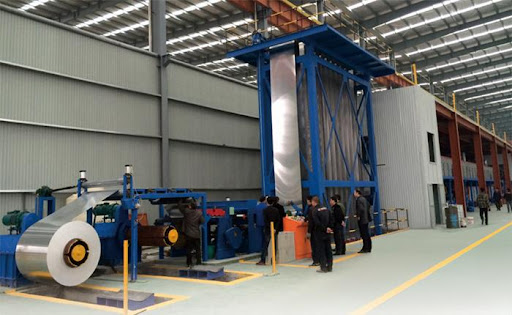
A modern aluminum coil coating line is no longer just a mechanical production system; it is now a digitally connected platform that combines sensors, automation, and intelligent control systems. These innovations allow manufacturers to achieve higher precision, real-time monitoring, and predictive optimization across the entire coating process.
Table of Contents
ToggleThe Shift Toward Smart Manufacturing in Coil Coating
Traditional coil coating systems relied heavily on manual supervision and fixed process settings. While effective, they often lacked flexibility and real-time responsiveness. Smart manufacturing introduces a new approach where systems continuously adapt based on live production data.
This shift is driven by:
- Increasing demand for high-quality consistency
- Need for reduced production downtime
- Pressure to optimize energy and material usage
- Growing complexity of coating requirements
As a result, coil coating lines are becoming more intelligent, efficient, and self-regulating.
Industrial IoT Integration in Coil Coating Systems
The Industrial Internet of Things (IIoT) plays a central role in smart coil coating lines. Sensors installed throughout the production line collect real-time data from every stage of processing.
These sensors monitor:
- Temperature levels in curing ovens
- Coating thickness and uniformity
- Line speed and tension
- Chemical concentration levels
- Equipment vibration and wear conditions
This continuous data flow allows operators and automated systems to make immediate adjustments when deviations occur.
Predictive Maintenance and Equipment Reliability
One of the most significant innovations in smart manufacturing is predictive maintenance. Instead of waiting for equipment failure, systems analyze performance data to predict potential breakdowns before they happen.
Predictive maintenance in coil coating lines helps:
- Reduce unexpected downtime
- Extend equipment lifespan
- Lower maintenance costs
- Improve production stability
By monitoring vibration patterns, temperature changes, and motor performance, systems can identify early warning signs of wear or malfunction.
Artificial Intelligence in Process Optimization
Artificial intelligence (AI) is increasingly being used to optimize coil coating operations. AI algorithms analyze large volumes of production data to identify patterns and recommend adjustments for improved efficiency.
AI systems can help:
- Optimize coating thickness automatically
- Adjust curing temperatures in real time
- Improve color consistency across batches
- Reduce material waste during production
This leads to more stable output quality and reduced dependency on manual intervention.
Digital Twin Technology for Coil Coating Lines
Digital twin technology creates a virtual model of the physical coil coating line. This digital replica simulates production behavior, allowing manufacturers to test changes and predict outcomes without disrupting real operations.
Applications of digital twins include:
- Process simulation and optimization
- Equipment performance testing
- Production planning and forecasting
- Troubleshooting system issues
This technology helps reduce risk and improve decision-making in complex manufacturing environments.
Smart Energy Management Systems
Energy consumption is a major operational factor in coil coating facilities. Smart manufacturing introduces intelligent energy management systems that monitor and optimize power usage in real time.
These systems help:
- Reduce energy waste in curing ovens
- Optimize motor and conveyor usage
- Balance load distribution across equipment
- Track energy consumption per production batch
By improving energy efficiency, manufacturers can reduce costs and support sustainability goals.
Automated Quality Inspection Systems
Quality control is essential in coil coating production, and smart technologies have significantly improved inspection accuracy. Automated systems use cameras, sensors, and machine vision to detect surface defects instantly.
These systems identify:
- Coating irregularities
- Surface scratches or contamination
- Color deviations
- Thickness inconsistencies
Early detection helps reduce scrap rates and ensures consistent product quality.
Cloud-Based Data Monitoring and Remote Control
Modern coil coating facilities increasingly use cloud platforms to store and analyze production data. This enables remote monitoring and control of manufacturing processes from anywhere.
Cloud-based systems provide:
- Real-time production dashboards
- Remote troubleshooting capabilities
- Centralized data storage
- Multi-facility coordination
This level of connectivity improves operational flexibility and decision-making speed.
Smart Automation and Self-Adjusting Systems
Advanced automation systems in coil coating lines are now capable of self-adjustment based on real-time conditions. These systems continuously fine-tune process parameters without requiring manual input.
Examples include:
- Automatic roller pressure adjustment
- Real-time viscosity control
- Dynamic line speed regulation
- Adaptive curing temperature control
This ensures stable production even when raw material or environmental conditions change.
Human-Machine Collaboration in Smart Facilities
Despite high levels of automation, human expertise remains essential. Smart manufacturing emphasizes collaboration between operators and intelligent systems.
Operators now focus on:
- System supervision and data interpretation
- Decision-making based on analytics
- Maintenance planning and optimization
- Process improvement strategies
This shift allows human workers to focus on higher-value tasks while automation handles routine control.
Conclusion
Smart manufacturing innovations are transforming coil coating production into a highly efficient, data-driven, and intelligent process. Technologies such as IoT sensors, artificial intelligence, predictive maintenance, and digital twins are improving every aspect of performance, from quality control to energy efficiency.
A modern aluminum coil coating line is now a key component of this transformation, offering manufacturers the ability to achieve higher precision, reduced costs, and improved operational flexibility. As smart manufacturing continues to evolve, coil coating systems will become even more automated, adaptive, and efficient in meeting global industrial demands.