Ink manufacturing is a highly controlled process that transforms raw pigments, resins, solvents, and additives into a stable and uniform final product. The quality of ink depends heavily on particle size reduction, dispersion efficiency, and formulation accuracy. Modern production systems are designed to handle these requirements with precision and consistency.
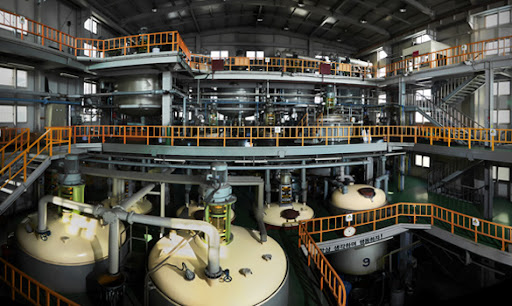
An efficient Ink Production Machine plays a central role in ensuring that each stage of the process—from raw material handling to final filling—is executed under controlled conditions. A system like this is typically integrated into a complete production line such as the Ink Production Machine, where grinding, mixing, and dispersion are optimized for industrial-scale output.
Table of Contents
ToggleRaw Material Selection and Preparation
The ink production process begins with selecting high-quality raw materials. These typically include pigments, binders, solvents, and performance additives. Each component contributes to the final properties of the ink, such as color strength, viscosity, drying time, and adhesion.
Before processing, raw materials are pre-mixed to create a uniform base slurry. This step ensures that pigments are evenly distributed before fine grinding begins.
Key preparation steps include:
- Measuring and batching raw materials
- Pre-mixing pigments and binders
- Adjusting viscosity for processing
- Removing impurities if necessary
Proper preparation is essential for achieving consistent final results.
Dispersion and Grinding Process
Once the slurry is prepared, it moves into the dispersion stage, which is the core function of the production system. This is where particle size reduction takes place, ensuring smooth texture and stable color performance.
High-speed dispersers or bead mills are commonly used in this stage. Mechanical energy breaks down pigment agglomerates into fine particles, improving color intensity and stability.
During this stage:
- Pigments are broken down into micro or nano-sized particles
- Agglomerates are eliminated through shear forces
- Uniform dispersion is achieved throughout the mixture
This step directly impacts the quality and performance of the final ink.
Fine Milling and Homogenization
After initial dispersion, the ink mixture may undergo further processing to achieve ultra-fine particle size distribution. This is especially important for high-performance inks used in printing, packaging, and industrial applications.
Fine milling ensures:
- Consistent particle size distribution
- Improved color brightness and clarity
- Enhanced stability over time
Homogenization also helps eliminate any inconsistencies in texture or composition, ensuring that every batch meets quality standards.
Quality Adjustment and Formulation Control
Once the grinding process is complete, the ink is carefully adjusted to meet specific performance requirements. This stage involves fine-tuning the formulation based on viscosity, drying time, and color strength.
Adjustments may include:
- Adding solvents to control viscosity
- Introducing additives for stability or flow
- Balancing pigment concentration
- Adjusting pH levels if required
This step ensures that the ink performs consistently across different applications.
Filtration and Impurity Removal
Before final packaging, the ink passes through a filtration system to remove any remaining impurities or oversized particles. This ensures a smooth and defect-free final product.
Filtration helps:
- Eliminate foreign particles
- Improve print quality
- Prevent nozzle clogging in printing applications
- Enhance product stability
This stage is critical for maintaining high production standards.
Filling and Packaging
After quality control, the finished ink is transferred to filling and packaging systems. Automation is often used to ensure accuracy, hygiene, and efficiency.
The packaging stage includes:
- Filling containers with precise volumes
- Sealing and labeling products
- Batch coding for traceability
Proper packaging ensures product safety during storage and transportation.
Role of Automation in Ink Production
Modern ink production systems rely heavily on automation to improve efficiency and reduce human error. Automated control systems help monitor:
- Mixing speed and time
- Temperature and viscosity
- Particle size distribution
- Flow rates and material consistency
Automation ensures repeatability and maintains product quality across large production volumes.
Benefits of a Complete Ink Production System
A fully integrated production line offers several advantages over manual or semi-automated processes:
- Higher production efficiency
- Consistent product quality
- Reduced material waste
- Better process control and monitoring
- Scalability for industrial demands
These benefits make modern systems essential for competitive manufacturing environments.
Conclusion
The transformation of raw materials into high-quality ink involves multiple carefully controlled stages, including mixing, dispersion, fine grinding, filtration, and packaging. Each step plays a vital role in ensuring consistency, stability, and performance.
A well-designed Ink Production Machine ensures that these processes work seamlessly together, delivering reliable and high-quality output. As demand for precision inks continues to grow across industries, advanced production systems remain essential for maintaining efficiency and product excellence.