Modern construction projects often involve complex structures, changing elevations, and working areas that require adaptable access solutions. Traditional scaffolding arrangements may not always provide the flexibility needed for projects with irregular shapes or multiple working levels. Modular scaffolding systems address these challenges through standardized components and connection mechanisms that allow different structural configurations.
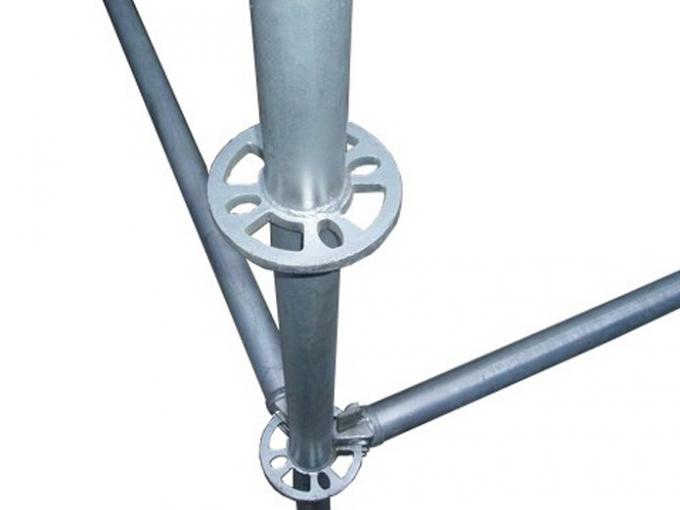
The Rosette Ring Scaffold is a modular system designed around a distinctive circular connection plate, commonly known as a rosette. This connection allows horizontal and diagonal members to attach to vertical standards at multiple angles, creating adaptable structures for different construction requirements. Its design supports efficient assembly, consistent connections, and flexible scaffold layouts across a wide range of applications.
What Is a Rosette Ring Scaffold System?
A rosette ring scaffold is a type of modular scaffolding that uses vertical standards fitted with circular connection plates. These plates contain multiple openings that allow compatible ledgers, braces, and other components to connect at predetermined positions.
Unlike conventional systems that may depend on separate couplers for many connections, rosette-based systems use integrated connection points. This arrangement helps simplify assembly and makes it easier to create different scaffold configurations.
The system typically consists of:
- Vertical standards: Main structural members fitted with rosette connection plates.
- Horizontal ledgers: Members that connect standards and establish the scaffold’s horizontal framework.
- Diagonal braces: Components that improve rigidity and help resist lateral movement.
- Base jacks: Adjustable components used to accommodate suitable foundation levels.
- Steel or aluminum platforms: Working surfaces selected according to project specifications.
- Guardrails and toe boards: Safety components used to protect working platforms.
- Connection wedges: Locking mechanisms that secure compatible members to the rosette plates.
Each component has a specific function, and the complete structure must be assembled according to its approved design.
Understanding the Rosette Connection Mechanism
The rosette is the central feature that distinguishes this scaffolding arrangement. It is generally a circular steel plate attached to a vertical standard and manufactured with several openings around its perimeter.
Compatible ledgers and braces have end fittings that engage with these openings. A wedge mechanism is then used to secure the connection.
This design provides several practical advantages.
Multiple Connection Angles
The openings around the rosette allow horizontal and diagonal members to connect in different directions. This makes the system suitable for structures that require more than a straightforward rectangular arrangement.
Contractors can use these connection positions to develop layouts around curved surfaces, building corners, and irregular structural shapes, provided the configuration is supported by an appropriate design.
Consistent Connection Points
Because rosettes are positioned at specified intervals along the vertical standards, scaffold members can connect at predictable heights.
This supports organized assembly and helps maintain consistent structural arrangements across multiple levels.
Secure Mechanical Connections
The wedge connection creates a mechanical attachment between compatible components. When properly installed and inspected, it helps maintain the intended connection between the vertical and horizontal members.
Correct engagement and locking are essential. A connection should never be assumed secure simply because the components appear to be in position.
Key Advantages of Rosette-Based Modular Scaffolding
The modular connection design provides several benefits for construction teams working with different structural layouts.
1. Greater Layout Flexibility
One of the main advantages is the ability to connect members in multiple directions. This allows contractors to adapt scaffold arrangements to different building shapes and access requirements.
It can be especially useful when working around industrial equipment, curved structures, and architectural features that make conventional scaffold layouts difficult.
2. Efficient Assembly and Dismantling
Standardized components and integrated connection points can simplify the assembly process.
Once workers are familiar with the system, they can connect compatible members without relying on numerous separate couplers for every connection. This may help reduce installation time, although actual productivity depends on project complexity, workforce experience, and site conditions.
3. Adaptability to Different Heights
Vertical standards are available in different lengths and connection arrangements. Combined with compatible ledgers and braces, they allow scaffold structures to be developed across multiple working levels.
The final arrangement must still follow the manufacturer’s specifications and the project’s structural design.
4. Reusability
Modular components can be dismantled, inspected, transported, and reused on other projects when they remain in suitable condition.
This can support better equipment utilization and help reduce the need to purchase entirely new scaffold structures for every construction activity.
5. Organized Component Management
Standardized parts make it easier to identify, store, and manage scaffold inventory.
Contractors can organize components by type, dimensions, and connection compatibility, helping reduce confusion during transportation and installation.
Where Rosette Ring Scaffold Systems Are Used
The flexibility of rosette-based scaffolding makes it suitable for a variety of construction and maintenance applications.
Building Construction
Residential, commercial, and industrial buildings often require access to exterior walls, structural frames, ceilings, and elevated working areas.
A modular rosette system can be configured to support different working levels and building geometries.
Industrial Maintenance
Factories, power facilities, processing plants, and other industrial environments may contain pipes, machinery, and equipment that create complicated access requirements.
The system’s multiple connection directions can help contractors develop suitable access arrangements around these obstacles, subject to engineering review.
Bridge and Infrastructure Projects
Infrastructure construction often involves large structures with varying heights and unusual shapes.
Rosette-based scaffolding can be adapted for selected bridge, tunnel, and transportation projects where the required loading conditions and structural design are properly established.
Shipbuilding and Ship Repair
Ship structures frequently contain curved surfaces, confined areas, and changing elevations.
Modular scaffold components can provide adaptable access arrangements for maintenance, surface preparation, and repair work.
Event and Temporary Structures
Some rosette-based systems are also used in temporary platforms and support structures. These applications require appropriate design, component selection, and compliance with relevant safety requirements.
Rosette Ring Scaffold Compared With Traditional Scaffolding
Traditional tube-and-coupler scaffolding and modular rosette systems both have important roles in construction. Their differences mainly relate to connection methods, assembly procedures, and configuration flexibility.
| Feature | Rosette Ring Scaffold | Tube-and-Coupler Scaffold |
|---|---|---|
| Connection method | Integrated rosette plates and wedges | Separate couplers |
| Configuration | Standardized modular arrangements | Highly adaptable tube layouts |
| Assembly | Uses compatible prefabricated components | Requires positioning and tightening individual couplers |
| Component management | Organized around standardized parts | Depends on tube lengths and coupler inventory |
| Common applications | Complex modular access structures | Customized access arrangements |
Neither system is automatically suitable for every project. The choice depends on site geometry, loading requirements, available components, workforce experience, and project specifications.
Important Factors When Selecting a Rosette Scaffold System
Choosing a modular scaffold requires more than comparing component prices. Contractors should examine technical specifications and confirm that the complete system is appropriate for the intended application.
Material Quality
Vertical standards, ledgers, braces, and connection plates should be manufactured using materials that meet the required mechanical and quality standards.
Material grade, wall thickness, dimensions, and manufacturing consistency all influence component performance.
Connection Compatibility
Components from different manufacturers may not have identical dimensions or connection details.
Before combining parts, contractors should confirm that the components are approved for use together. Mixing incompatible parts can compromise the intended connection and structural behavior.
Load Requirements
Scaffold structures may need to support workers, tools, materials, and equipment.
The system must be selected and configured according to its intended duty rating and the loads established by the project design. Load capacity should never be estimated from appearance alone.
Environmental Conditions
Outdoor installations may experience wind, rain, temperature changes, and corrosion exposure.
Material finishes and protective treatments should be suitable for the working environment, while the scaffold design must account for relevant environmental forces.
Supplier Documentation
A dependable supplier should provide technical drawings, component specifications, installation guidance, and relevant quality documentation.
These details help contractors evaluate product suitability and manage equipment throughout its service life.
Assembly and Safety Considerations
Although rosette systems are designed for modular assembly, correct installation remains essential. A standardized connection does not eliminate the need for competent supervision, appropriate training, and structural planning.
Important installation considerations include:
- Preparing a firm and suitable foundation.
- Positioning base jacks and standards according to the approved layout.
- Installing ledgers and braces at their specified connection points.
- Ensuring that wedges are correctly engaged and secured.
- Providing suitable ties and restraints where required.
- Installing fully supported working platforms and appropriate edge protection.
- Checking access arrangements and maintaining safe working clearances.
- Inspecting the completed structure before it is used.
Scaffolding should be erected, altered, and dismantled by trained and competent personnel under suitable supervision. Inspections should also take place at the required intervals and after events that could affect structural integrity.
Maintenance and Storage for Long-Term Performance
Reusable scaffold components require regular attention to remain suitable for future projects.
Rosette plates should be examined for cracks, deformation, damaged openings, and excessive wear. Wedges and connection fittings should also be checked to confirm that they engage correctly.
Vertical standards, ledgers, and braces should be inspected for bending, corrosion, damaged welds, and other defects. Components that do not meet the required condition should be removed from service until they have been assessed and appropriately repaired or replaced.
Proper storage is equally important. Components should be cleaned when necessary, organized by type, and kept in conditions that minimize unnecessary exposure to moisture and physical damage.
A consistent inspection and inventory process can help contractors maintain equipment quality and reduce avoidable replacement costs.
Conclusion
Rosette ring scaffolding is an important development in modular access equipment because its integrated connection design supports flexible configurations and organized assembly. Multiple connection positions allow compatible horizontal and diagonal members to attach to vertical standards, making the system useful for projects with varied structural layouts.
However, flexibility alone does not guarantee safety or performance. Material quality, component compatibility, structural design, correct installation, and regular inspections all contribute to a reliable scaffold structure.
By understanding how the rosette connection works and evaluating system specifications carefully, construction professionals can select modular scaffolding that meets project requirements while supporting efficient and responsible site operations.