Starting a food manufacturing business involves making important decisions about production equipment, processing methods, and food safety requirements. For businesses producing packaged foods with longer shelf-life requirements, thermal sterilization equipment can be an essential part of the production process. Choosing a suitable retort system helps manufacturers establish reliable processing practices while managing investment costs and available production space.
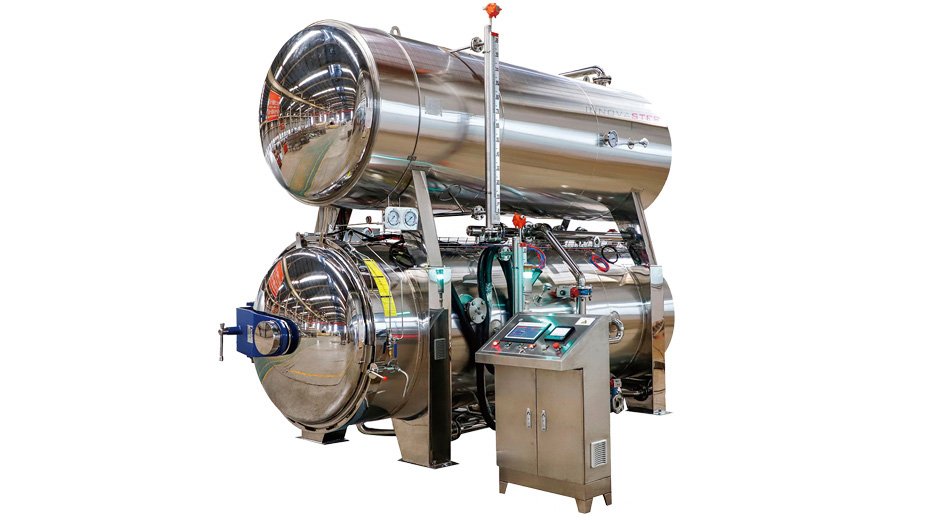
Small Water Spray Sterilization Retorts provide a practical option for emerging food businesses that need controlled thermal processing without immediately investing in large industrial systems. These machines use heated water distributed through spray nozzles to transfer heat to packaged products. Their suitability depends on production volume, packaging formats, product characteristics, and the required sterilization process.
Understanding Small Water Spray Sterilization Retorts
A water spray retort is a pressure-processing machine designed to heat and cool sealed food containers using circulating water. The water is heated and distributed through spray nozzles positioned inside the chamber.
Small-capacity models use the same general processing principles as larger industrial systems but are designed around lower batch volumes and more compact production requirements.
They may be suitable for businesses manufacturing:
- Canned vegetables and fruits
- Ready-to-eat meals
- Packaged sauces and soups
- Meat and seafood products
- Retort pouch foods
- Heat-resistant packaged food products
The equipment must be selected according to the packaging material and the validated thermal process required for each product.
Why Emerging Food Businesses Consider Small Retorts
Smaller manufacturers often face different operational challenges from established food processing plants. Production volumes may be limited, product ranges may still be developing, and available installation space may be restricted.
A compact water spray retort can help address some of these requirements.
1. Manageable Batch Processing
Small retorts allow businesses to process products in batches that better match their current production output.
This can be useful when demand is still developing or when manufacturers produce several different products in relatively limited quantities.
2. More Practical Space Requirements
A compact system may be easier to accommodate in a smaller processing facility than a large industrial retort.
However, the installation still needs sufficient space for loading, unloading, maintenance, utilities, and safe operator access.
3. Support for Product Development
Emerging food businesses often need to test new formulations and packaging formats.
A suitable small retort can support pilot production and process development, provided the equipment is appropriate for the intended testing and validation work.
4. Controlled Investment
Starting with equipment sized for realistic production requirements can help avoid unnecessary initial investment.
Businesses should still consider future production growth, equipment durability, operating costs, and the possibility of adding capacity later.
Important Equipment Features to Evaluate
Not all small water spray retorts offer the same performance or configuration. Manufacturers should review several technical features before choosing a system.
Chamber Size and Batch Capacity
The chamber dimensions determine how much product can be loaded during each cycle.
Capacity should be assessed using actual container dimensions, basket arrangements, and required circulation space.
A larger chamber does not automatically mean more usable production capacity if the loading arrangement restricts water distribution.
Water Circulation System
The circulation pump moves heated water through the spray distribution network.
A suitable system should provide the flow required for the chamber design and intended loading configuration.
Pump performance, pipe dimensions, and nozzle positioning all influence water distribution.
Spray Nozzle Arrangement
Spray nozzles distribute heated water across the product load.
Their arrangement should help deliver consistent thermal conditions throughout the chamber.
Manufacturers should ask about nozzle accessibility, cleaning requirements, and inspection procedures.
Heating System
The heating system raises the circulating water to the required processing temperature.
Depending on the machine design, heating may use steam injection or a heat exchanger.
The heating arrangement should be suitable for the planned batch size and available facility utilities.
Temperature and Pressure Controls
Temperature and pressure instruments monitor important processing conditions.
Reliable measurements are essential for following established processing schedules. Instruments should be suitable for the operating range and calibrated according to an appropriate maintenance program.
Automated Control Panel
A programmable control system can help manage heating, holding, and cooling stages.
Useful functions may include:
- Processing recipe selection
- Temperature monitoring
- Pressure monitoring
- Cycle timing
- Alarm notifications
- Batch record storage
The level of automation should match the business’s production needs and operator capabilities.
How a Small Water Spray Retort Works
Water spray retorts use a sequence of controlled operating stages to process packaged foods.
1. Product Loading
Sealed containers are arranged in baskets or racks and placed inside the retort chamber.
The loading arrangement should allow water to circulate effectively around the products.
2. Chamber Preparation
The chamber door is closed and secured according to the manufacturer’s operating procedure.
The system checks or establishes the conditions required before heating begins.
3. Water Heating and Circulation
The heating system raises the water temperature while the circulation pump moves water through the spray nozzles.
The heated water is distributed throughout the chamber to transfer thermal energy to the packaged products.
4. Sterilization Holding Stage
Once the required processing conditions are reached, the retort maintains them for the validated holding period.
The required time and temperature depend on the food formulation, packaging dimensions, initial product temperature, and heat penetration characteristics.
5. Controlled Cooling
After the holding stage, the system reduces product temperature through controlled water circulation and appropriate pressure management.
This stage helps protect packaging from damage caused by unsuitable pressure differences.
6. Unloading
Once the cooling process is complete and the chamber is safe to open, processed products can be removed for inspection and subsequent production operations.
Choosing the Right Capacity for a Small Food Business
One of the most important equipment decisions is selecting a chamber size that matches actual production requirements.
Manufacturers should consider more than the number of containers that physically fit inside the chamber.
Important planning factors include:
- Number of containers required per batch
- Container size and shape
- Product loading arrangement
- Total heating and cooling time
- Number of operating hours per day
- Expected production growth
- Time needed for loading and unloading
- Cleaning and maintenance requirements
A basic production estimate can be calculated by multiplying the number of products processed per batch by the number of completed batches.
For example, a machine processing 300 containers per batch and completing three cycles per day would have a theoretical output of 900 containers per day. Actual output may be lower because of loading time, changeovers, maintenance, and other production interruptions.
The final equipment choice should reflect achievable production conditions rather than theoretical maximum capacity.
Packaging Compatibility and Product Requirements
Packaging plays an important role in determining whether a water spray retort is suitable for a particular product.
Metal Cans
Metal cans are commonly used for shelf-stable food products. Their dimensions, fill weight, headspace, and closure integrity influence thermal processing requirements.
Glass Containers
Glass jars can be processed in suitable retorts, but heating and cooling conditions must be controlled to reduce the risk of thermal shock.
Retort Pouches
Flexible pouches can offer efficient heat transfer because of their relatively thin profile. However, pouch thickness, seal quality, filling consistency, and pressure control must be considered.
Heat-Resistant Plastic Containers
Some plastic trays and containers are designed for retort processing. Manufacturers must confirm that the packaging material can withstand the intended temperature, pressure, and processing conditions.
Packaging compatibility should always be confirmed before purchasing equipment or introducing a new product.
Food Safety and Process Validation
A small retort must meet the same essential food safety principles as a larger commercial sterilization system.
The equipment’s ability to reach a target chamber temperature does not automatically establish that every product has received adequate thermal treatment.
Two important evaluations are required:
Temperature distribution testing: Determines how temperature varies throughout the retort chamber under defined operating and loading conditions.
Heat penetration testing: Evaluates how heat moves into the food and identifies the slowest-heating location within the product container.
These studies support the development of a scientifically established processing schedule.
For low-acid shelf-stable foods, qualified thermal processing specialists should establish scheduled processes in accordance with applicable regulations. Product formulation, container dimensions, fill weight, and loading changes may require a review or revalidation.
Installation and Utility Requirements
Even compact retorts require suitable facility infrastructure.
Before purchasing equipment, businesses should assess the following:
Available Floor Space
The installation area should provide sufficient room for the retort, loading equipment, operator access, and maintenance activities.
Steam Supply
If the system uses steam for heating, the facility must have an adequate and reliable steam supply.
Water Availability
Water spray systems require water for circulation and cooling. Water quality, supply capacity, and wastewater arrangements should be considered.
Electrical Supply
Pumps, motors, sensors, and control systems require suitable electrical connections.
Drainage and Cleaning
The installation should provide appropriate drainage and access for cleaning and routine maintenance.
Planning these requirements in advance can reduce installation delays and unexpected facility costs.
Maintenance Considerations for Small Retorts
Regular maintenance helps preserve equipment performance and reduce unplanned downtime.
Important activities include:
- Inspecting the retort chamber for corrosion or damage.
- Checking door seals and pressure-related components.
- Cleaning spray nozzles to prevent blockages.
- Inspecting circulation pumps, motors, and piping.
- Checking heating components and valves.
- Calibrating temperature and pressure instruments.
- Testing safety devices according to manufacturer instructions.
- Reviewing processing records for recurring alarms or unusual variations.
A preventive maintenance schedule should be established from the equipment manufacturer’s recommendations and the facility’s operating conditions.
Common Purchasing Mistakes to Avoid
Emerging food businesses can make more informed equipment decisions by avoiding several common mistakes.
- Choosing only by price: Initial cost should be compared with operating expenses, maintenance needs, and equipment reliability.
- Ignoring packaging compatibility: Not every retort is suitable for every container type.
- Overestimating production capacity: Actual output depends on the complete cycle and loading arrangement.
- Overlooking utility requirements: Steam, water, electricity, and drainage must be available.
- Neglecting process validation: Equipment selection cannot replace product-specific thermal processing studies.
- Ignoring future expansion: Expected business growth should be considered during capacity planning.
- Underestimating operator training: Employees need to understand operating procedures, safety requirements, and process records.
When Should a Business Consider Upgrading to a Larger Retort?
A small retort may be appropriate during the early stages of production, but increasing demand can eventually make a larger system necessary.
Possible signs include:
- Frequent production backlogs
- Increasing demand for additional daily batches
- Longer operating hours to meet orders
- Insufficient capacity for new packaging formats
- Retort processing becoming a bottleneck in the production line
Before upgrading, manufacturers should review actual production data, cycle duration, product mix, and facility capacity.
In some cases, adding another small retort may be more practical than replacing the existing system. The best approach depends on production scheduling, available space, and long-term investment plans.
Conclusion
Small water spray sterilization retorts can be practical equipment choices for emerging food businesses that need controlled thermal processing and manageable batch capacity. Their water circulation systems, heating arrangements, pressure controls, and programmable functions support the processing of compatible packaged food products.
Choosing the right machine requires careful evaluation of chamber capacity, packaging compatibility, utility requirements, automation, maintenance, and future production needs. Most importantly, every product must be processed according to a scientifically established and validated thermal schedule.
With suitable equipment selection and proper operating procedures, smaller food manufacturers can establish reliable sterilization practices while preparing their production facilities for future growth.