Woven textiles play an essential role in the global fabric industry, supporting applications ranging from everyday clothing to industrial products and home furnishings. Among the many synthetic materials available, polyester has become a preferred choice for woven fabric production because of its strength, versatility, and adaptability to different manufacturing requirements. Its ability to maintain shape, support varied finishes, and perform consistently makes it valuable across numerous industries.
The growing use of Polyester Woven materials reflects their suitability for products that require a combination of durability, structure, and design flexibility. By combining polyester yarns with different weaving patterns, manufacturers can produce fabrics with varied textures, weights, and performance characteristics. Understanding how these textiles are made and where they are used helps buyers select appropriate materials for specific applications.
What Are Polyester Woven Fabrics?
Polyester woven fabrics are textiles created by interlacing polyester yarns in a structured pattern. The process involves two main yarn systems: warp yarns, which run lengthwise, and weft yarns, which pass across the width of the fabric.
The way these yarns intersect determines the fabric’s construction, surface appearance, flexibility, and strength. Different weaving patterns can produce lightweight materials for apparel or heavier textiles for upholstery and industrial applications.
Polyester is commonly used because its synthetic fibers offer several useful characteristics, including:
- Good tensile strength and resistance to everyday wear.
- Relatively low moisture absorption.
- Resistance to excessive shrinking and stretching.
- Good shape retention under normal care conditions.
- Compatibility with various dyeing, printing, and finishing methods.
These properties make woven polyester suitable for both consumer products and technical textile manufacturing.
How Polyester Woven Fabrics Are Manufactured
Producing woven polyester involves several stages, beginning with fiber preparation and ending with fabric inspection and finishing. Each stage influences the quality and performance of the final textile.
1. Polyester Fiber and Yarn Production
Polyester fibers are commonly manufactured from polyethylene terephthalate (PET), a polymer processed into continuous filaments or staple fibers.
Filament yarns consist of long continuous strands, while staple fibers are shorter fibers that are spun together to form yarn. Manufacturers select the appropriate yarn type according to the desired fabric texture, strength, and end use.
2. Yarn Preparation
Before weaving, yarns undergo preparation to ensure they can move through the loom consistently. This stage may include winding, warping, and sizing.
Warping arranges lengthwise yarns in the required order and tension. Sizing may be applied to improve yarn handling and reduce breakage during weaving.
Proper preparation supports stable production and helps reduce fabric defects.
3. The Weaving Process
Weaving involves interlacing warp and weft yarns according to a selected construction. Industrial looms perform this process at different speeds and levels of automation.
Three basic weaving structures are widely used:
Plain weave: The simplest structure, where each weft yarn passes alternately over and under warp yarns. It creates a balanced construction suitable for many everyday textile applications.
Twill weave: Characterized by diagonal lines across the fabric surface. It often provides a distinctive texture and is used in clothing, workwear, and selected furnishing textiles.
Satin weave: Uses longer yarn floats to create a smoother and often more lustrous surface. It is suitable for decorative fabrics and garments where a refined appearance is desired.
The selected weave affects the fabric’s drape, surface texture, stability, and resistance to wear.
4. Dyeing, Printing, and Finishing
After weaving, the fabric may undergo preparation, coloration, and finishing treatments. These processes help achieve the required appearance and performance.
Common treatments include:
- Dyeing: Adds a consistent color throughout the textile.
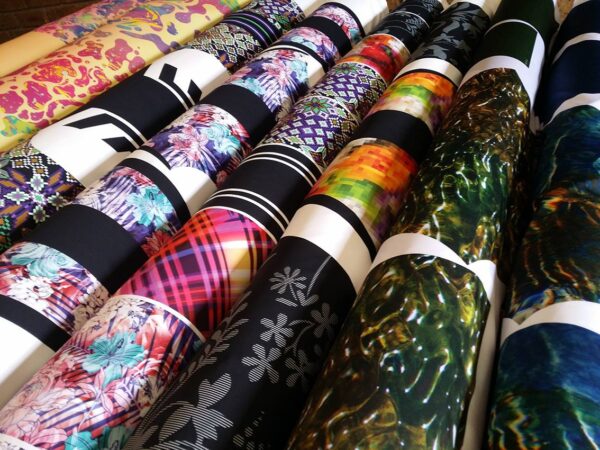
- Printing: Applies decorative patterns, graphics, or customized designs.
- Heat setting: Helps stabilize polyester fabric dimensions.
- Softening: Improves the surface feel and handling characteristics.
- Functional finishing: May provide properties such as water repellency or specialized surface performance.
The appropriate treatments depend on the intended application and customer specifications.
5. Inspection and Quality Control
The final stage involves checking the fabric for defects and confirming that it meets required specifications. Manufacturers may inspect dimensions, weight, color consistency, weaving irregularities, and surface quality.
For technical applications, additional testing may be required to evaluate tensile strength, tear resistance, abrasion performance, or other relevant properties.
Key Properties of Polyester Woven Fabrics
The performance of woven polyester depends on yarn type, fabric density, weave structure, and finishing. However, several characteristics contribute to its widespread use.
Strength and Durability
Polyester fibers generally provide good tensile strength, making them suitable for products that experience regular handling and wear. The woven structure can further support dimensional stability and fabric strength.
Shape Retention
Polyester tends to resist shrinking and stretching under normal care conditions. This helps garments and furnishing products maintain their dimensions over time.
Low Moisture Absorption
Polyester absorbs relatively little moisture compared with many natural fibers. This can support faster drying and make it useful in selected outdoor and performance textile applications.
Wrinkle Resistance
Many woven polyester fabrics resist creasing and maintain a relatively smooth appearance. This property can reduce maintenance requirements for clothing, uniforms, and household textiles.
Design and Finishing Flexibility
Woven polyester can be produced in different colors, textures, patterns, and surface finishes. This flexibility allows manufacturers to create materials for both decorative and functional products.
Common Applications of Woven Polyester
The combination of strength, versatility, and production flexibility makes woven polyester useful across several industries.
Fashion and Apparel
Woven polyester is used in shirts, trousers, dresses, jackets, uniforms, and outerwear. Depending on the yarn and construction, it can provide a smooth finish, structured appearance, or lightweight drape.
It is also blended with cotton, viscose, and other fibers to adjust softness, comfort, and performance.
Home Furnishings
Interior textile manufacturers use woven polyester for curtains, cushion covers, bedding, tablecloths, and selected upholstery products.
Its ability to support different patterns and finishes makes it suitable for both decorative and practical furnishing applications.
Industrial and Technical Textiles
Woven polyester is used in industrial applications where strength and dimensional stability are important. Examples include reinforcement fabrics, filtration materials, protective coverings, equipment components, and selected conveyor-related textiles.
The specific grade must be selected according to the operating environment, mechanical requirements, and expected exposure conditions.
Bags and Accessories
Backpacks, luggage, shopping bags, and protective cases often use woven polyester because it can provide a useful balance of weight and strength.
Coatings and additional treatments may be applied when greater water resistance or surface protection is required.
Woven Polyester Compared with Knitted Polyester
Although both fabric types can be manufactured from polyester fibers, their construction methods create different characteristics.
| Feature | Woven Polyester | Knitted Polyester |
|---|---|---|
| Construction | Interlaced warp and weft yarns | Interconnected yarn loops |
| Stretch | Generally less stretch in the fabric structure | Often more flexible and stretchable |
| Shape | Usually provides a more structured appearance | Often offers greater flexibility |
| Common uses | Shirts, trousers, curtains, bags | Sportswear, T-shirts, activewear |
| Surface | Depends on the selected weave | Depends on the knitting structure |
| Stability | Often dimensionally stable | May require construction-specific stabilization |
Neither construction is universally better. The right option depends on the product’s requirements for stretch, drape, structure, comfort, and durability.
Factors to Consider When Selecting Polyester Woven Fabric
Choosing a suitable textile requires evaluating its technical specifications and intended use. Buyers should consider the following factors before making a purchase:
- Fabric weight: Select a suitable weight based on the required thickness and product design.
- Weave construction: Determine whether plain, twill, satin, or another structure meets the application requirements.
- Yarn quality: Review yarn type, thickness, and consistency.
- Fabric density: Consider how closely the yarns are arranged and how this affects performance.
- Color and finish: Check whether the material has the required shade, surface texture, or functional treatment.
- Strength requirements: Evaluate tensile, tear, and abrasion performance where relevant.
- Care requirements: Confirm washing, drying, and maintenance instructions.
- Supplier reliability: Look for consistent specifications, quality documentation, and dependable production capacity.
Requesting samples and technical data sheets can help manufacturers and wholesale buyers assess material suitability before placing large orders.
Sustainability and Developments in Polyester Weaving
Environmental considerations are becoming increasingly important in textile manufacturing. Conventional polyester is generally produced from fossil-based raw materials, and discarded polyester textiles can persist in the environment.
To address these concerns, manufacturers are exploring recycled polyester, improved production efficiency, and more effective textile recovery methods.
Recycled polyester can be produced from recovered plastic materials or discarded polyester products. Its environmental benefits depend on the source material, processing technology, energy use, and end-of-life management.
Advances in weaving machinery are also improving production precision and reducing material waste. These developments may help manufacturers produce more consistent textiles while using resources more efficiently.
Conclusion
Polyester woven fabrics have become an important part of modern textile manufacturing because they combine strength, dimensional stability, design flexibility, and versatile applications. Their production involves several stages, including fiber processing, yarn preparation, weaving, finishing, and quality inspection, with each step contributing to the final material’s characteristics.
From fashion garments and home furnishings to industrial and technical products, woven polyester offers manufacturers a broad range of material options. By understanding weave structures, fabric properties, and application requirements, buyers can select suitable textiles that provide reliable performance and practical value.