The quality of a bathroom basin depends on more than the material used to make it. Its shape, mold design, production method, and finishing process all influence its strength, surface consistency, drainage, and everyday performance. Even small manufacturing differences can affect how well a basin fits into a bathroom and how long it maintains its original appearance.
A small wash basin requires careful production planning because its compact dimensions leave less room for manufacturing errors. The bowl must provide enough depth for comfortable handwashing, while its outer shape needs to fit the intended installation space. Accurate molding helps achieve consistent dimensions, smooth surfaces, and properly formed edges.
Why Shape Matters In Basin Manufacturing
Basin shape determines how the fixture looks, how much space it occupies, and how effectively it handles water. Manufacturers need to consider these factors before creating a mold because the design directly affects the production process.
A rounded bowl may require a different mold structure from a rectangular basin with defined corners. Each design needs suitable curves, wall thickness, drainage positioning, and surface transitions to maintain quality.
Shape also affects the distribution of material during production. Uneven sections may create weak points or cause dimensional differences after the basin comes out of the mold. A well-planned design helps reduce these risks.
How Different Shapes Affect Production Quality
Manufacturers use different mold designs to produce various basin styles. The complexity of the shape can influence production time, finishing requirements, and the consistency of the final product.
Round Basin Designs
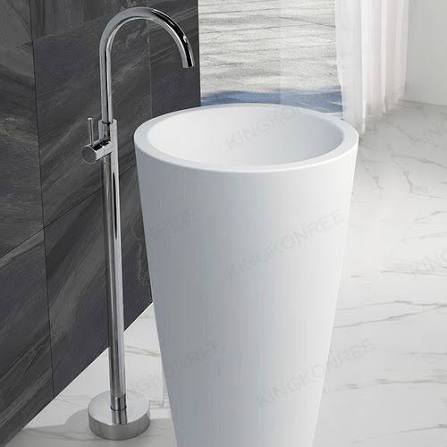
Round basins have continuous curved surfaces that create a smooth transition between the bowl and its outer edges. Their shape can make cleaning easier because they have fewer sharp internal corners where residue may collect.
During manufacturing, the mold must maintain a consistent curve around the entire bowl. Uneven material distribution can affect the wall thickness and create differences in the finished shape.
Rectangular Basin Designs
Rectangular basins use straight edges and defined corners. These features require careful mold construction to achieve accurate dimensions and consistent angles.
The transition between the flat base and vertical sides also needs attention. Poorly formed corners may create areas where material thickness varies, affecting the fixture’s strength and appearance.
Asymmetrical Basin Designs
Asymmetrical models have different curves or dimensions on each side. They can suit unusual bathroom layouts, but their production often requires more detailed mold development.
Manufacturers must control the shape carefully so that the basin maintains the intended proportions. Small errors can affect tap alignment, wall fitting, and the overall appearance.
The Role Of Mold Design In Basin Quality
A mold provides the structure that determines the basin’s final shape and dimensions. Its accuracy affects everything from the bowl’s depth to the position of the waste opening.
A well-designed mold should account for the material’s behaviour during production. Some materials shrink or change slightly as they cool or cure. Manufacturers need to consider these characteristics when setting the mold dimensions.
The mold surface also influences the final finish. Scratches, defects, or uneven areas on the mold may transfer to the basin, increasing the need for repairs or polishing.
Dimensional Accuracy
Accurate dimensions help the basin fit its intended countertop, cabinet, or wall-mounted support. Inconsistent measurements may create installation gaps or require adjustments during fitting.
Manufacturers use measurements and inspection tools to check the width, depth, height, and mounting points. Consistent mold performance makes it easier to produce multiple units with similar dimensions.
Uniform Wall Thickness
Wall thickness affects the basin’s structural strength and weight. If some sections become too thin, they may be more vulnerable to damage during handling or installation.
Excessively thick areas can increase material use and affect production efficiency. Mold design and material control help maintain a suitable thickness throughout the fixture.
Smooth Edges And Transitions
The rim and internal corners need consistent finishing. Uneven edges can affect the appearance and may create difficulties when fitting taps, waste fittings, or supporting hardware.
Smooth transitions also make the basin easier to clean. Manufacturers need to ensure that the mold produces the intended contours without rough sections or unwanted ridges.
How Different Materials Influence The Molding Process
The material determines which production methods manufacturers can use and how they need to control the molding process. Each material has different characteristics that affect the finished basin.
Ceramic Manufacturing
Ceramic basins commonly involve forming a clay-based mixture in a mold, followed by drying and firing. During these stages, the material loses moisture and undergoes shrinkage.
Manufacturers must account for this change when designing the mold. Uneven drying or firing conditions may cause warping, cracks, or dimensional differences.
A glaze is then applied to create the finished surface. Proper firing helps produce a smooth, durable coating that resists everyday stains and makes cleaning easier.
Solid Surface Manufacturing
Solid surface basins generally use a mixture of mineral fillers and resin. The material is poured or placed into a prepared mold, where it cures into the required shape.
Manufacturers need to control the mixture, temperature, and curing conditions. Air bubbles, incomplete filling, or inconsistent mixing may affect the appearance and structural quality.
Once the material cures, the basin may undergo trimming, sanding, and polishing. These finishing stages help create an even surface and accurate edges.
Resin-Based Materials
Certain resin-based materials allow manufacturers to create detailed shapes and smooth contours. Their production quality depends on the resin formulation, mold condition, and curing process.
Incorrect mixing ratios or curing conditions can affect hardness, surface appearance, and dimensional stability. Consistent process control helps reduce these defects.
Common Manufacturing Defects And Their Causes
Even a carefully planned basin design can develop defects during production. Understanding their causes helps manufacturers improve quality control and reduce rejected units.
| Manufacturing Defect | Possible Cause | Effect On Quality |
| Surface bubbles | Trapped air during molding | Uneven appearance and weak spots |
| Warping | Uneven drying, cooling, or curing | Poor fit and inconsistent shape |
| Cracks | Material stress or incorrect processing | Reduced structural reliability |
| Uneven wall thickness | Poor material distribution | Inconsistent strength |
| Rough edges | Mold defects or inadequate finishing | Poor appearance and difficult fitting |
| Dimensional variation | Mold wear or process inconsistency | Installation problems |
Inspection at different production stages helps identify these problems before the basin reaches the customer.
Why Finishing Is Important After Molding
Removing a basin from its mold does not complete the manufacturing process. Most products need additional work to meet the required appearance and dimensional standards.
Finishing may include trimming excess material, smoothing edges, polishing surfaces, and preparing openings for taps and drainage fittings. The exact process depends on the material and product design.
A smooth surface helps prevent dirt and soap residue from sticking easily. Accurate openings also make installation more straightforward and reduce the risk of gaps around fittings.
Manufacturers should inspect the finished basin under suitable lighting to identify surface marks, uneven colour, or other visible defects.
Quality Control During Small Basin Production
Quality checks should take place throughout manufacturing rather than only at the final stage. Early inspections help identify mold or material problems before they affect a large production batch.
Important checks include:
- Raw material inspection: Confirm that the material meets the required specifications.
- Mold condition: Check for scratches, worn sections, and other defects.
- Shape verification: Compare finished dimensions with the approved design.
- Surface inspection: Look for bubbles, cracks, stains, and rough areas.
- Drainage checks: Confirm that the bowl directs water towards the waste opening.
- Final fitting inspection: Check tap holes, mounting points, and edge alignment.
Manufacturers may also conduct strength and performance tests according to the material and applicable product standards. Consistent records help identify recurring production problems and improve future batches.
How Manufacturing Quality Affects Installation And Daily Use
Production accuracy has a direct effect on how easily a basin can be installed. A fixture with inconsistent dimensions may not align properly with a countertop or mounting brackets.
The bowl’s shape also affects everyday performance. A poorly formed slope can leave water standing in the basin, while an unsuitable depth may cause excessive splashing.
Surface quality matters during regular cleaning. Smooth finishes and properly formed corners make it easier to remove soap deposits and water marks.
For compact bathrooms, these details are particularly important because the basin often sits close to walls, taps, and other fixtures. A small dimensional error may become noticeable once everything is installed.
What Buyers Should Check Before Choosing A Manufactured Basin
Buyers do not need to understand every production technique, but a few checks can help them assess product quality.
Look at the basin from different angles to identify uneven edges, surface marks, or differences in colour. Check that the waste opening and tap holes have clean, accurate edges.
Ask about the material and recommended maintenance requirements. Product specifications should also provide the overall dimensions, installation method, and relevant care instructions.
When comparing products from manufacturers such as kingkonree, consider the consistency of the finish and the suitability of the design for the intended bathroom layout. These details provide a more useful basis for comparison than appearance alone.
Final Thoughts On Shape And Molding Quality
Basin quality begins with the relationship between design, mold accuracy, and material behaviour. Round, rectangular, and asymmetrical shapes each present different production requirements, particularly when manufacturers need to maintain consistent wall thickness, smooth edges, and accurate dimensions.
The molding process determines much of the fixture’s structure, while finishing and quality inspections help ensure that it meets practical requirements. Buyers who understand these factors can make better decisions when comparing compact bathroom basins.
A well-manufactured basin should fit correctly, drain efficiently, provide a smooth cleaning surface, and maintain its appearance through regular use. Careful attention to shape and production quality helps achieve all four.