Road construction requires careful planning, suitable materials, skilled operators, and reliable machinery. Every stage, from preparing the foundation to laying and compacting asphalt, influences the strength, smoothness, and durability of the finished pavement. As infrastructure projects become larger and construction schedules more demanding, contractors increasingly depend on advanced machinery to maintain consistent results and complete work efficiently.
Modern Road Paving Equipment helps construction teams manage material distribution, control pavement thickness, and achieve more uniform surfaces. These machines combine mechanical systems, hydraulic technology, and electronic controls to improve accuracy throughout the paving process. Understanding their functions and advantages can help contractors select equipment that meets project specifications and supports long-term operational performance.
Understanding Road Paving Equipment
Road paving equipment refers to the machinery used to prepare, spread, level, and compact materials during road construction and resurfacing. Different machines perform specific tasks, but they must operate together to create a stable and properly finished pavement structure.
Common equipment includes:
- Asphalt pavers for distributing and leveling hot asphalt mixtures.
- Road rollers for compacting pavement layers.
- Milling machines for removing damaged or uneven surfaces.
- Bitumen sprayers for applying bonding and protective coatings.
- Material transfer vehicles for supporting consistent asphalt delivery.
- Road preparation machinery for grading and stabilizing the foundation.
The appropriate equipment combination depends on road dimensions, pavement design, construction materials, and project deadlines.
How Advanced Paving Technology Improves Construction Quality
Pavement quality depends on several factors, including material consistency, layer thickness, surface smoothness, and compaction. Advanced machinery helps contractors control these variables more effectively.
1. More Accurate Material Distribution
Asphalt pavers are designed to distribute material across a prepared surface at a controlled rate. Their conveyor and auger systems move the mixture toward the screed, which spreads it to the required width and thickness.
Modern controls help operators maintain consistent material flow and reduce uneven distribution. Proper adjustment also minimizes the risk of segregation and irregular pavement surfaces.
2. Consistent Pavement Thickness
Maintaining the specified asphalt layer thickness is important for structural performance and material efficiency. Uneven layers can create weak areas, affect compaction, and increase the likelihood of premature pavement deterioration.
Advanced screed systems and electronic leveling controls help operators maintain more consistent paving depths. These features are especially useful on long road sections where maintaining uniformity can be challenging.
3. Improved Surface Smoothness
A smooth road surface contributes to driving comfort, vehicle control, and pavement performance. Modern paving machines use adjustable screeds and leveling technologies to help manage surface irregularities.
When combined with suitable material preparation and proper operating techniques, these systems support more consistent pavement profiles.
4. Better Compaction Results
Compaction reduces air voids within asphalt and helps the pavement achieve its specified density. Advanced rollers may offer adjustable vibration settings, improved drum designs, and monitoring features.
Selecting the correct roller and compaction pattern helps prevent under-compaction, excessive vibration, and surface defects.
Essential Types of Modern Road Paving Machinery
Different machines contribute to specific stages of road construction. Understanding their functions helps contractors develop an efficient equipment plan.
Asphalt Pavers
<AsyncImage query=”modern asphalt paver machine laying asphalt on highway construction site” aspectRatio=”16:9″ width=”100%”/>
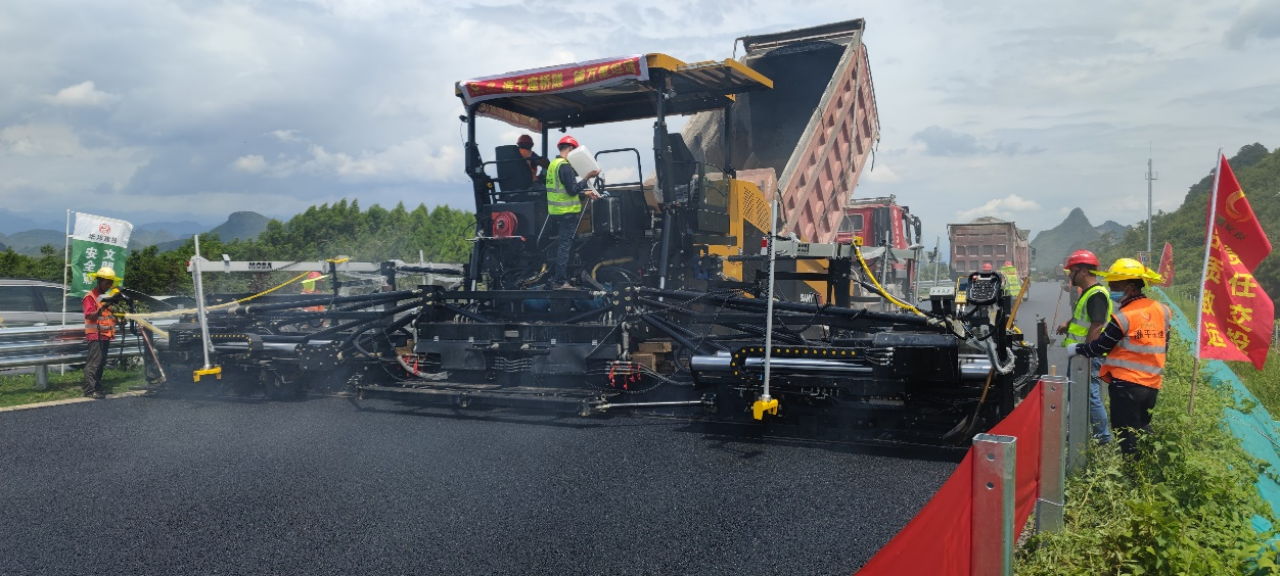
Asphalt pavers receive hot mixture from transport vehicles and spread it across the prepared road surface. Their main components include a receiving hopper, conveyor system, augers, and adjustable screed.
Important features to evaluate include paving width, screed heating, material distribution, leveling controls, and operating capacity. A suitable paver should match the project’s road dimensions and expected production rate.
Vibratory Road Rollers
<AsyncImage query=”large vibratory tandem steel drum road roller compacting asphalt highway” aspectRatio=”16:9″ width=”100%”/>
Vibratory rollers use drum pressure and controlled vibration to compact asphalt or suitable base materials. They are commonly used during initial and intermediate compaction stages.
Contractors should consider operating weight, drum width, vibration frequency, amplitude settings, and maneuverability when selecting a roller.
Pneumatic Tire Rollers
<AsyncImage query=”pneumatic tire roller compacting asphalt road construction” aspectRatio=”16:9″ width=”100%”/>
Pneumatic tire rollers use rubber tires to apply pressure across the pavement surface. Their action can help improve density and create a more uniform finish when used under appropriate conditions.
Tire pressure, machine weight, and the characteristics of the asphalt mixture influence their effectiveness.
Road Milling Machines
<AsyncImage query=”road milling machine removing old asphalt pavement highway resurfacing” aspectRatio=”16:9″ width=”100%”/>
Milling machines remove deteriorated asphalt layers before resurfacing. They use rotating cutting drums to remove material to a specified depth while helping restore the road profile.
Their cutting width, milling depth, engine power, and material collection arrangements should be considered when choosing equipment for rehabilitation projects.
Bitumen Spraying Equipment
<AsyncImage query=”bitumen distributor truck spraying asphalt emulsion road construction” aspectRatio=”16:9″ width=”100%”/>
Bitumen spraying equipment applies suitable bonding or protective materials to prepared road surfaces. It is commonly used for prime coats, tack coats, and surface dressing.
Accurate spray distribution depends on nozzle condition, pressure, application rate, material temperature, and vehicle speed. Proper calibration is essential for consistent results.
Ways Advanced Equipment Improves Project Efficiency
Construction efficiency involves more than completing work quickly. Contractors must coordinate machinery, labor, material supply, and quality requirements while controlling costs.
Faster Construction Operations
High-capacity machinery can process, spread, or compact larger quantities of material within a given period. This helps contractors complete extensive road sections according to planned schedules.
However, equipment output must remain coordinated. A high-capacity paver, for example, requires sufficient asphalt supply and suitable roller capacity to avoid interruptions.
Reduced Material Waste
Precise material distribution helps prevent excessive application and uneven pavement thickness. Accurate controls can also reduce the need for repeated corrective work.
Better material management supports cost control and makes project planning more predictable.
Lower Manual Workload
Automated controls and hydraulic systems reduce the need for certain repetitive manual adjustments. Operators can focus more effectively on monitoring equipment performance and maintaining construction standards.
Improved Equipment Coordination
Modern machinery may include digital monitoring and communication features that help construction teams track operating conditions. Better coordination between transport vehicles, pavers, and rollers can reduce waiting times and material cooling.
More Predictable Results
Consistent machine settings and controlled operating procedures help reduce variations between different pavement sections. This makes it easier for contractors to maintain project specifications across larger construction areas.
Important Features to Consider When Selecting Equipment
Choosing machinery requires an assessment of technical specifications, project requirements, and long-term ownership costs.
Operating capacity: Confirm that the machine can handle the expected construction volume and working width.
Engine performance: Evaluate engine power, fuel consumption, and suitability for demanding site conditions.
Control technology: Consider electronic leveling, temperature monitoring, automatic adjustment, and other useful control features.
Hydraulic reliability: Inspect hydraulic components and evaluate their accessibility for routine maintenance.
Operator comfort: Clear controls, good visibility, and ergonomic seating can improve productivity during extended shifts.
Durability: Look for strong structural components and materials designed for repeated heavy-duty operation.
Service support: Review warranty coverage, spare-part availability, technical assistance, and maintenance requirements.
A careful comparison of these factors helps contractors avoid selecting equipment based solely on initial purchase price.
Safety Considerations During Paving Operations
Road construction sites involve moving machinery, hot asphalt, reversing vehicles, and workers operating in restricted spaces. A well-organized safety plan is essential.
Recommended practices include:
- Ensure operators have the necessary training and equipment-specific authorization.
- Inspect brakes, tires, lights, hydraulic systems, and warning devices before operation.
- Establish clear traffic routes and safe working zones.
- Keep personnel away from moving conveyors, augers, and roller drums.
- Use suitable protective clothing, gloves, safety footwear, and eye protection.
- Provide adequate ventilation when working around heated bituminous materials.
- Use communication signals between operators and ground personnel.
- Follow lockout procedures before cleaning, inspection, or mechanical servicing.
Regular safety briefings help ensure that everyone understands site conditions and operational responsibilities.
Maintenance Practices for Reliable Performance
Advanced machinery requires consistent maintenance to preserve accuracy and reduce the likelihood of unexpected breakdowns.
Daily Equipment Inspections
Check fluid levels, tires, tracks, hydraulic connections, electrical systems, and safety devices before starting work. Report unusual noises, leaks, or changes in machine performance.
Cleaning After Operation
Remove asphalt residue, dust, and other accumulated materials from relevant machine components. Cleaning procedures should follow manufacturer recommendations, especially around heated or moving parts.
Hydraulic and Mechanical Servicing
Inspect hoses, cylinders, bearings, belts, and other mechanical components at the recommended intervals. Replace worn parts before they cause further damage.
Calibration of Control Systems
Electronic leveling systems, temperature sensors, and other monitoring devices should be checked regularly. Accurate readings are essential for maintaining consistent paving conditions.
Scheduled Component Replacement
Follow the manufacturer’s service schedule for filters, lubricants, cutting teeth, and other wear components. Keep maintenance records to track servicing and identify recurring problems.
The Role of Skilled Operators in Modern Paving
Even sophisticated machinery cannot guarantee quality without proper operation. Skilled operators understand how machine settings, material temperature, travel speed, and environmental conditions influence paving results.
They can identify irregular material flow, detect equipment problems, adjust operating parameters, and coordinate with other construction teams. Training should cover machine controls, routine inspections, emergency procedures, and the technical requirements of the pavement design.
Combining modern equipment with experienced personnel creates a more reliable approach to road construction.
Conclusion
Advanced road paving equipment plays a major role in improving pavement quality and construction efficiency. Modern pavers, rollers, milling machines, and bitumen spraying systems help contractors manage material distribution, maintain consistent thickness, achieve proper compaction, and reduce unnecessary delays.
Selecting suitable machinery requires attention to project capacity, technical features, durability, safety, and after-sales support. When supported by skilled operators and preventive maintenance, advanced paving technology helps construction businesses deliver smoother, more consistent, and longer-lasting road surfaces.