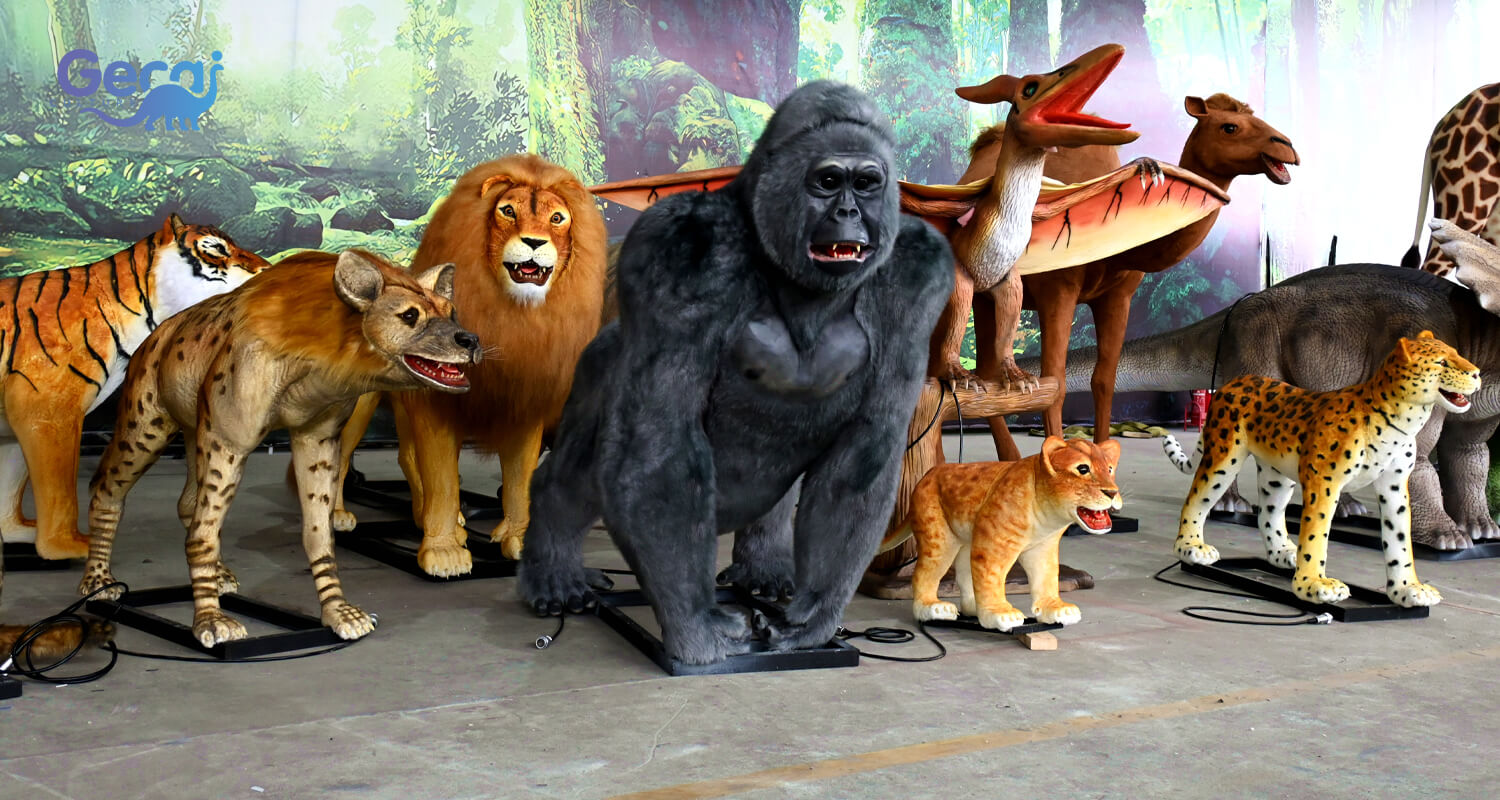
Animatronic animals are changing the way museums, theme parks, science centers, and interactive exhibitions present the natural world. By combining realistic sculpting, mechanical movement, sound effects, and carefully designed visual details, these lifelike creations bring animal characters into environments where visitors can observe and engage with them. From prehistoric dinosaurs to modern wildlife species, animatronic displays can turn ordinary exhibition spaces into memorable experiences.
For attractions looking to create more engaging environments, Animatronic Animals offer opportunities to combine education and entertainment through movement and visual storytelling. Unlike static models, animated animal figures can move their heads, open their mouths, blink, breathe, or perform coordinated actions. These features help capture visitors’ attention while providing new ways to communicate information about animal anatomy, habitats, and behavior.
What Are Animatronic Animals?
Animatronic animals are mechanically animated figures designed to imitate the appearance and movements of real or imaginary creatures. They typically combine an internal mechanical structure with an external sculpted body and a control system that coordinates movement.
Depending on the design, an animatronic animal may include:
- Moving heads, necks, and tails.
- Opening and closing jaws.
- Blinking eyes and facial movements.
- Moving legs, wings, or other body parts.
- Sound effects such as calls, growls, and roars.
- Lighting and synchronized special effects.
Some models use simple programmed movements, while more advanced installations feature multiple coordinated actions or interactive responses. The level of complexity depends on the intended application, available space, budget, and visitor experience goals.
Enhancing Museum Exhibitions Through Realistic Movement
Museums often use animal displays to explain biological concepts, natural history, and environmental relationships. Traditional exhibits may include photographs, illustrations, preserved specimens, and static models. Animatronic figures add another dimension by showing how an animal might move or behave.
Making Natural History More Engaging
A moving animal model can help visitors imagine how a creature responds to its surroundings. For example, an animatronic bird that moves its head and wings can demonstrate recognizable physical actions, while an animated dinosaur can help communicate the scale and appearance of prehistoric life.
These displays can be particularly useful when visitors cannot observe the actual species in person.
Supporting Educational Storytelling
Animatronic figures can be integrated with information panels, audio guides, and interactive presentations. A museum exhibition might use an animated animal to introduce a topic before providing additional information about its habitat, diet, adaptations, or conservation status.
This combination of visual presentation and educational content can help make complex subjects easier to understand.
Creating Memorable Exhibition Features
Large or highly detailed animatronic animals can become central attractions within a museum. Their movement and realistic appearance naturally draw attention, encouraging visitors to spend more time exploring the surrounding exhibition.
Transforming Theme Parks Into Immersive Environments
Theme parks rely on visual storytelling to create distinctive worlds. Animatronic animals help strengthen these environments by adding movement and personality to themed settings.
Creating Realistic Wildlife Scenes
Wildlife-themed attractions can use animated figures to represent animals in natural-looking environments. A moving elephant, roaring lion, or animated crocodile can help establish the atmosphere of a safari or jungle-themed experience.
When combined with suitable landscaping, sound effects, and lighting, these displays can create a stronger sense of immersion.
Bringing Fantasy Creatures to Life
Theme parks also use animatronics to present imaginary animals and fantasy characters. Dragons, giant insects, mythical creatures, and prehistoric monsters can become part of interactive adventures and themed storytelling environments.
Designers can customize the creature’s appearance and movement to match the attraction’s creative direction.
Supporting Visitor Interaction
Some animatronic installations are programmed to respond to visitor activity. Sensors or operator controls may trigger movement, sound, or lighting when guests approach a display.
These interactions can make an attraction feel more responsive and encourage visitors to explore different parts of the environment.
The Engineering Behind Animatronic Animal Displays
A successful animatronic animal combines artistic design with mechanical and electrical engineering. Every moving feature must be planned around the creature’s shape, size, intended behavior, and operating environment.
Mechanical Structures and Movement Systems
The internal frame provides support for the exterior body and moving components. Depending on the design, engineers may use motors, gears, linkages, bearings, and actuators to create different types of movement.
For example, a moving neck requires a mechanism that can support the head while allowing controlled rotation or bending. A flapping wing needs a movement system capable of handling its size, weight, and operating range.
Mechanical systems should be designed to operate smoothly and consistently while accounting for wear and maintenance requirements.
Control Systems and Programming
Control systems coordinate the movement of different mechanical components. They can operate individual motors, manage movement sequences, and synchronize actions with sound and lighting effects.
A programmed sequence might include:
- The animal slowly turns its head.
- Its eyes blink as it looks toward visitors.
- The mouth opens while a sound effect plays.
- The body performs a secondary movement.
- The figure gradually returns to its starting position.
More advanced systems may include sensors or operator-controlled features that allow selected actions to be triggered during an exhibition.
Sound and Lighting Effects
Sound can make an animated animal display more convincing by reinforcing the movement being shown. Roars, growls, calls, breathing effects, and environmental audio can help establish the atmosphere of an exhibit.
Lighting can highlight facial features, eyes, wings, or other important details. When properly synchronized with movement and audio, these effects create a more cohesive presentation.
Realistic Sculpting and Exterior Design
The external appearance of an animatronic animal is just as important as its mechanical performance. Visitors should be able to recognize the creature and understand its intended character through its shape, proportions, textures, and coloration.
Accurate Proportions
The head, body, limbs, and other features should follow a consistent design. Realistic proportions are especially important for museum displays and wildlife exhibitions, where visual accuracy supports the educational purpose.
For fantasy creatures, designers have greater artistic flexibility, but the overall anatomy should still appear visually balanced.
Detailed Surface Textures
Different animals have distinctive surface characteristics. Reptiles may feature scales, mammals may have fur-like textures, and birds may require carefully defined feather details.
These features can be reproduced through sculpting, molding, surface treatments, and paint applications.
Color and Finishing
Color selection influences how realistic or stylized the final figure appears. Naturalistic shading can help reproduce the appearance of wildlife, while brighter colors may suit family entertainment attractions.
Protective finishes should also be appropriate for the intended environment, especially when the model will be installed outdoors or handled by visitors.
Interactive Exhibitions and Educational Experiences
Interactive exhibitions encourage visitors to participate rather than simply observe. Animatronic animals can support this approach by introducing movement, sound, and responsive features into learning environments.
For example, a science center might use an animated animal to demonstrate how a particular species moves or feeds. A children’s exhibition could include friendly animated figures that respond to nearby visitors through programmed actions.
Common applications include:
- Interactive wildlife learning stations.
- Natural history and biodiversity exhibitions.
- Children’s museums and educational play areas.
- Prehistoric animal displays.
- Environmental awareness installations.
- Themed storytelling and discovery zones.
The educational value becomes stronger when movement is supported by accurate information and clear explanations.
Choosing the Right Animatronic Animal for a Project
Different venues have different requirements. A museum may prioritize scientific accuracy, while a theme park may focus on dramatic movement and visitor engagement.
Before selecting an animatronic animal, project planners should consider the following factors:
| Selection factor | What to evaluate |
|---|---|
| Intended purpose | Education, entertainment, decoration, or interactive storytelling |
| Animal design | Species, character, proportions, and visual style |
| Size | Available space, viewing distance, and installation access |
| Movement features | Required actions and movement complexity |
| Sound and lighting | Audio effects, illumination, and synchronization |
| Environment | Indoor or outdoor exposure conditions |
| Control system | Automated sequences, sensors, or operator controls |
| Maintenance | Inspection access, replacement parts, and service requirements |
| Budget | Manufacturing, transportation, installation, and ongoing operation |
A detailed project brief can help designers and manufacturers develop a model that fits the venue’s practical and creative requirements.
Safety and Maintenance Considerations
Animatronic animals installed in public spaces must be designed and operated with safety in mind. Moving parts, electrical systems, supporting structures, and visitor access all require appropriate planning.
Important considerations include:
- Protecting visitors from exposed moving mechanisms.
- Using suitable barriers or controlled access where necessary.
- Securing internal frames and mounting structures.
- Providing appropriate electrical protection.
- Setting movement limits and emergency stopping procedures.
- Following relevant installation and operating standards.
- Inspecting mechanical and electrical components regularly.
Maintenance is also essential for long-term performance. Operators should follow manufacturer recommendations for cleaning, lubrication, mechanical inspections, electrical checks, and testing of programmed movement sequences.
Outdoor models may need additional protection against moisture, sunlight, dust, and changing temperatures.
The Future of Animatronic Animal Attractions
Advances in mechanical engineering, materials, control systems, and interactive technologies continue to expand the possibilities for animatronic displays. More coordinated movements, improved surface materials, and responsive features can make installations increasingly engaging.
Future exhibition designs may combine animatronic figures with projection mapping, digital information screens, environmental soundscapes, and interactive learning systems. These technologies can help create experiences in which visitors explore an environment while learning about the creatures represented within it.
However, technological complexity is not the only measure of success. A well-designed animatronic animal should still have a clear purpose, reliable operation, appropriate movement, and an appearance that suits its environment.
Conclusion
Animatronic animals transform museums, theme parks, and interactive exhibitions by combining realistic design with mechanical movement and immersive effects. They can make natural history displays more engaging, strengthen themed environments, and provide new ways for visitors to explore wildlife and prehistoric creatures.
Successful installations require a balance of sculpting, engineering, control programming, sound design, safety, and maintenance. By choosing appropriate models and integrating them thoughtfully into their surroundings, exhibition designers and attraction operators can create memorable experiences that bring animal stories to life.